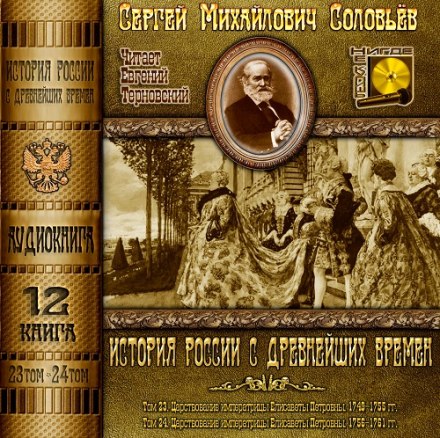
History of Russia from Ancient Times. Volumes 23, 24
43 hrs. 15 min.
Language
Russian
Author
Sergey Solovyov
Author
Sergey Solovyov
Narrator
Evgeny Ternovsky
Narrator
Evgeny Ternovsky
Vol. 23. Reign of Empress Elizaveta Petrovna. 1749–1755.
Vol. 24. Reign of Empress Elizaveta Petrovna. 1756–1761.
Vol. 23. Contents
Chapter 01. Continuation of the reign of Empress Elizaveta Petrovna. 1749 and 1750
Moscow in 1749; concerns about its rebuilding. — Orders in case of danger from Sweden, orders for the navy and army. — Increase in the price of wine and salt. — Orders concerning foreigners (non-Russians). — Summons of runaways. — Measures to preserve public health. — Measures against robberies. — Clashes between parts of the city population. — Resistance of runaway peasants in Bryansk. — Magistrates. — Voivodes and police. — Situation of factories and plants. — Petition by Russian merchants against foreign money-lenders/brokers. — Colleges (departmental bodies). — Clash between members of the Synod and the chief procurator, Prince Shakhovskoy. — Publication of the Bible. — Complaints from the Synod about bad treatment of secular persons toward the clergy. — Prohibition of books and things on religious grounds. — State of Little Russia. — Restoration of the Hetmanate in Little Russia. — The activity of Nepliuyev in the Orenburg region. — Struggle with foreigners in North-East Siberia. — Relations with European powers. — The situation of Chancellor Bestuzhev. — Termination of diplomatic relations with Prussia. — Relations with Austria regarding its Orthodox subjects. — Relations with the Polish-Saxon court. — The Courland question. — Unsuccessful attempt by Moritz of Saxony. — Actions of Nikita Iv. Panin in Stockholm, Korf in Copenhagen, Nepliuyev in Constantinople.
Chapter 02. Continuation of the reign of Empress Elizaveta Petrovna. 1751 and 1752
Rebellions among peasants assigned to factories. — Feudal and peasant infighting. — Clashes along boundaries. — Proposal by Count Peter Ivanovich Shuvalov on general land surveying. — Decree against troublemakers/law-saboteurs (litigants). — A softening movement in legislation. — Continuation of the Bryansk case about runaway peasants. — A magistrates’ case in Belgorod. — Riots in Oryol. — Merchants of Ustyug and “poluwniki” (grain/merchant teams). — Trade and industrial movement. — Finances. — Ecclesiastical affairs. — Continuation of the struggle with foreigners in Siberia. — Little-Russian affairs. — Letter from Chancellor Bestuzhev to the empress. — A quarrel between the chancellor and his brother Mikh. Petr. Bestuzhev. — Clash with Austria regarding the resettlement of Serbs into Russia. — New Serbia. — Relations with the Polish-Saxon court. — Negotiations with the English court about subsidies. — Turkish affairs. — Death of the Swedish king Frederick and accession of Adolf-Frederick to the throne. Cessation of concern about the plans of the new king. — Relations with Denmark.
Chapter 03. Continuation of the reign of Empress Elizaveta Petrovna. 1753
The empress’s departure to Moscow and the situation in that capital. — Fire in the Golovin Palace. — Construction of a new palace. — The Batyrin conspiracy. — Peasant unrest. — Caution regarding torture. — Orders concerning abolition of the death penalty. — Measures against delays in cases. — Financial measures. — Establishment of a bank for the nobility. — Abolition of internal customs duties. — Concerns about silk production. — Affairs in the border regions (ukrainas). — Closer ties between Chancellor Bestuzhev and the Grand Duchess. — Appointment of a new chancellor in Vienna, Count Kaunitz, and his review by Keislering. — Difficult position of the Russian minister Gross in Dresden because of a quarrel between the Polish-Saxon government and the princes Czartoryski. — Gross’s activity in a case involving Orthodox people in Poland. — Negotiations regarding the succession to the Polish throne. — Negotiations regarding Prussia. — Swedish relations move to the background. — Beginning of negotiations with England about subsidies. — Turkish affairs.
Chapter 04. Continuation of the reign of Empress Elizaveta Petrovna. 1754
Measures for compiling a new law code (Ulozheniye). — Establishment of a Merchant Bank. — Decree on issuing/runaways’ extradition. — Abolition of internal levies in Little Russia. — Commission on the law code. — Situation of the Court Order (Sudnyi prikaz). — Noble feuds. — Clash between church peasants and the clergy. — Unpleasant correspondence between the Synod and the Senate, between the Senate and the Admiralty College. — The position of the newly established Merchant Bank. — Sale of salt. — Measures regarding midwives. — A broad project by Peter Iv. Shuvalov on preserving the people. — Birth of Grand Duke Pavel Petrovich. — Letter from Chancellor Bestuzhev to his brother Mikhail Petrovich. — The latter continues to be angry at his brother. — Case of resettling Montenegrins into Russia. — Difficult negotiations with Poland regarding the extradition of runaways, in Courland matters, and in the Czartoryski case. — Continuation of negotiations with England on a subsidy treaty. — Clash with Turkey regarding the construction of the fortress of St. Elizaveta.
Chapter 05. Continuation of the reign of Empress Elizaveta Petrovna. 1755
Hearing of articles of the new law code. — Land surveying case. — Abuses/acts of self-will. — New general-crig commissar, Prince Shakhovskoy. — The Bashkir rebellion and putting it down. — Continuation of unpleasant relations with the Polish-Saxon government regarding the princes Czartoryski and the recall of the Saxon envoy Funke from St. Petersburg. — Case of the convention with England. — Panin’s report on the state of affairs in Sweden and a letter to him from Chancellor Bestuzhev. — Concession to Turkey’s demands concerning the construction of the fortress of St. Elizaveta.
Chapter 06. Continuation of the reign of Empress Elizaveta Petrovna.
The state of education in Russia during the second seven-year term of Elizaveta’s reign. 1749–1755.
Moscow in 1749; concerns about its rebuilding. — Orders in case of danger from Sweden, orders for the navy and army. — Increase in the price of wine and salt. — Orders concerning foreigners (non-Russians). — Summons of runaways. — Measures to preserve public health. — Measures against robberies. — Clashes between parts of the city population. — Resistance of runaway peasants in Bryansk. — Magistrates. — Voivodes and police. — Situation of factories and plants. — Petition by Russian merchants against foreign money-lenders/brokers. — Colleges (departmental bodies). — Clash between members of the Synod and the chief procurator, Prince Shakhovskoy. — Publication of the Bible. — Complaints from the Synod about bad treatment of secular persons toward the clergy. — Prohibition of books and things on religious grounds. — State of Little Russia. — Restoration of the Hetmanate in Little Russia. — The activity of Nepliuyev in the Orenburg region. — Struggle with foreigners in North-East Siberia. — Relations with European powers. — The situation of Chancellor Bestuzhev. — Termination of diplomatic relations with Prussia. — Relations with Austria regarding its Orthodox subjects. — Relations with the Polish-Saxon court. — The Courland question. — Unsuccessful attempt by Moritz of Saxony. — Actions of Nikita Iv. Panin in Stockholm, Korf in Copenhagen, Nepliuyev in Constantinople.
Chapter 02. Continuation of the reign of Empress Elizaveta Petrovna. 1751 and 1752
Rebellions among peasants assigned to factories. — Feudal and peasant infighting. — Clashes along boundaries. — Proposal by Count Peter Ivanovich Shuvalov on general land surveying. — Decree against troublemakers/law-saboteurs (litigants). — A softening movement in legislation. — Continuation of the Bryansk case about runaway peasants. — A magistrates’ case in Belgorod. — Riots in Oryol. — Merchants of Ustyug and “poluwniki” (grain/merchant teams). — Trade and industrial movement. — Finances. — Ecclesiastical affairs. — Continuation of the struggle with foreigners in Siberia. — Little-Russian affairs. — Letter from Chancellor Bestuzhev to the empress. — A quarrel between the chancellor and his brother Mikh. Petr. Bestuzhev. — Clash with Austria regarding the resettlement of Serbs into Russia. — New Serbia. — Relations with the Polish-Saxon court. — Negotiations with the English court about subsidies. — Turkish affairs. — Death of the Swedish king Frederick and accession of Adolf-Frederick to the throne. Cessation of concern about the plans of the new king. — Relations with Denmark.
Chapter 03. Continuation of the reign of Empress Elizaveta Petrovna. 1753
The empress’s departure to Moscow and the situation in that capital. — Fire in the Golovin Palace. — Construction of a new palace. — The Batyrin conspiracy. — Peasant unrest. — Caution regarding torture. — Orders concerning abolition of the death penalty. — Measures against delays in cases. — Financial measures. — Establishment of a bank for the nobility. — Abolition of internal customs duties. — Concerns about silk production. — Affairs in the border regions (ukrainas). — Closer ties between Chancellor Bestuzhev and the Grand Duchess. — Appointment of a new chancellor in Vienna, Count Kaunitz, and his review by Keislering. — Difficult position of the Russian minister Gross in Dresden because of a quarrel between the Polish-Saxon government and the princes Czartoryski. — Gross’s activity in a case involving Orthodox people in Poland. — Negotiations regarding the succession to the Polish throne. — Negotiations regarding Prussia. — Swedish relations move to the background. — Beginning of negotiations with England about subsidies. — Turkish affairs.
Chapter 04. Continuation of the reign of Empress Elizaveta Petrovna. 1754
Measures for compiling a new law code (Ulozheniye). — Establishment of a Merchant Bank. — Decree on issuing/runaways’ extradition. — Abolition of internal levies in Little Russia. — Commission on the law code. — Situation of the Court Order (Sudnyi prikaz). — Noble feuds. — Clash between church peasants and the clergy. — Unpleasant correspondence between the Synod and the Senate, between the Senate and the Admiralty College. — The position of the newly established Merchant Bank. — Sale of salt. — Measures regarding midwives. — A broad project by Peter Iv. Shuvalov on preserving the people. — Birth of Grand Duke Pavel Petrovich. — Letter from Chancellor Bestuzhev to his brother Mikhail Petrovich. — The latter continues to be angry at his brother. — Case of resettling Montenegrins into Russia. — Difficult negotiations with Poland regarding the extradition of runaways, in Courland matters, and in the Czartoryski case. — Continuation of negotiations with England on a subsidy treaty. — Clash with Turkey regarding the construction of the fortress of St. Elizaveta.
Chapter 05. Continuation of the reign of Empress Elizaveta Petrovna. 1755
Hearing of articles of the new law code. — Land surveying case. — Abuses/acts of self-will. — New general-crig commissar, Prince Shakhovskoy. — The Bashkir rebellion and putting it down. — Continuation of unpleasant relations with the Polish-Saxon government regarding the princes Czartoryski and the recall of the Saxon envoy Funke from St. Petersburg. — Case of the convention with England. — Panin’s report on the state of affairs in Sweden and a letter to him from Chancellor Bestuzhev. — Concession to Turkey’s demands concerning the construction of the fortress of St. Elizaveta.
Chapter 06. Continuation of the reign of Empress Elizaveta Petrovna.
The state of education in Russia during the second seven-year term of Elizaveta’s reign. 1749–1755.
Vol. 24. Reign of Empress Elizaveta Petrovna. 1756–1761.
Vol. 24. Contents
Chapter 01. Continuation of the reign of Empress Elizaveta Petrovna. 1756
Causes of the Seven Years’ War. — Kaunitz. — Change in the political system in the West; the alliance of England with Prussia and France with Austria. — Russia’s relations with Western powers. — Chancellor Bestuzhev’s record about the need to ratify the subsidy treaty with England as soon as possible. — Conditional ratification of the treaty. — The English envoy Williams announces the conclusion of the Anglo-Prussian treaty. — Chancellor Bestuzhev’s position after this announcement. — Establishment of a conference. — Determining Russian policy in view of new European relations. — Zubarev’s account. — Austria delays Russia’s movement against Frederick II. — The Russian court’s relations with the Polish-Saxon. — Frederick II’s attack on Saxony. — The relocation of Augustus III to Warsaw. — Stanislav Poniatowski. — Movements in St. Petersburg due to the empress’s illness. — Russia’s rapprochement with France. — England’s vain efforts to persuade Elizaveta to mediate between Austria and Prussia. — Russia’s attitude to Sweden and Turkey. — Troop movements toward Prussian borders. — Commander-in-chief Apraksin. — Financial measures to sustain the war. — Consequences of moving troops from interior regions to the borders. — Robberies and peasant uprisings. — Measures regarding “odnodvortsy” (single-village households/lesser gentry). — Little Russia. — Eastern Ukraine (ukrainas). — Adventures of the Bashkir instigator Batyrsha. — Siberia.
Chapter 02. Continuation of the reign of Empress Elizaveta Petrovna. 1757
Russia’s treaty with Austria, January 22. — Austria’s treaty with France, May 1. — Louis XV does not ratify the secret Russian declaration. — Clashes between Russia and France regarding Poland. — Bechteyev’s view on relations among the allied courts. — Appointment of M. P. Bestuzhev-Ryumin as ambassador to France; his letter from Warsaw; his arrival in France and first activities. — Marquis Lopital — French ambassador in St. Petersburg. — Beginning of military operations. — Prussian spies. — Discontent in St. Petersburg with Apraksin’s slowness; letter to him from Chancellor Bestuzhev. — The crossing of the Russian army beyond the border. — The Battle of Groß-Egersdorf. — Apraksin’s retreat after victory. — He is replaced by Fermor in the top command over the army. — Relations with Austria regarding the persecution of Orthodox people in Austrian territories. — Relations with England, Sweden, and Poland. — Internal orders regarding the army and finances. — Peasant uprisings. — Situation of affairs in the ukrainas.
Chapter 03. Continuation of the reign of Empress Elizaveta Petrovna. 1758
The fall of Chancellor Bestuzhev. — The relations of Grand Duchess Ekaterina Alekseevna with the empress. — Relations with Austria regarding military operations. — The occupation of East Prussia by Russian troops. — Fermor’s movement toward the Oder. — Bombardment of Kistrin. — Battle of Zorndorf. — Fermor’s movement into Pomerania. — Conference remarks on his orders. — A letter to him from Vorontsov. — Fermor’s retreat to the Vistula. — Plan for the campaign of the coming year. — Relations with allied courts: Austrian and French. — Relations with England and Poland. — The Saxon prince Charles receives the Duchy of Courland. — Turkish affairs. — Order regarding Montenegro. — Behavior of the Montenegrins in Moscow. — Internal activity of the government. — Financial orders. — Trade. — Unrest among monastery peasants. — The question of governing church estates. — Compiling the law code. — Commission regarding the “odnodvortsy” (single-village households). — Affairs in the ukrainas.
Chapter 04. Continuation of the reign of Empress Elizaveta Petrovna. 1759
Fermor is summoned to St. Petersburg. — Campaign plan. — Fermor’s departure from winter quarters. — Conference remarks to him. — Appointment of Soltykov as commander-in-chief. — Battles of Palzig and Kunersdorf. — Frederick II’s desperate situation. — Inactivity of the allies. — Conference remarks to Soltykov. — Harsh explanations between the two imperial courts. — Peace proposals from England and Prussia. — Explanations on this matter between the allied courts. — Russia’s relations with Sweden, Poland, and Turkey. — Internal orders of the government. — Lack of manpower and its consequences. — Lack of money. — Industry. — Landlords and cities. — Rural population. — Ukrainas.
Chapter 05. Continuation of the reign of Empress Elizaveta Petrovna. 1760
New Year celebrations. — Preparations for the campaign. — Inspecting artillery. — Campaign plan. — Soltykov’s movements. — His correspondence with the conference. — Soltykov’s retreat and his illness. — He hands over the top command over the army to Fermor. — Occupation of Berlin by the Russians and their leaving it. — Second failure near Kolberg. — Arrival at the army of the new commander-in-chief, Count Buturlin. — His retreat to the Vistula for the winter. — Negotiations with Austria about compensation for Russia for the war. — Relations with Denmark. — Death of Mikh. Petr. Bestuzhev-Ryumin. — Replacement of Lopital in St. Petersburg by Breteuil. — Relations with England about compensation for Russia for the war. — Recall of Panin from Stockholm. — Appointment in his place of Count Osterman. — Relations with Poland and Turkey. — Internal orders. — Difficult position of finances. — Lottery. — State of the cities. — The famous decree of August 16. — Filling the Senate. — New chief prosecutor, Prince Shakhovskoy. — His clashes with Count Pетр Iv. Shuvalov. — The most important judicial decisions. — Peasant uprisings. — Conference of the Senate with the Synod about the management of church estates. — Events in Tobolsk and Irkutsk. — Clash between the Senate and the conference.
Chapter 06. End of the reign of Empress Elizaveta Petrovna. 1761
Desire for peace expressed by celebrating the New Year. — Financial calculations for the coming campaign. — French proposals for peace and negotiations among the allies about this. — Buturlin’s unsuccessful actions. He retreats, leaving Chernyshov’s corps to act together with the Austrian corps of Loudon. — Loudon’s taking of Schweidnitz with the help of the Russians. — Treason of Tottleben. — Break in peace negotiations between France and England. — Change in the English ministry favorable to the allies. — Desire for peace in Sweden. — Strengthening of French influence in Poland. — Treaty between Prussia and Turkey. — Danish court’s act regarding the Holstein affair. — Frederick II’s desperate situation. — Ransom of Kolberg by Rumyantsev. — The illness and death of Elizaveta. — Significance of her reign. — Internal government orders in the last year of Elizaveta’s reign.
Comments on volumes 23 and 24.
Causes of the Seven Years’ War. — Kaunitz. — Change in the political system in the West; the alliance of England with Prussia and France with Austria. — Russia’s relations with Western powers. — Chancellor Bestuzhev’s record about the need to ratify the subsidy treaty with England as soon as possible. — Conditional ratification of the treaty. — The English envoy Williams announces the conclusion of the Anglo-Prussian treaty. — Chancellor Bestuzhev’s position after this announcement. — Establishment of a conference. — Determining Russian policy in view of new European relations. — Zubarev’s account. — Austria delays Russia’s movement against Frederick II. — The Russian court’s relations with the Polish-Saxon. — Frederick II’s attack on Saxony. — The relocation of Augustus III to Warsaw. — Stanislav Poniatowski. — Movements in St. Petersburg due to the empress’s illness. — Russia’s rapprochement with France. — England’s vain efforts to persuade Elizaveta to mediate between Austria and Prussia. — Russia’s attitude to Sweden and Turkey. — Troop movements toward Prussian borders. — Commander-in-chief Apraksin. — Financial measures to sustain the war. — Consequences of moving troops from interior regions to the borders. — Robberies and peasant uprisings. — Measures regarding “odnodvortsy” (single-village households/lesser gentry). — Little Russia. — Eastern Ukraine (ukrainas). — Adventures of the Bashkir instigator Batyrsha. — Siberia.
Chapter 02. Continuation of the reign of Empress Elizaveta Petrovna. 1757
Russia’s treaty with Austria, January 22. — Austria’s treaty with France, May 1. — Louis XV does not ratify the secret Russian declaration. — Clashes between Russia and France regarding Poland. — Bechteyev’s view on relations among the allied courts. — Appointment of M. P. Bestuzhev-Ryumin as ambassador to France; his letter from Warsaw; his arrival in France and first activities. — Marquis Lopital — French ambassador in St. Petersburg. — Beginning of military operations. — Prussian spies. — Discontent in St. Petersburg with Apraksin’s slowness; letter to him from Chancellor Bestuzhev. — The crossing of the Russian army beyond the border. — The Battle of Groß-Egersdorf. — Apraksin’s retreat after victory. — He is replaced by Fermor in the top command over the army. — Relations with Austria regarding the persecution of Orthodox people in Austrian territories. — Relations with England, Sweden, and Poland. — Internal orders regarding the army and finances. — Peasant uprisings. — Situation of affairs in the ukrainas.
Chapter 03. Continuation of the reign of Empress Elizaveta Petrovna. 1758
The fall of Chancellor Bestuzhev. — The relations of Grand Duchess Ekaterina Alekseevna with the empress. — Relations with Austria regarding military operations. — The occupation of East Prussia by Russian troops. — Fermor’s movement toward the Oder. — Bombardment of Kistrin. — Battle of Zorndorf. — Fermor’s movement into Pomerania. — Conference remarks on his orders. — A letter to him from Vorontsov. — Fermor’s retreat to the Vistula. — Plan for the campaign of the coming year. — Relations with allied courts: Austrian and French. — Relations with England and Poland. — The Saxon prince Charles receives the Duchy of Courland. — Turkish affairs. — Order regarding Montenegro. — Behavior of the Montenegrins in Moscow. — Internal activity of the government. — Financial orders. — Trade. — Unrest among monastery peasants. — The question of governing church estates. — Compiling the law code. — Commission regarding the “odnodvortsy” (single-village households). — Affairs in the ukrainas.
Chapter 04. Continuation of the reign of Empress Elizaveta Petrovna. 1759
Fermor is summoned to St. Petersburg. — Campaign plan. — Fermor’s departure from winter quarters. — Conference remarks to him. — Appointment of Soltykov as commander-in-chief. — Battles of Palzig and Kunersdorf. — Frederick II’s desperate situation. — Inactivity of the allies. — Conference remarks to Soltykov. — Harsh explanations between the two imperial courts. — Peace proposals from England and Prussia. — Explanations on this matter between the allied courts. — Russia’s relations with Sweden, Poland, and Turkey. — Internal orders of the government. — Lack of manpower and its consequences. — Lack of money. — Industry. — Landlords and cities. — Rural population. — Ukrainas.
Chapter 05. Continuation of the reign of Empress Elizaveta Petrovna. 1760
New Year celebrations. — Preparations for the campaign. — Inspecting artillery. — Campaign plan. — Soltykov’s movements. — His correspondence with the conference. — Soltykov’s retreat and his illness. — He hands over the top command over the army to Fermor. — Occupation of Berlin by the Russians and their leaving it. — Second failure near Kolberg. — Arrival at the army of the new commander-in-chief, Count Buturlin. — His retreat to the Vistula for the winter. — Negotiations with Austria about compensation for Russia for the war. — Relations with Denmark. — Death of Mikh. Petr. Bestuzhev-Ryumin. — Replacement of Lopital in St. Petersburg by Breteuil. — Relations with England about compensation for Russia for the war. — Recall of Panin from Stockholm. — Appointment in his place of Count Osterman. — Relations with Poland and Turkey. — Internal orders. — Difficult position of finances. — Lottery. — State of the cities. — The famous decree of August 16. — Filling the Senate. — New chief prosecutor, Prince Shakhovskoy. — His clashes with Count Pетр Iv. Shuvalov. — The most important judicial decisions. — Peasant uprisings. — Conference of the Senate with the Synod about the management of church estates. — Events in Tobolsk and Irkutsk. — Clash between the Senate and the conference.
Chapter 06. End of the reign of Empress Elizaveta Petrovna. 1761
Desire for peace expressed by celebrating the New Year. — Financial calculations for the coming campaign. — French proposals for peace and negotiations among the allies about this. — Buturlin’s unsuccessful actions. He retreats, leaving Chernyshov’s corps to act together with the Austrian corps of Loudon. — Loudon’s taking of Schweidnitz with the help of the Russians. — Treason of Tottleben. — Break in peace negotiations between France and England. — Change in the English ministry favorable to the allies. — Desire for peace in Sweden. — Strengthening of French influence in Poland. — Treaty between Prussia and Turkey. — Danish court’s act regarding the Holstein affair. — Frederick II’s desperate situation. — Ransom of Kolberg by Rumyantsev. — The illness and death of Elizaveta. — Significance of her reign. — Internal government orders in the last year of Elizaveta’s reign.
Comments on volumes 23 and 24.
1.
History of Russia from Ancient Times. Volumes 1, 2
(narrated by
Evgeny Ternovsky)
2.
History of Russia from the Earliest Times. Volumes 3, 4
(narrated by
Evgeny Ternovsky)
3.
History of Russia from the Earliest Times. Volume 3
(narrated by
Leontina Brotskaya)
3.
History of Russia from Ancient Times, Volumes 5–6
(narrated by
Evgeny Ternovsky)
4.
History of Russia from Ancient Times. Volumes 7, 8
(narrated by
Evgeny Ternovsky)
5.
History of Russia from Ancient Times. Volumes 9, 10
(narrated by
Evgeny Ternovsky)
6.
History of Russia from the Earliest Times. Volumes 11, 12
(narrated by
Vyacheslav Gerasimov)
7.
History of Russia from Ancient Times. Volumes 13, 14
(narrated by
Evgeny Ternovsky)
8.
History of Russia from Ancient Times. Volumes 15, 16
(narrated by
Ilya Prudovsky)
9.
History of Russia from the Earliest Times. Volumes 17, 18
(narrated by
Yury Zaborovsky)
10.
History of Russia from the Earliest Times. Volumes 19, 20
(narrated by
Ilya Prudovsky)
11.
History of Russia from Ancient Times. Volumes 21, 22
(narrated by
Vyacheslav Gerasimov)
12.
History of Russia from the Earliest Times. Volume 12
(narrated by
Leontina Brotskaya)
12.
History of Russia from Ancient Times. Volumes 23, 24
13.
History of Russia from the Earliest Times. Volume 13. From the Reign of Feodor Alekseyevich to the Moscow Uprising of 1682
(narrated by
Leontina Brotskaya)
13.
History of Russia from Ancient Times. Volumes 25, 26
(narrated by
Valeria Lebedeva)
14.
History of Russia from the Earliest Times. Volume 14. From the Reign of Tsarevna Sophia to the Beginning of the Reign of Peter I Alexeyevich. 1682–1703.
(narrated by
Leontina Brotskaya)
14.
History of Russia from Ancient Times. Volumes 27, 28
(narrated by
Yury Zaborovsky)
15.
History of Russia from the Earliest Times. Volume 15
(narrated by
Leontina Brotskaya)
15.
History of Russia from Ancient Times. Volume 29
(narrated by
Valeria Lebedeva)
19.
History of Russia from the Earliest Times. Volume 19. From the Reign of Empress Catherine I Alexeyevna to the Reign of Empress Anna Ioannovna
(narrated by
Leontina Brotskaya)
20.
History of Russia from the Earliest Times. Volume 20. The Reign of Empress Anna Ioannovna
(narrated by
Leontina Brotskaya)
21.
History of Russia from the Earliest Times. Volume 21. The Reign of Empress Elisabeth Petrovna. 1740–1744.
(narrated by
Leontina Brotskaya)
22.
History of Russia from the Earliest Times. Volume 22. The Reign of Empress Elisabeth Petrovna. 1745–1748.
(narrated by
Leontina Brotskaya)
23.
History of Russia from the Earliest Times. Volume 23. The Reign of Empress Elisabeth Petrovna
(narrated by
Leontina Brotskaya)
24.
History of Russia from the Earliest Times. Volume 24
(narrated by
Leontina Brotskaya)
25.
History of Russia from the Earliest Times. Volume 25
(narrated by
Leontina Brotskaya)
100%
02:39
23_00_Сод
08:19
23_01_001
08:04
23_01_002
08:06
23_01_003
08:02
23_01_004
08:28
23_01_005
08:02
23_01_006
08:14
23_01_007
08:13
23_01_008
08:09
23_01_009
08:05
23_01_010
08:41
23_01_011
08:35
23_01_012
08:12
23_01_013
08:46
23_01_014
08:10
23_01_015
08:07
23_01_016
08:04
23_01_017
08:18
23_01_018
08:03
23_01_019
08:23
23_01_020
08:05
23_01_021
08:08
23_01_022
08:08
23_01_023
08:10
23_01_024
08:20
23_01_025
08:25
23_01_026
08:07
23_01_027
08:13
23_01_028
08:02
23_01_029
08:36
23_01_030
08:25
23_01_031
08:04
23_01_032
08:11
23_01_033
08:06
23_01_034
08:06
23_01_035
08:12
23_01_036
08:08
23_01_037
08:05
23_01_038
08:08
23_01_039
08:14
23_01_040
08:03
23_01_041
08:12
23_01_042
08:32
23_01_043
08:09
23_01_044
08:02
23_01_045
08:44
23_01_046
08:44
23_01_047
02:41
23_01_048
08:10
23_02_001
08:02
23_02_002
08:17
23_02_003
08:32
23_02_004
08:15
23_02_005
08:29
23_02_006
08:06
23_02_007
08:11
23_02_008
08:02
23_02_009
08:03
23_02_010
08:15
23_02_011
08:09
23_02_012
08:13
23_02_013
08:38
23_02_014
08:07
23_02_015
08:05
23_02_016
08:24
23_02_017
08:16
23_02_018
08:40
23_02_019
08:21
23_02_020
08:05
23_02_021
08:04
23_02_022
08:17
23_02_023
08:06
23_02_024
08:09
23_02_025
08:03
23_02_026
08:14
23_02_027
08:17
23_02_028
08:19
23_02_029
08:45
23_02_030
08:01
23_02_031
08:18
23_02_032
00:47
23_02_033
08:03
23_03_001
08:16
23_03_002
08:23
23_03_003
08:28
23_03_004
08:45
23_03_005
08:27
23_03_006
08:03
23_03_007
08:20
23_03_008
08:06
23_03_009
08:21
23_03_010
08:40
23_03_011
08:05
23_03_012
08:33
23_03_013
08:24
23_03_014
08:40
23_03_015
04:42
23_03_016
08:01
23_04_001
08:18
23_04_002
08:04
23_04_003
08:10
23_04_004
08:02
23_04_005
08:30
23_04_006
08:10
23_04_007
08:01
23_04_008
08:18
23_04_009
08:17
23_04_010
08:16
23_04_011
08:33
23_04_012
08:05
23_04_013
08:29
23_04_014
08:04
23_04_015
08:02
23_04_016
03:47
23_04_017
08:43
23_05_001
08:04
23_05_002
08:08
23_05_003
08:11
23_05_004
08:36
23_05_005
08:37
23_05_006
08:19
23_05_007
08:02
23_05_008
08:21
23_05_009
05:24
23_05_010
08:03
23_06_001
08:02
23_06_002
08:02
23_06_003
08:23
23_06_004
08:15
23_06_005
08:22
23_06_006
08:21
23_06_007
08:13
23_06_008
08:12
23_06_009
08:33
23_06_010
08:25
23_06_011
08:02
23_06_012
08:02
23_06_013
08:11
23_06_014
08:08
23_06_015
08:25
23_06_016
08:06
23_06_017
08:05
23_06_018
08:23
23_06_019
00:21
23_06_020
08:13
24_01_001
08:07
24_01_002
08:14
24_01_003
08:12
24_01_004
08:18
24_01_005
08:07
24_01_006
08:14
24_01_007
08:12
24_01_008
08:25
24_01_009
08:11
24_01_010
08:14
24_01_011
09:02
24_01_012
08:13
24_01_013
08:08
24_01_014
08:06
24_01_015
08:08
24_01_016
08:09
24_01_017
08:08
24_01_018
08:54
24_01_019
08:18
24_01_020
08:16
24_01_021
08:11
24_01_022
08:03
24_01_023
08:15
24_01_024
08:03
24_01_025
08:11
24_01_026
08:02
24_01_027
08:03
24_01_028
08:01
24_01_029
08:38
24_01_030
08:16
24_01_031
08:55
24_01_032
08:23
24_01_033
08:04
24_01_034
08:13
24_01_035
08:08
24_01_036
08:45
24_01_037
08:07
24_01_038
08:09
24_01_039
08:14
24_01_040
02:35
24_01_041
08:29
24_02_001
08:25
24_02_002
08:04
24_02_003
08:10
24_02_004
08:11
24_02_005
08:05
24_02_006
08:11
24_02_007
08:02
24_02_008
08:08
24_02_009
08:17
24_02_010
08:56
24_02_011
08:13
24_02_012
08:02
24_02_013
08:13
24_02_014
08:06
24_02_015
08:05
24_02_016
08:06
24_02_017
08:10
24_02_018
08:29
24_02_019
08:07
24_02_020
08:21
24_02_021
08:24
24_02_022
08:05
24_02_023
08:06
24_02_024
08:06
24_02_025
05:21
24_02_026
08:12
24_03_001
08:13
24_03_002
08:06
24_03_003
08:07
24_03_004
08:07
24_03_005
08:17
24_03_006
08:21
24_03_007
08:06
24_03_008
08:03
24_03_009
08:04
24_03_010
08:32
24_03_011
08:08
24_03_012
08:08
24_03_013
08:17
24_03_014
08:04
24_03_015
08:21
24_03_016
08:08
24_03_017
08:20
24_03_018
08:24
24_03_019
08:20
24_03_020
08:07
24_03_021
08:45
24_03_022
08:12
24_03_023
08:31
24_03_024
08:06
24_03_025
08:02
24_03_026
08:27
24_03_027
01:23
24_03_028
08:14
24_04_001
08:04
24_04_002
08:04
24_04_003
08:07
24_04_004
08:14
24_04_005
08:36
24_04_006
08:11
24_04_007
08:37
24_04_008
08:09
24_04_009
08:23
24_04_010
08:14
24_04_011
08:16
24_04_012
08:04
24_04_013
08:05
24_04_014
08:04
24_04_015
08:09
24_04_016
08:37
24_04_017
08:06
24_04_018
08:10
24_04_019
05:42
24_04_020
08:01
24_05_001
08:13
24_05_002
08:12
24_05_003
08:10
24_05_004
08:06
24_05_005
08:43
24_05_006
08:02
24_05_007
08:06
24_05_008
08:09
24_05_009
08:15
24_05_010
08:16
24_05_011
08:27
24_05_012
08:31
24_05_013
09:27
24_05_014
08:20
24_05_015
08:39
24_05_016
08:02
24_05_017
08:24
24_05_018
08:06
24_05_019
08:04
24_05_020
08:29
24_05_021
08:26
24_05_022
08:32
24_05_023
00:13
24_05_024
08:06
24_06_001
08:05
24_06_002
08:02
24_06_003
08:28
24_06_004
08:10
24_06_005
08:15
24_06_006
08:08
24_06_007
08:04
24_06_008
08:06
24_06_009
08:45
24_06_010
08:20
24_06_011
08:21
24_06_012
08:39
24_06_013
08:29
24_06_014
08:14
24_06_015
08:10
24_06_016
09:12
24_06_017
08:03
24_06_018
08:08
24_06_019
08:02
24_06_020
08:06
24_06_021
08:11
24_06_022
08:04
24_06_023
08:10
24_06_024
03:44
24_06_025
08:05
24_07_Ком_001
08:23
24_07_Ком_002
08:19
24_07_Ком_003
08:16
24_07_Ком_004
08:12
24_07_Ком_005
08:14
24_07_Ком_006
08:12
24_07_Ком_007
08:13
24_07_Ком_008
08:46
24_07_Ком_009
08:06
24_07_Ком_010
08:15
24_07_Ком_011
08:12
24_07_Ком_012
08:08
24_07_Ком_013
05:00
24_07_Ком_014
