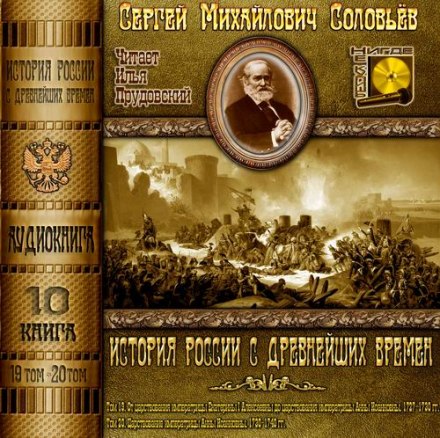
History of Russia from the Earliest Times. Volumes 19, 20
45 hrs. 27 min.
Language
Russian
Author
Sergey Solovyov
Author
Sergey Solovyov
Narrator
Ilya Prudovsky
Narrator
Ilya Prudovsky
Volume 19. From the reign of Empress Catherine I Alekseyevna to the reign of Empress Anna Ioannovna. 1727-1730.
Volume 20. The Reign of Empress Anna Ioannovna. 1730-1740.
Volume 19. Contents
Chapter 01. The End of the Reign of Empress Catherine I Alekseyevna
Foreign affairs. — The Persian War. — Osterman’s opinion on Persian affairs. — Prince Vasily Vladimirovich Dolgoruky appointed commander-in-chief. — His reports. — Turkish affairs. — Turkish setbacks in Persia. — Dolgoruky’s activities. — The French envoy’s suggestions to the Turks. — Russia’s relations with France. — The Hanover Alliance. — The appearance of an English squadron off Russian shores in a threatening posture. — Russia’s alliance with Austria. — Polish affairs. — The Thorn affair. — Activities of Commissioner Rudakovsky in Mogilev. — Courland affairs. — Yaguzhinsky’s embassy to Poland. — Swedish affairs; the dispatch of Prince Vasily Lukich Dolgoruky to Stockholm. — Sweden’s accession to the Hanover Alliance. — Relations with Denmark. — Relations with Prussia. — A general view of Russia’s foreign relations under Catherine I. — The question of succession to the throne. — Osterman’s opinion on reconciling interests. — The Duke of Holstein, Bishop of Lübeck—the bridegroom of Tsesarevna Elizabeth. — Concern for the army. — Menshikov goes over to the side of Grand Duke Peter. — The movement of the opposing side. — The Devier case. — Catherine’s testament. — Her death. — The proclamation of Grand Duke Pyotr Alekseyevich as Emperor.
Chapter 02. The Reign of Emperor Peter II Alekseyevich
Menshikov. — His measures to strengthen his power. — The emperor’s move to Menshikov’s house. — Peter’s instruction with Menshikov’s daughter. — Osterman, Münnich, Golitsyn, and the Dolgorukys. — The Duke of Holstein and his departure from Russia. — The grandmother-tsarina. — Shafirov. — The dispersal of Bestuzhev’s circle. — Makarov, Matveyev, and Volynsky. — The curriculum for the young emperor. — The Supreme Privy Council; the Senate. — Finances. — Abolition of the Chief Magistrate. — Activities of the Commerce Commission. — Softening of manners. — Church affairs. — Feofan Prokopovich’s struggle with his enemies. — Restoration of the hetmanate in Little Russia. — The fall of Menshikov. — The position of the Golitsyns. — Osterman’s position. — Reasons for the advantageous position of the Dolgorukys. — The grandmother-tsarina; her correspondence with Osterman. — The court’s move to Moscow. — The emperor’s relations with his paternal grandmother. — Relations with his other grandmother, on his mother’s side, the Duchess of Blankenburg. — The decisive favor of the Dolgorukys. — Menshikov in Berezov. — A new trouble with Bestuzhev’s circle. — Duchess Anna of Courland and her favorite Biron. — Duchess Anna Petrovna of Holstein; the birth of her son Karl Peter Ulrich; her death. — Court movements. — Activities of the Supreme Privy Council. — Abolition of the Preobrazhensky Prikaz. — The colleges. — Provincial administration. — Police. — Efforts to compile a new law code. — Activities of the Commerce Commission. — The poor state of the army and navy. — The case of Admiral Zmayevich. — The work of the geodesists. — The Academy of Sciences. — The state of the church. — Continuation of Feofan Prokopovich’s struggle with his enemies. — Affairs on the borderlands. — Foreign activity; Persian, Turkish, French, Austrian, Polish, Courland, Swedish, Danish, Prussian, and Chinese affairs. — The decision of the question of joining Asia with America. — The emperor’s betrothal to Princess Dolgorukaya. — Peter’s illness. — The Dolgorukys’ plan. — The emperor’s death.
Chapter 03. The Reign of Empress Anna Ioannovna
Anna’s election to the throne. — Restriction of autocracy. — Discontent among the clergy, the generals, and the gentry. — Embassy to Mitau. — Anna agrees to the terms proposed to her. — Yaguzhinsky’s behavior; his arrest. — Opinions on the state system submitted to the Supreme Privy Council. — Projects of the Supreme Privy Council. — Anna’s arrival. — Peter II’s funeral. — Anna’s ceremonial entry into Moscow. — A new form of oath. — Party movements. — Restoration of autocracy. — A second oath. — The character of the new empress. — Abolition of the Supreme Privy Council. — Restoration of the Senate to its former significance. — The empress’s presence in the Senate. — Abolition of primogeniture. — Establishment of the Cadet Corps. — Measures concerning justice. — Efforts regarding the law code. — Changes in legal proceedings. — Division of the Senate into departments. — Restoration of the office of Prosecutor General. — Establishment of the Judicial and Investigative prikazes. — Restoration of the Siberian prikaz. — Measures regarding voivodes’ abuses. — Financial measures. — Care for the army. — The fleet. — The question of staff establishments. — Activities of the Commerce Commission. — Police. — Church. — Affairs on the borderlands. — Persecution of the Dolgorukys. — Biron, Levenwolde, and Osterman. — Enlargement of the guard. — Luxury at court. — Discontents. — Rumiantsev’s disgrace. — Strong embitterment. — The death of Prince Mikhail Mikhailovich Golitsyn and the disgrace of Prince Vasily Vladimirovich Dolgoruky. — Reasons for the triumph of foreigners. — Restoration of the Preobrazhensky Prikaz. — Establishment of the Cabinet. — Removal of Yaguzhinsky and Shafirov. — The court’s move to Petersburg. — Foreign activity in the first three years of Anna’s reign.
Appendices to Volume 19
Foreign affairs. — The Persian War. — Osterman’s opinion on Persian affairs. — Prince Vasily Vladimirovich Dolgoruky appointed commander-in-chief. — His reports. — Turkish affairs. — Turkish setbacks in Persia. — Dolgoruky’s activities. — The French envoy’s suggestions to the Turks. — Russia’s relations with France. — The Hanover Alliance. — The appearance of an English squadron off Russian shores in a threatening posture. — Russia’s alliance with Austria. — Polish affairs. — The Thorn affair. — Activities of Commissioner Rudakovsky in Mogilev. — Courland affairs. — Yaguzhinsky’s embassy to Poland. — Swedish affairs; the dispatch of Prince Vasily Lukich Dolgoruky to Stockholm. — Sweden’s accession to the Hanover Alliance. — Relations with Denmark. — Relations with Prussia. — A general view of Russia’s foreign relations under Catherine I. — The question of succession to the throne. — Osterman’s opinion on reconciling interests. — The Duke of Holstein, Bishop of Lübeck—the bridegroom of Tsesarevna Elizabeth. — Concern for the army. — Menshikov goes over to the side of Grand Duke Peter. — The movement of the opposing side. — The Devier case. — Catherine’s testament. — Her death. — The proclamation of Grand Duke Pyotr Alekseyevich as Emperor.
Chapter 02. The Reign of Emperor Peter II Alekseyevich
Menshikov. — His measures to strengthen his power. — The emperor’s move to Menshikov’s house. — Peter’s instruction with Menshikov’s daughter. — Osterman, Münnich, Golitsyn, and the Dolgorukys. — The Duke of Holstein and his departure from Russia. — The grandmother-tsarina. — Shafirov. — The dispersal of Bestuzhev’s circle. — Makarov, Matveyev, and Volynsky. — The curriculum for the young emperor. — The Supreme Privy Council; the Senate. — Finances. — Abolition of the Chief Magistrate. — Activities of the Commerce Commission. — Softening of manners. — Church affairs. — Feofan Prokopovich’s struggle with his enemies. — Restoration of the hetmanate in Little Russia. — The fall of Menshikov. — The position of the Golitsyns. — Osterman’s position. — Reasons for the advantageous position of the Dolgorukys. — The grandmother-tsarina; her correspondence with Osterman. — The court’s move to Moscow. — The emperor’s relations with his paternal grandmother. — Relations with his other grandmother, on his mother’s side, the Duchess of Blankenburg. — The decisive favor of the Dolgorukys. — Menshikov in Berezov. — A new trouble with Bestuzhev’s circle. — Duchess Anna of Courland and her favorite Biron. — Duchess Anna Petrovna of Holstein; the birth of her son Karl Peter Ulrich; her death. — Court movements. — Activities of the Supreme Privy Council. — Abolition of the Preobrazhensky Prikaz. — The colleges. — Provincial administration. — Police. — Efforts to compile a new law code. — Activities of the Commerce Commission. — The poor state of the army and navy. — The case of Admiral Zmayevich. — The work of the geodesists. — The Academy of Sciences. — The state of the church. — Continuation of Feofan Prokopovich’s struggle with his enemies. — Affairs on the borderlands. — Foreign activity; Persian, Turkish, French, Austrian, Polish, Courland, Swedish, Danish, Prussian, and Chinese affairs. — The decision of the question of joining Asia with America. — The emperor’s betrothal to Princess Dolgorukaya. — Peter’s illness. — The Dolgorukys’ plan. — The emperor’s death.
Chapter 03. The Reign of Empress Anna Ioannovna
Anna’s election to the throne. — Restriction of autocracy. — Discontent among the clergy, the generals, and the gentry. — Embassy to Mitau. — Anna agrees to the terms proposed to her. — Yaguzhinsky’s behavior; his arrest. — Opinions on the state system submitted to the Supreme Privy Council. — Projects of the Supreme Privy Council. — Anna’s arrival. — Peter II’s funeral. — Anna’s ceremonial entry into Moscow. — A new form of oath. — Party movements. — Restoration of autocracy. — A second oath. — The character of the new empress. — Abolition of the Supreme Privy Council. — Restoration of the Senate to its former significance. — The empress’s presence in the Senate. — Abolition of primogeniture. — Establishment of the Cadet Corps. — Measures concerning justice. — Efforts regarding the law code. — Changes in legal proceedings. — Division of the Senate into departments. — Restoration of the office of Prosecutor General. — Establishment of the Judicial and Investigative prikazes. — Restoration of the Siberian prikaz. — Measures regarding voivodes’ abuses. — Financial measures. — Care for the army. — The fleet. — The question of staff establishments. — Activities of the Commerce Commission. — Police. — Church. — Affairs on the borderlands. — Persecution of the Dolgorukys. — Biron, Levenwolde, and Osterman. — Enlargement of the guard. — Luxury at court. — Discontents. — Rumiantsev’s disgrace. — Strong embitterment. — The death of Prince Mikhail Mikhailovich Golitsyn and the disgrace of Prince Vasily Vladimirovich Dolgoruky. — Reasons for the triumph of foreigners. — Restoration of the Preobrazhensky Prikaz. — Establishment of the Cabinet. — Removal of Yaguzhinsky and Shafirov. — The court’s move to Petersburg. — Foreign activity in the first three years of Anna’s reign.
Appendices to Volume 19
Volume 20. The Reign of Empress Anna Ioannovna. 1730-1740.
Volume 20. Contents
Chapter 01. Continuation of the Reign of Empress Anna Ioannovna
Events in Warsaw after the death of Augustus II. — Strengthening of the party of Stanisław Leszczyński. — France’s conduct. — Actions of the Polish magnates. — Russia demands the exclusion of Leszczyński from the candidates for the Polish throne. — Declarations of France and Austria. — The Convocation Sejm. — Actions of the Russian plenipotentiary Count Karl Gustav Levenwolde in Warsaw. — Poniatowski, the Princes Czartoryski, Primate Fyodor Potocki. — The appeal of Leszczyński’s opponents to Russia. — Russia and Austria put forward the Elector of Saxony as their candidate for the Polish throne. — Prussia’s resistance and relations with it. — The failure of Rudomina, sent by the Stanisław party to Petersburg. — The Electoral Sejm. — The majority elects Leszczyński. — The protest of the minority. — Arrival of Russian troops. — Reasons that compelled Russia to use armed intervention. — General Lacy’s campaign. — Election of Augustus III as King of Poland. — Relations between Levenwolde and the Russian generals. — Formation of confederations in favor of Leszczyński, who had established himself in Danzig. — Lacy’s march on Danzig. — Münnich replaces him. — Münnich takes the suburbs and bombards the city. — His correspondence with the Prussian king. — The confederates’ movement to aid Danzig and their failures. — The unsuccessful Russian assault on Hagelsberg. — French aid to Danzig. — The first battle of the Russians with the French. — The surrender of Danzig. — Levenwolde’s trips to Vienna, Leipzig, and Berlin. — Relations with Denmark, Sweden, and England. — The state of affairs in Poland. — Successes of Russian troops against the Stanisław party. — Münnich in Poland. — Discontent of the inhabitants of Lithuania. — General Lacy’s march to the Rhine to assist Emperor Charles VI. — Russia’s clash with Turkey. — Prince Golitsyn’s embassy to Persia. — Causes of the Turkish war.
Chapter 02. Continuation of the Reign of Empress Anna Ioannovna
General Leontyev’s unsuccessful campaign against Crimea. — Münnich’s conference with the Zaporozhians about the future campaign. — Münnich’s quarrel with the Prince of Hesse-Homburg. — News from Persia and Austria. — The campaign of 1736. — The siege of Azov. — Münnich’s Crimean campaign. — His clash with Prince Shakhovskoy. — The taking of Perekop, Kozlov, and Bakhchisarai. — Münnich’s return to the Dnieper. — The taking of Kinburn and Azov. — Münnich’s clash with Lacy. — His correspondence with the empress. — Reports of Resident Veshnyakov from Constantinople. — His departure from there. — News from Persia and Vienna. — The campaign of 1737. — The taking of Ochakov. — Report of the Austrian military agent Berenklau. — Lacy’s Crimean campaign. — Actions of the Austrians. — The Nemirov Congress. — The campaign of 1738. — Lacy’s second campaign in Crimea. — Austrian reports on the Russian manner of warfare. — Actions of the Persians and Austrians. — French mediation. — Reports of the Russian envoy Kantemir from Paris. — The campaign of 1739. — Orlik’s intrigues. — The Battle of Stavuchany. — The taking of Khotyn. — Occupation of Jassy. — Peace.
Chapter 03. Continuation of the Reign of Empress Anna Ioannovna
The Cabinet. — The Senate. — The colleges. — Provincial administration. — The army. — Term of noble service. — Decree concerning landless retired servicemen. — Recruitment levies. — The fleet. — Finances. — Industry. — Tatishchev’s activities at the Siberian mining works. — Peasants. — The first bank. — Justice. — Police. — Fires. — Epidemics. — Banditry. — Morals and customs. — Education. — The Cadet Corps. — The Academy of Sciences. — The Russian Assembly. — Trediakovsky. — Mankiev. — Tatishchev. — Kantemir. — Feofan Prokopovich; his final struggles and death. — The clergy.
Chapter 04. The End of the Reign of Empress Anna Ioannovna
Affairs on the borderlands. — Little Russia. — The Orenburg expedition and the Bashkir revolt. — Siberia. — Dangers to the western borderlands from Sweden. — Relations with Poland, Prussia, and England. — French policy regarding Russia. — France wishes to take advantage of Russian discontent against the government. — Causes of discontent. — Exiles and executions. — Biron’s might. — Feud among the Germans. — Yaguzhinsky, Volynsky, Bestuzhev-Ryumin. — The empress’s illness. — The question of the regency. — Anna’s death.
Appendices to Volume 20
Events in Warsaw after the death of Augustus II. — Strengthening of the party of Stanisław Leszczyński. — France’s conduct. — Actions of the Polish magnates. — Russia demands the exclusion of Leszczyński from the candidates for the Polish throne. — Declarations of France and Austria. — The Convocation Sejm. — Actions of the Russian plenipotentiary Count Karl Gustav Levenwolde in Warsaw. — Poniatowski, the Princes Czartoryski, Primate Fyodor Potocki. — The appeal of Leszczyński’s opponents to Russia. — Russia and Austria put forward the Elector of Saxony as their candidate for the Polish throne. — Prussia’s resistance and relations with it. — The failure of Rudomina, sent by the Stanisław party to Petersburg. — The Electoral Sejm. — The majority elects Leszczyński. — The protest of the minority. — Arrival of Russian troops. — Reasons that compelled Russia to use armed intervention. — General Lacy’s campaign. — Election of Augustus III as King of Poland. — Relations between Levenwolde and the Russian generals. — Formation of confederations in favor of Leszczyński, who had established himself in Danzig. — Lacy’s march on Danzig. — Münnich replaces him. — Münnich takes the suburbs and bombards the city. — His correspondence with the Prussian king. — The confederates’ movement to aid Danzig and their failures. — The unsuccessful Russian assault on Hagelsberg. — French aid to Danzig. — The first battle of the Russians with the French. — The surrender of Danzig. — Levenwolde’s trips to Vienna, Leipzig, and Berlin. — Relations with Denmark, Sweden, and England. — The state of affairs in Poland. — Successes of Russian troops against the Stanisław party. — Münnich in Poland. — Discontent of the inhabitants of Lithuania. — General Lacy’s march to the Rhine to assist Emperor Charles VI. — Russia’s clash with Turkey. — Prince Golitsyn’s embassy to Persia. — Causes of the Turkish war.
Chapter 02. Continuation of the Reign of Empress Anna Ioannovna
General Leontyev’s unsuccessful campaign against Crimea. — Münnich’s conference with the Zaporozhians about the future campaign. — Münnich’s quarrel with the Prince of Hesse-Homburg. — News from Persia and Austria. — The campaign of 1736. — The siege of Azov. — Münnich’s Crimean campaign. — His clash with Prince Shakhovskoy. — The taking of Perekop, Kozlov, and Bakhchisarai. — Münnich’s return to the Dnieper. — The taking of Kinburn and Azov. — Münnich’s clash with Lacy. — His correspondence with the empress. — Reports of Resident Veshnyakov from Constantinople. — His departure from there. — News from Persia and Vienna. — The campaign of 1737. — The taking of Ochakov. — Report of the Austrian military agent Berenklau. — Lacy’s Crimean campaign. — Actions of the Austrians. — The Nemirov Congress. — The campaign of 1738. — Lacy’s second campaign in Crimea. — Austrian reports on the Russian manner of warfare. — Actions of the Persians and Austrians. — French mediation. — Reports of the Russian envoy Kantemir from Paris. — The campaign of 1739. — Orlik’s intrigues. — The Battle of Stavuchany. — The taking of Khotyn. — Occupation of Jassy. — Peace.
Chapter 03. Continuation of the Reign of Empress Anna Ioannovna
The Cabinet. — The Senate. — The colleges. — Provincial administration. — The army. — Term of noble service. — Decree concerning landless retired servicemen. — Recruitment levies. — The fleet. — Finances. — Industry. — Tatishchev’s activities at the Siberian mining works. — Peasants. — The first bank. — Justice. — Police. — Fires. — Epidemics. — Banditry. — Morals and customs. — Education. — The Cadet Corps. — The Academy of Sciences. — The Russian Assembly. — Trediakovsky. — Mankiev. — Tatishchev. — Kantemir. — Feofan Prokopovich; his final struggles and death. — The clergy.
Chapter 04. The End of the Reign of Empress Anna Ioannovna
Affairs on the borderlands. — Little Russia. — The Orenburg expedition and the Bashkir revolt. — Siberia. — Dangers to the western borderlands from Sweden. — Relations with Poland, Prussia, and England. — French policy regarding Russia. — France wishes to take advantage of Russian discontent against the government. — Causes of discontent. — Exiles and executions. — Biron’s might. — Feud among the Germans. — Yaguzhinsky, Volynsky, Bestuzhev-Ryumin. — The empress’s illness. — The question of the regency. — Anna’s death.
Appendices to Volume 20
1.
History of Russia from Ancient Times. Volumes 1, 2
(narrated by
Evgeny Ternovsky)
2.
History of Russia from the Earliest Times. Volumes 3, 4
(narrated by
Evgeny Ternovsky)
3.
History of Russia from the Earliest Times. Volume 3
(narrated by
Leontina Brotskaya)
3.
History of Russia from Ancient Times, Volumes 5–6
(narrated by
Evgeny Ternovsky)
4.
History of Russia from Ancient Times. Volumes 7, 8
(narrated by
Evgeny Ternovsky)
5.
History of Russia from Ancient Times. Volumes 9, 10
(narrated by
Evgeny Ternovsky)
6.
History of Russia from the Earliest Times. Volumes 11, 12
(narrated by
Vyacheslav Gerasimov)
7.
History of Russia from Ancient Times. Volumes 13, 14
(narrated by
Evgeny Ternovsky)
8.
History of Russia from Ancient Times. Volumes 15, 16
(narrated by
Ilya Prudovsky)
9.
History of Russia from the Earliest Times. Volumes 17, 18
(narrated by
Yury Zaborovsky)
10.
History of Russia from the Earliest Times. Volumes 19, 20
11.
History of Russia from Ancient Times. Volumes 21, 22
(narrated by
Vyacheslav Gerasimov)
12.
History of Russia from the Earliest Times. Volume 12
(narrated by
Leontina Brotskaya)
12.
History of Russia from Ancient Times. Volumes 23, 24
(narrated by
Evgeny Ternovsky)
13.
History of Russia from the Earliest Times. Volume 13. From the Reign of Feodor Alekseyevich to the Moscow Uprising of 1682
(narrated by
Leontina Brotskaya)
13.
History of Russia from Ancient Times. Volumes 25, 26
(narrated by
Valeria Lebedeva)
14.
History of Russia from the Earliest Times. Volume 14. From the Reign of Tsarevna Sophia to the Beginning of the Reign of Peter I Alexeyevich. 1682–1703.
(narrated by
Leontina Brotskaya)
14.
History of Russia from Ancient Times. Volumes 27, 28
(narrated by
Yury Zaborovsky)
15.
History of Russia from the Earliest Times. Volume 15
(narrated by
Leontina Brotskaya)
15.
History of Russia from Ancient Times. Volume 29
(narrated by
Valeria Lebedeva)
19.
History of Russia from the Earliest Times. Volume 19. From the Reign of Empress Catherine I Alexeyevna to the Reign of Empress Anna Ioannovna
(narrated by
Leontina Brotskaya)
20.
History of Russia from the Earliest Times. Volume 20. The Reign of Empress Anna Ioannovna
(narrated by
Leontina Brotskaya)
21.
History of Russia from the Earliest Times. Volume 21. The Reign of Empress Elisabeth Petrovna. 1740–1744.
(narrated by
Leontina Brotskaya)
22.
History of Russia from the Earliest Times. Volume 22. The Reign of Empress Elisabeth Petrovna. 1745–1748.
(narrated by
Leontina Brotskaya)
23.
History of Russia from the Earliest Times. Volume 23. The Reign of Empress Elisabeth Petrovna
(narrated by
Leontina Brotskaya)
24.
History of Russia from the Earliest Times. Volume 24
(narrated by
Leontina Brotskaya)
25.
History of Russia from the Earliest Times. Volume 25
(narrated by
Leontina Brotskaya)
100%
08:08
19_01_001
08:15
19_01_002
08:14
19_01_003
08:15
19_01_004
08:35
19_01_005
08:16
19_01_006
08:07
19_01_007
08:39
19_01_008
08:04
19_01_009
08:03
19_01_010
08:12
19_01_011
08:13
19_01_012
08:41
19_01_013
08:16
19_01_014
08:06
19_01_015
08:01
19_01_016
08:28
19_01_017
08:14
19_01_018
08:26
19_01_019
08:06
19_01_020
08:13
19_01_021
08:02
19_01_022
08:07
19_01_023
08:04
19_01_024
08:08
19_01_025
08:31
19_01_026
08:26
19_01_027
08:03
19_01_028
08:09
19_01_029
08:08
19_01_030
08:05
19_01_031
08:01
19_01_032
08:02
19_01_033
08:16
19_01_034
08:02
19_01_035
03:18
19_01_036
08:56
19_02_001
08:42
19_02_002
08:05
19_02_003
08:25
19_02_004
08:11
19_02_005
08:31
19_02_006
08:04
19_02_007
08:12
19_02_008
08:29
19_02_009
08:22
19_02_010
08:25
19_02_011
08:13
19_02_012
08:03
19_02_013
08:02
19_02_014
08:07
19_02_015
08:24
19_02_016
08:15
19_02_017
08:02
19_02_018
08:08
19_02_019
08:08
19_02_020
08:07
19_02_021
08:34
19_02_022
08:16
19_02_023
08:14
19_02_024
08:07
19_02_025
08:06
19_02_026
08:06
19_02_027
08:16
19_02_028
08:28
19_02_029
08:26
19_02_030
08:08
19_02_031
08:10
19_02_032
08:10
19_02_033
08:20
19_02_034
08:12
19_02_035
08:05
19_02_036
08:28
19_02_037
08:49
19_02_038
08:05
19_02_039
08:02
19_02_040
08:05
19_02_041
08:11
19_02_042
08:02
19_02_043
08:05
19_02_044
08:09
19_02_045
08:06
19_02_046
08:22
19_02_047
08:07
19_02_048
08:02
19_02_049
08:04
19_02_050
08:09
19_02_051
08:18
19_02_052
08:13
19_02_053
08:15
19_02_054
00:37
19_02_055
08:04
19_03_001
08:08
19_03_002
08:09
19_03_003
08:08
19_03_004
08:40
19_03_005
08:02
19_03_006
08:22
19_03_007
08:17
19_03_008
08:08
19_03_009
08:06
19_03_010
08:07
19_03_011
08:28
19_03_012
08:27
19_03_013
08:02
19_03_014
08:04
19_03_015
08:16
19_03_016
08:04
19_03_017
09:16
19_03_018
08:08
19_03_019
08:26
19_03_020
08:06
19_03_021
08:18
19_03_022
08:02
19_03_023
08:11
19_03_024
08:07
19_03_025
09:21
19_03_026
08:20
19_03_027
08:21
19_03_028
08:05
19_03_029
08:03
19_03_030
08:26
19_03_031
08:12
19_03_032
08:24
19_03_033
08:06
19_03_034
08:03
19_03_035
08:36
19_03_036
08:07
19_03_037
08:11
19_03_038
08:11
19_03_039
08:03
19_03_040
08:08
19_03_041
08:09
19_03_042
08:12
19_03_043
08:11
19_03_044
08:16
19_03_045
08:04
19_03_046
08:07
19_03_047
08:04
19_03_048
08:06
19_03_049
06:22
19_03_050
08:50
19_04_001
08:04
19_04_002
08:04
19_04_003
04:56
19_04_004
08:25
20_01_001
08:31
20_01_002
08:12
20_01_003
08:20
20_01_004
08:05
20_01_005
08:20
20_01_006
08:09
20_01_007
08:05
20_01_008
08:24
20_01_009
08:13
20_01_010
08:04
20_01_011
08:30
20_01_012
08:12
20_01_013
08:17
20_01_014
08:25
20_01_015
08:28
20_01_016
08:04
20_01_017
08:31
20_01_018
08:07
20_01_019
08:08
20_01_020
08:08
20_01_021
08:06
20_01_022
08:12
20_01_023
08:10
20_01_024
08:02
20_01_025
08:03
20_01_026
08:33
20_01_027
08:10
20_01_028
08:06
20_01_029
09:29
20_01_030
06:05
20_01_031
08:23
20_02_001
08:17
20_02_002
08:10
20_02_003
08:36
20_02_004
08:05
20_02_005
08:02
20_02_006
08:25
20_02_007
08:09
20_02_008
08:22
20_02_009
08:18
20_02_010
08:30
20_02_011
08:07
20_02_012
08:24
20_02_013
08:11
20_02_014
08:03
20_02_015
08:08
20_02_016
08:02
20_02_017
09:04
20_02_018
09:06
20_02_019
08:09
20_02_020
08:35
20_02_021
08:03
20_02_022
08:07
20_02_023
08:50
20_02_024
08:06
20_02_025
08:08
20_02_026
08:42
20_02_027
08:33
20_02_028
08:05
20_02_029
01:51
20_02_030
08:09
20_03_001
08:09
20_03_002
08:36
20_03_003
08:15
20_03_004
08:08
20_03_005
08:18
20_03_006
08:08
20_03_007
08:13
20_03_008
08:09
20_03_009
08:24
20_03_010
08:02
20_03_011
08:07
20_03_012
08:12
20_03_013
08:02
20_03_014
08:03
20_03_015
08:19
20_03_016
08:47
20_03_017
08:16
20_03_018
08:03
20_03_019
08:03
20_03_020
08:36
20_03_021
08:17
20_03_022
08:11
20_03_023
08:19
20_03_024
08:02
20_03_025
08:18
20_03_026
08:04
20_03_027
08:22
20_03_028
08:05
20_03_029
08:07
20_03_030
08:08
20_03_031
08:15
20_03_032
08:02
20_03_033
08:11
20_03_034
08:01
20_03_035
08:13
20_03_036
08:15
20_03_037
08:19
20_03_038
08:07
20_03_039
08:14
20_03_040
08:22
20_03_041
08:28
20_03_042
08:17
20_03_043
08:03
20_03_044
08:04
20_03_045
08:33
20_03_046
08:31
20_03_047
08:02
20_03_048
08:03
20_03_049
08:10
20_03_050
08:59
20_03_051
08:28
20_03_052
08:16
20_03_053
08:30
20_03_054
08:14
20_03_055
06:04
20_03_056
08:17
20_04_001
08:08
20_04_002
08:09
20_04_003
09:06
20_04_004
08:10
20_04_005
08:09
20_04_006
08:04
20_04_007
08:33
20_04_008
08:14
20_04_009
08:03
20_04_010
08:14
20_04_011
08:05
20_04_012
08:10
20_04_013
08:15
20_04_014
08:02
20_04_015
08:10
20_04_016
08:08
20_04_017
08:07
20_04_018
08:08
20_04_019
08:03
20_04_020
08:16
20_04_021
08:13
20_04_022
08:07
20_04_023
08:10
20_04_024
08:40
20_04_025
08:37
20_04_026
08:07
20_04_027
08:46
20_04_028
08:36
20_04_029
08:02
20_04_030
08:16
20_04_031
08:01
20_04_032
08:04
20_04_033
08:01
20_04_034
08:27
20_04_035
08:19
20_04_036
08:04
20_04_037
08:08
20_04_038
08:43
20_04_039
08:46
20_04_040
08:02
20_04_041
08:08
20_04_042
08:11
20_04_043
08:20
20_04_044
08:41
20_04_045
08:23
20_04_046
08:05
20_04_047
08:03
20_04_048
08:06
20_04_049
08:36
20_04_050
08:06
20_04_051
08:15
20_04_052
07:14
20_04_053
08:12
20_05_Прил_001
08:41
20_05_Прил_002
08:03
20_05_Прил_003
08:05
20_05_Прил_004
08:04
20_05_Прил_005
08:04
20_05_Прил_006
08:13
20_05_Прил_007
08:17
20_05_Прил_008
08:06
20_05_Прил_009
08:18
20_05_Прил_010
08:12
20_05_Прил_011
08:27
20_05_Прил_012
08:09
20_05_Прил_013
08:32
20_05_Прил_014
08:10
20_05_Прил_015
08:39
20_05_Прил_016
08:11
20_05_Прил_017
08:27
20_05_Прил_018
07:58
20_05_Прил_019
