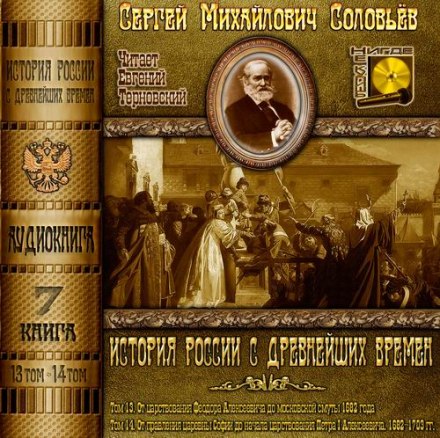
History of Russia from Ancient Times. Volumes 13, 14
44 hrs. 35 min.
Language
Russian
Author
Sergey Solovyov
Author
Sergey Solovyov
Narrator
Evgeny Ternovsky
Narrator
Evgeny Ternovsky
Volume 13. From the reign of Feodor Alekseyevich to the Moscow turmoil of 1682
Volume 14. From the reign of Tsarevna Sophia to the beginning of the reign of Peter I Alekseyevich. (1682–1703)
Volume 13. Contents
Book contents 7
Chapter 01. Russia before the era of transformations
General overview of the course of ancient Russian history. — Differences between Eastern and Western Europe. — The nature of North-Eastern Russia. — Moscow, its character. — The great sovereign. — Cases when he appeared before his subjects, departures and campaigns. — His family celebrations. — Dinners at the palace. — Service of the great sovereign. — Service held on the porch, and service held in the front room. — Their interests. — Local precedence (mestnichestvo). — The chamber and reports. — Sitting of the [great] sovereign with the boyars on matters. — Cathedrals. — Landowners. — The new army. — Military settlements. — Cossacks and streltsy. — Feeding military people. — Feeding from affairs. — Orders. — Feeding by cities. — View of an ancient Russian city. — The voivode. — The head of the губная (local) office. — The zemstvo head. — The main interests of townspeople. — Taxes. — Services of townspeople. — Feeding the voivode and clerks. — Clashes between townspeople and voivodes and zemstvo heads. — Struggle between the best and lesser people. — Relations to the supreme government. — Fate of Ordyn-Nashchokin’s transformations in Pskov. — Trade regulations (statute). — Rural population. — Meaning of the attachment of peasants. — Peasants’ drive to create their own worlds separate from the city. — Sad condition of the peasants. — Need for a coup. — New teachers. — Schism. — Accusations. — Church councils. — Difficult position of the clergy. — Significance of the Nikon affair. — Joseph of Kolomna. — Confessor Savinov. — Church estates. — The question of the children of the white clergy — Morals and customs. — Turn onto a new path. — Theater. — Literature.
Chapter 02. The reign of Feodor Alekseyevich
Differences in reform activity among the successors of Tsar Alexei Mikhailovich. — Children of Tsar Alexei from both marriages. — Polish and German influence. — News about Feodor’s accession. — Matveev’s exile. — Exile of the confessor Andrew Savinov. — Worsening of Nikon’s fate. — Favorites of the tsar: Yazykov, Likhachevs. — Feodor’s marriage to Agafya Semyonovna Grushetskaya. — Rapid rise of Yazykov and Likhachev. — Prince V. V. Vasilchikov Golitsyn. — End of the case with Doroshenko. — Affairs of Roslavets and Adamovich. — Doroshenko in Moscow. — Manifesto of Yuri Khmelnitsky. — Correspondence with the hetman Samoylovich about Serke and Doroshenko. — Exiles of Roslavets and Adamovich. — First Chigirin campaign. — Opinions of Romodanovsky and Samoylovich about Chigirin. — Zaporizhian matters and an embassy to Turkey. — Second Chigirin campaign. — Relations with Poland. — Peace negotiations with Turkey. — Negotiations in Crimea and peace with the sultan and khan. — Doroshenko the voivode. — Death of Serke. — Swedish, Danish, Austrian affairs. — Kalmyks and Cossacks. — Riots of the Bashkirs. — Struggle against the Kyrgyz, Nenets (Samoyeds), Yakuts, and Tungus in Siberia; abuses by local officials there. — Internal government activity under Tsar Feodor. — The question of silk trade with Armenians. — Decree on trade with the Greeks. — Mitigation of punishments for criminal offenses. — New form of petitions. — Schism. — Church council of 1681. — Conversion of nonbelievers to Christianity. — Decrees regarding voivodes. — Financial measures. — Elimination of local precedence (mestnichestvo). — Project to separate civil offices from military ones. — Project for an academy. — Death of Tsarina Agafya and Tsarevich Ilya. — Second marriage of the tsar and his death. — Death of Nikon. — Easing of Matveev’s fate.
Chapter 03. The Moscow turmoil of 1682
Motivation for choosing Peter as tsar bypassing Ivan. — Ivan’s party and its movements. — Scenes at the burial of Tsar Feodor. — Disturbances of the streltsy and soldiers. — Weakness of the government and the streltsy’s unruliness. — Miloslavsky’s conspiracy. — Matveev’s arrival. — Streltsy uprising. — Dual power and the rule of Sophia. — Awkward position of the streltsy. — The pillar in Red Square to justify the uprising. — The movement of the dissenters (schismatics). — Khovansky supports them. — The schismatics’ turmoil of 5 July. — The streltsy fall behind the schismatics, and the latter’s case is lost. — Continuation of streltsy unrest. — The court leaves Moscow. — Execution of the Khovanskys. — Calling up the noble militia. — Unrest and terror among the streltsy and soldiers. — They ask the tsars for pardon. — Terms of pardon. — The streltsy acknowledge themselves as insurgents. — Destruction of the pillar in Red Square. — Return of the court to Moscow. — Shaklovity — head of the Streltsy Order, his steadfastness. — Measures against the investigation of the rebellion. — Turmoils in Little Russia and on the Don. — Removal of dangerous streltsy from Moscow.
Supplement to Volume 13
Chapter 01. Russia before the era of transformations
General overview of the course of ancient Russian history. — Differences between Eastern and Western Europe. — The nature of North-Eastern Russia. — Moscow, its character. — The great sovereign. — Cases when he appeared before his subjects, departures and campaigns. — His family celebrations. — Dinners at the palace. — Service of the great sovereign. — Service held on the porch, and service held in the front room. — Their interests. — Local precedence (mestnichestvo). — The chamber and reports. — Sitting of the [great] sovereign with the boyars on matters. — Cathedrals. — Landowners. — The new army. — Military settlements. — Cossacks and streltsy. — Feeding military people. — Feeding from affairs. — Orders. — Feeding by cities. — View of an ancient Russian city. — The voivode. — The head of the губная (local) office. — The zemstvo head. — The main interests of townspeople. — Taxes. — Services of townspeople. — Feeding the voivode and clerks. — Clashes between townspeople and voivodes and zemstvo heads. — Struggle between the best and lesser people. — Relations to the supreme government. — Fate of Ordyn-Nashchokin’s transformations in Pskov. — Trade regulations (statute). — Rural population. — Meaning of the attachment of peasants. — Peasants’ drive to create their own worlds separate from the city. — Sad condition of the peasants. — Need for a coup. — New teachers. — Schism. — Accusations. — Church councils. — Difficult position of the clergy. — Significance of the Nikon affair. — Joseph of Kolomna. — Confessor Savinov. — Church estates. — The question of the children of the white clergy — Morals and customs. — Turn onto a new path. — Theater. — Literature.
Chapter 02. The reign of Feodor Alekseyevich
Differences in reform activity among the successors of Tsar Alexei Mikhailovich. — Children of Tsar Alexei from both marriages. — Polish and German influence. — News about Feodor’s accession. — Matveev’s exile. — Exile of the confessor Andrew Savinov. — Worsening of Nikon’s fate. — Favorites of the tsar: Yazykov, Likhachevs. — Feodor’s marriage to Agafya Semyonovna Grushetskaya. — Rapid rise of Yazykov and Likhachev. — Prince V. V. Vasilchikov Golitsyn. — End of the case with Doroshenko. — Affairs of Roslavets and Adamovich. — Doroshenko in Moscow. — Manifesto of Yuri Khmelnitsky. — Correspondence with the hetman Samoylovich about Serke and Doroshenko. — Exiles of Roslavets and Adamovich. — First Chigirin campaign. — Opinions of Romodanovsky and Samoylovich about Chigirin. — Zaporizhian matters and an embassy to Turkey. — Second Chigirin campaign. — Relations with Poland. — Peace negotiations with Turkey. — Negotiations in Crimea and peace with the sultan and khan. — Doroshenko the voivode. — Death of Serke. — Swedish, Danish, Austrian affairs. — Kalmyks and Cossacks. — Riots of the Bashkirs. — Struggle against the Kyrgyz, Nenets (Samoyeds), Yakuts, and Tungus in Siberia; abuses by local officials there. — Internal government activity under Tsar Feodor. — The question of silk trade with Armenians. — Decree on trade with the Greeks. — Mitigation of punishments for criminal offenses. — New form of petitions. — Schism. — Church council of 1681. — Conversion of nonbelievers to Christianity. — Decrees regarding voivodes. — Financial measures. — Elimination of local precedence (mestnichestvo). — Project to separate civil offices from military ones. — Project for an academy. — Death of Tsarina Agafya and Tsarevich Ilya. — Second marriage of the tsar and his death. — Death of Nikon. — Easing of Matveev’s fate.
Chapter 03. The Moscow turmoil of 1682
Motivation for choosing Peter as tsar bypassing Ivan. — Ivan’s party and its movements. — Scenes at the burial of Tsar Feodor. — Disturbances of the streltsy and soldiers. — Weakness of the government and the streltsy’s unruliness. — Miloslavsky’s conspiracy. — Matveev’s arrival. — Streltsy uprising. — Dual power and the rule of Sophia. — Awkward position of the streltsy. — The pillar in Red Square to justify the uprising. — The movement of the dissenters (schismatics). — Khovansky supports them. — The schismatics’ turmoil of 5 July. — The streltsy fall behind the schismatics, and the latter’s case is lost. — Continuation of streltsy unrest. — The court leaves Moscow. — Execution of the Khovanskys. — Calling up the noble militia. — Unrest and terror among the streltsy and soldiers. — They ask the tsars for pardon. — Terms of pardon. — The streltsy acknowledge themselves as insurgents. — Destruction of the pillar in Red Square. — Return of the court to Moscow. — Shaklovity — head of the Streltsy Order, his steadfastness. — Measures against the investigation of the rebellion. — Turmoils in Little Russia and on the Don. — Removal of dangerous streltsy from Moscow.
Supplement to Volume 13
Volume 14. From the reign of Tsarevna Sophia to the beginning of the reign of Peter I Alekseyevich. (1682–1703)
Volume 14. Contents
Chapter 01. The rule of Tsarevna Sophia
Polish intrigues to incite unrest in Little Russia. — Prince V. V. Golitsyn and his policy. — Sacred alliance against the Turks. — Russia is invited to join it. — Eternal peace with Poland and entry into the Sacred League. — Subordination of the Kiev metropolitan to the Moscow patriarch. — Contact with the hetman Ivan Samoylovich on this matter. — The election of Prince Gedeon Chetvertinsky as Kiev metropolitan. — Correspondence with Eastern patriarchs regarding the subordination of the Kiev metropolis to the Moscow patriarch. — First Crimean campaign. — Shaklovity’s embassy to the regiments. The fall of Samoylovich, and the election of Mazepa as hetman. — Lazary Baranovich. — Encouragement of Turkish Christians to resume hostilities. — Second Crimean campaign. — Relations with European and Asian states during Sophia’s reign. — The Nerchinsk treaty with China. — Internal government activity.
Chapter 02. Sophia’s fall. The tsar’s activity up to the first Azov campaign
The significance of Peter and the coup he carried out. — Peter’s upbringing. — Foreign teachers. — Shipbuilding. — Peter’s marriage. — Clash with the regent. — Sophia’s intention to be crowned as tsarina. — Sophia’s hostility toward Tsarina Natalya Kirillovna. — V. V. Golitsyn and Shaklovity. — Useless effort to raise the streltsy. — Peter’s displeasures. — Gathering of the streltsy in the Kremlin on August 7. — Peter’s flight to the Trinity Monastery. — Sophia’s futile attempts to reconcile with her brother. The streltsy force her to hand over Shaklovity. — Search for Shaklovity; exile of the Golitsyns. Feud among people close to Peter over the Golitsyns. — Execution of Shaklovity with his associates. — New denunciations against Prince V. V. Golitsyn and worsening of his fate. — Search for and execution of Medvedev. — Sophia removed from government and confined to a monastery. — Continuation of denunciations. — New government. — A quarrel between Prince Boris Golitsyn and the Dolgorukys. — Lefort. — Royal amusements. — The company/enterprise. — Society’s condition. — Little Russian affairs. — The position of Russians in Polish territories. — Mazepa and Palyey. — Affairs concerning tax farming (the lease of revenues).
Chapter 03. The end of dual power. The reign of Peter I Alekseyevich
End of amusements. — Peter’s plans for naval enterprises. — The role of Lefort. — Greek clergy asks for an active continuation of the war against the Turks. — First Azov campaign. — Voronezh fleet. — Death of Tsar Ivan Alekseyevich. — Second campaign and capture of Azov. — The impression this event made in Moscow and Poland. — Triumphal entry of the victors into Moscow. — Shipbuilding by private “kumpanstvos” (joint-stock-like associations). — Sending young people abroad to study. — Peter’s intention to go abroad himself. — Displeasures. — Search for the monk Avramy. — Search for Tsykler and Sokolnin. — Peter’s departure abroad. — Displeasure in Riga. — Staying in Prussia. — Polish affairs. — Peter’s meeting with two electresses; their assessment of him. — Peter in Holland, in England, in Vienna. — Streltsy uprising. — Peter’s return to Moscow. — Cutting of the beards. — Streltsy investigation and executions. — Tonsuring of the princesses and Tsarina Yevdokiya. — Peter’s irritation. — Menshikov’s favorite. — Peter’s trip to Voronezh. — New searches and executions upon his return to Moscow. — Raids. — Abuses by voivodes. — Establishment of town mayors (burmisters). — Aleksei Kurbatov. — Seal paper. — Decree on trade by companies. — Measures to improve the situation in Siberia. — Affairs in the border regions (ukrainas). — The case of Petr Artemyev.
Chapter 04. Continuation of the reign of Peter I Alekseyevich
New reckoning of time. — Causes of the Northern War. — Peter’s meeting with the Polish king Augustus and friendship with him. — Voznitsyn at the Carlovitz Congress. — Ukrainians in Constantinople. — Truce with the Turks. — Alliance of three powers against Sweden. — Charles XII. — Peace of Travendahl. — Russians lay siege to Narva. — Defeat of the Russian army by Charles XII. — Winner and defeated. — Activity of Vinius. — Movement of Sheremetev. — Peter’s meeting with King Augustus in the Bourses. — Russian war and the Saxon general. — Defeat of the Saxons and Russians on the Dvina; its consequences. — The Erestfer victory of Sheremetev. — Displeasure of the Little Russian army. — Matters concerning Zaporizhzhia. — Advice of King Augustus to ravage Livonia. — Carrying out the advice. — Apraksin’s actions in Ingria. — Peter in Arkhangelsk. — His arrival and actions in Ingria. — The sea. — Founding of St. Petersburg.
Addendum to Volume 14
Comments on Volumes 13 and 14
Polish intrigues to incite unrest in Little Russia. — Prince V. V. Golitsyn and his policy. — Sacred alliance against the Turks. — Russia is invited to join it. — Eternal peace with Poland and entry into the Sacred League. — Subordination of the Kiev metropolitan to the Moscow patriarch. — Contact with the hetman Ivan Samoylovich on this matter. — The election of Prince Gedeon Chetvertinsky as Kiev metropolitan. — Correspondence with Eastern patriarchs regarding the subordination of the Kiev metropolis to the Moscow patriarch. — First Crimean campaign. — Shaklovity’s embassy to the regiments. The fall of Samoylovich, and the election of Mazepa as hetman. — Lazary Baranovich. — Encouragement of Turkish Christians to resume hostilities. — Second Crimean campaign. — Relations with European and Asian states during Sophia’s reign. — The Nerchinsk treaty with China. — Internal government activity.
Chapter 02. Sophia’s fall. The tsar’s activity up to the first Azov campaign
The significance of Peter and the coup he carried out. — Peter’s upbringing. — Foreign teachers. — Shipbuilding. — Peter’s marriage. — Clash with the regent. — Sophia’s intention to be crowned as tsarina. — Sophia’s hostility toward Tsarina Natalya Kirillovna. — V. V. Golitsyn and Shaklovity. — Useless effort to raise the streltsy. — Peter’s displeasures. — Gathering of the streltsy in the Kremlin on August 7. — Peter’s flight to the Trinity Monastery. — Sophia’s futile attempts to reconcile with her brother. The streltsy force her to hand over Shaklovity. — Search for Shaklovity; exile of the Golitsyns. Feud among people close to Peter over the Golitsyns. — Execution of Shaklovity with his associates. — New denunciations against Prince V. V. Golitsyn and worsening of his fate. — Search for and execution of Medvedev. — Sophia removed from government and confined to a monastery. — Continuation of denunciations. — New government. — A quarrel between Prince Boris Golitsyn and the Dolgorukys. — Lefort. — Royal amusements. — The company/enterprise. — Society’s condition. — Little Russian affairs. — The position of Russians in Polish territories. — Mazepa and Palyey. — Affairs concerning tax farming (the lease of revenues).
Chapter 03. The end of dual power. The reign of Peter I Alekseyevich
End of amusements. — Peter’s plans for naval enterprises. — The role of Lefort. — Greek clergy asks for an active continuation of the war against the Turks. — First Azov campaign. — Voronezh fleet. — Death of Tsar Ivan Alekseyevich. — Second campaign and capture of Azov. — The impression this event made in Moscow and Poland. — Triumphal entry of the victors into Moscow. — Shipbuilding by private “kumpanstvos” (joint-stock-like associations). — Sending young people abroad to study. — Peter’s intention to go abroad himself. — Displeasures. — Search for the monk Avramy. — Search for Tsykler and Sokolnin. — Peter’s departure abroad. — Displeasure in Riga. — Staying in Prussia. — Polish affairs. — Peter’s meeting with two electresses; their assessment of him. — Peter in Holland, in England, in Vienna. — Streltsy uprising. — Peter’s return to Moscow. — Cutting of the beards. — Streltsy investigation and executions. — Tonsuring of the princesses and Tsarina Yevdokiya. — Peter’s irritation. — Menshikov’s favorite. — Peter’s trip to Voronezh. — New searches and executions upon his return to Moscow. — Raids. — Abuses by voivodes. — Establishment of town mayors (burmisters). — Aleksei Kurbatov. — Seal paper. — Decree on trade by companies. — Measures to improve the situation in Siberia. — Affairs in the border regions (ukrainas). — The case of Petr Artemyev.
Chapter 04. Continuation of the reign of Peter I Alekseyevich
New reckoning of time. — Causes of the Northern War. — Peter’s meeting with the Polish king Augustus and friendship with him. — Voznitsyn at the Carlovitz Congress. — Ukrainians in Constantinople. — Truce with the Turks. — Alliance of three powers against Sweden. — Charles XII. — Peace of Travendahl. — Russians lay siege to Narva. — Defeat of the Russian army by Charles XII. — Winner and defeated. — Activity of Vinius. — Movement of Sheremetev. — Peter’s meeting with King Augustus in the Bourses. — Russian war and the Saxon general. — Defeat of the Saxons and Russians on the Dvina; its consequences. — The Erestfer victory of Sheremetev. — Displeasure of the Little Russian army. — Matters concerning Zaporizhzhia. — Advice of King Augustus to ravage Livonia. — Carrying out the advice. — Apraksin’s actions in Ingria. — Peter in Arkhangelsk. — His arrival and actions in Ingria. — The sea. — Founding of St. Petersburg.
Addendum to Volume 14
Comments on Volumes 13 and 14
1.
History of Russia from Ancient Times. Volumes 1, 2
(narrated by
Evgeny Ternovsky)
2.
History of Russia from the Earliest Times. Volumes 3, 4
(narrated by
Evgeny Ternovsky)
3.
History of Russia from the Earliest Times. Volume 3
(narrated by
Leontina Brotskaya)
3.
History of Russia from Ancient Times, Volumes 5–6
(narrated by
Evgeny Ternovsky)
4.
History of Russia from Ancient Times. Volumes 7, 8
(narrated by
Evgeny Ternovsky)
5.
History of Russia from Ancient Times. Volumes 9, 10
(narrated by
Evgeny Ternovsky)
6.
History of Russia from the Earliest Times. Volumes 11, 12
(narrated by
Vyacheslav Gerasimov)
7.
History of Russia from Ancient Times. Volumes 13, 14
8.
History of Russia from Ancient Times. Volumes 15, 16
(narrated by
Ilya Prudovsky)
9.
History of Russia from the Earliest Times. Volumes 17, 18
(narrated by
Yury Zaborovsky)
10.
History of Russia from the Earliest Times. Volumes 19, 20
(narrated by
Ilya Prudovsky)
11.
History of Russia from Ancient Times. Volumes 21, 22
(narrated by
Vyacheslav Gerasimov)
12.
History of Russia from the Earliest Times. Volume 12
(narrated by
Leontina Brotskaya)
12.
History of Russia from Ancient Times. Volumes 23, 24
(narrated by
Evgeny Ternovsky)
13.
History of Russia from the Earliest Times. Volume 13. From the Reign of Feodor Alekseyevich to the Moscow Uprising of 1682
(narrated by
Leontina Brotskaya)
13.
History of Russia from Ancient Times. Volumes 25, 26
(narrated by
Valeria Lebedeva)
14.
History of Russia from the Earliest Times. Volume 14. From the Reign of Tsarevna Sophia to the Beginning of the Reign of Peter I Alexeyevich. 1682–1703.
(narrated by
Leontina Brotskaya)
14.
History of Russia from Ancient Times. Volumes 27, 28
(narrated by
Yury Zaborovsky)
15.
History of Russia from the Earliest Times. Volume 15
(narrated by
Leontina Brotskaya)
15.
History of Russia from Ancient Times. Volume 29
(narrated by
Valeria Lebedeva)
19.
History of Russia from the Earliest Times. Volume 19. From the Reign of Empress Catherine I Alexeyevna to the Reign of Empress Anna Ioannovna
(narrated by
Leontina Brotskaya)
20.
History of Russia from the Earliest Times. Volume 20. The Reign of Empress Anna Ioannovna
(narrated by
Leontina Brotskaya)
21.
History of Russia from the Earliest Times. Volume 21. The Reign of Empress Elisabeth Petrovna. 1740–1744.
(narrated by
Leontina Brotskaya)
22.
History of Russia from the Earliest Times. Volume 22. The Reign of Empress Elisabeth Petrovna. 1745–1748.
(narrated by
Leontina Brotskaya)
23.
History of Russia from the Earliest Times. Volume 23. The Reign of Empress Elisabeth Petrovna
(narrated by
Leontina Brotskaya)
24.
History of Russia from the Earliest Times. Volume 24
(narrated by
Leontina Brotskaya)
25.
History of Russia from the Earliest Times. Volume 25
(narrated by
Leontina Brotskaya)
100%
01:26
00_001
08:01
13_01_001
08:13
13_01_002
08:03
13_01_003
03:52
13_01_004
08:10
13_01_005
08:04
13_01_006
08:10
13_01_007
04:04
13_01_008
08:18
13_01_009
08:04
13_01_010
08:11
13_01_011
02:39
13_01_012
08:04
13_01_013
08:02
13_01_014
08:03
13_01_015
05:48
13_01_016
08:13
13_01_017
08:04
13_01_018
08:05
13_01_019
03:22
13_01_020
08:27
13_01_021
08:07
13_01_022
08:08
13_01_023
03:50
13_01_024
08:18
13_01_025
08:16
13_01_026
08:19
13_01_027
02:51
13_01_028
08:08
13_01_029
08:09
13_01_030
08:05
13_01_031
05:10
13_01_032
08:02
13_01_033
08:20
13_01_034
08:10
13_01_035
03:50
13_01_036
08:27
13_01_037
08:02
13_01_038
08:14
13_01_039
04:24
13_01_040
08:06
13_01_041
08:21
13_01_042
08:09
13_01_043
03:58
13_01_044
08:14
13_01_045
08:06
13_01_046
08:08
13_01_047
05:15
13_01_048
08:05
13_01_049
08:15
13_01_050
08:18
13_01_051
04:43
13_01_052
08:19
13_01_053
08:07
13_01_054
08:04
13_01_055
04:59
13_01_056
08:17
13_01_057
08:20
13_01_058
08:01
13_01_059
04:40
13_01_060
08:01
13_01_061
08:04
13_01_062
08:31
13_01_063
03:19
13_01_064
08:13
13_01_065
08:10
13_01_066
08:21
13_01_067
04:48
13_01_068
08:13
13_01_069
08:21
13_01_070
08:04
13_01_071
03:20
13_01_072
08:10
13_01_073
08:02
13_01_074
08:49
13_01_075
03:22
13_01_076
08:05
13_01_077
08:04
13_01_078
08:04
13_01_079
02:55
13_01_080
08:20
13_01_081
08:18
13_01_082
08:20
13_01_083
03:32
13_01_084
08:01
13_01_085
08:05
13_01_086
08:07
13_01_087
05:35
13_01_088
08:07
13_01_089
08:05
13_01_090
08:05
13_01_091
04:20
13_01_092
08:08
13_01_093
08:12
13_01_094
06:22
13_01_095
08:22
13_01_096
08:06
13_01_097
08:05
13_01_098
00:45
13_01_099
08:30
13_01_100
08:02
13_01_101
07:45
13_01_102
08:05
13_02_001
08:27
13_02_002
08:08
13_02_003
02:16
13_02_004
08:07
13_02_005
08:08
13_02_006
08:30
13_02_007
05:15
13_02_008
08:16
13_02_009
08:21
13_02_010
08:04
13_02_011
04:33
13_02_012
08:05
13_02_013
08:06
13_02_014
08:16
13_02_015
02:58
13_02_016
08:05
13_02_017
08:14
13_02_018
08:06
13_02_019
03:27
13_02_020
08:28
13_02_021
08:11
13_02_022
08:25
13_02_023
04:13
13_02_024
08:03
13_02_025
08:03
13_02_026
08:12
13_02_027
03:05
13_02_028
08:16
13_02_029
08:22
13_02_030
08:03
13_02_031
04:31
13_02_032
08:02
13_02_033
08:54
13_02_034
08:21
13_02_035
03:17
13_02_036
08:15
13_02_037
08:12
13_02_038
08:02
13_02_039
03:28
13_02_040
08:15
13_02_041
08:04
13_02_042
08:06
13_02_043
02:11
13_02_044
08:23
13_02_045
08:15
13_02_046
08:02
13_02_047
04:45
13_02_048
08:11
13_03_001
08:09
13_03_002
08:03
13_03_003
05:13
13_03_004
08:05
13_03_005
08:04
13_03_006
08:33
13_03_007
03:48
13_03_008
08:01
13_03_009
08:06
13_03_010
08:06
13_03_011
04:42
13_03_012
08:47
13_03_013
08:29
13_03_014
08:47
13_03_015
01:34
13_03_016
08:04
13_03_017
08:01
13_03_018
08:17
13_03_019
05:17
13_03_020
08:33
13_03_021
08:02
13_03_022
08:12
13_03_023
04:52
13_03_024
08:06
13_Доп_001
08:26
13_Доп_002
08:13
13_Доп_003
01:01
13_Доп_004
05:43
13_Доп_005
08:04
13_Доп_006
01:45
13_Доп_007
08:11
13_Доп_008
08:07
13_Доп_009
08:19
13_Доп_010
05:08
13_Доп_011
08:13
13_Доп_012
08:15
13_Доп_013
08:06
13_Доп_014
08:04
13_Доп_015
04:31
13_Доп_016
08:10
13_Доп_017
08:21
13_Доп_018
03:38
13_Доп_019
08:08
13_Доп_020
08:12
13_Доп_021
08:06
13_Доп_022
08:06
13_Доп_023
03:34
13_Доп_024
08:01
14_01_001
08:01
14_01_002
08:04
14_01_003
03:36
14_01_004
08:12
14_01_005
08:03
14_01_006
08:13
14_01_007
08:06
14_01_008
08:21
14_01_009
08:07
14_01_010
05:23
14_01_011
08:07
14_01_012
08:04
14_01_013
08:08
14_01_014
03:01
14_01_015
08:11
14_01_016
08:26
14_01_017
08:06
14_01_018
04:40
14_01_019
08:01
14_01_020
08:10
14_01_021
08:06
14_01_022
02:04
14_01_023
08:08
14_01_024
08:05
14_01_025
08:56
14_01_026
01:31
14_01_027
08:03
14_01_028
08:08
14_01_029
08:41
14_01_030
03:46
14_01_031
08:15
14_01_032
08:06
14_01_033
08:25
14_01_034
00:21
14_01_035
08:08
14_01_036
08:03
14_01_037
07:02
14_01_038
08:12
14_01_039
08:03
14_01_040
07:48
14_01_041
08:13
14_01_042
08:04
14_01_043
07:30
14_01_044
08:06
14_02_001
08:15
14_02_002
08:16
14_02_003
01:41
14_02_004
08:19
14_02_005
08:08
14_02_006
08:09
14_02_007
04:55
14_02_008
08:19
14_02_009
08:35
14_02_010
08:22
14_02_011
01:44
14_02_012
08:03
14_02_013
08:10
14_02_014
08:12
14_02_015
02:39
14_02_016
08:25
14_02_017
08:25
14_02_018
08:02
14_02_019
01:38
14_02_020
08:17
14_02_021
08:03
14_02_022
08:14
14_02_023
01:57
14_02_024
08:32
14_02_025
08:50
14_02_026
08:29
14_02_027
03:19
14_02_028
08:21
14_02_029
08:09
14_02_030
08:29
14_02_031
04:13
14_02_032
09:22
14_02_033
08:18
14_02_034
08:32
14_02_035
00:59
14_02_036
09:09
14_02_037
08:13
14_02_038
08:03
14_02_039
02:32
14_02_040
09:16
14_02_041
08:12
14_02_042
08:21
14_02_043
03:44
14_02_044
08:31
14_02_045
08:09
14_02_046
08:19
14_02_047
00:08
14_02_048
08:01
14_02_049
08:04
14_02_050
08:07
14_02_051
01:46
14_02_052
08:30
14_03_001
08:07
14_03_002
08:09
14_03_003
02:41
14_03_004
08:12
14_03_005
08:09
14_03_006
08:14
14_03_007
03:39
14_03_008
08:05
14_03_009
08:07
14_03_010
08:10
14_03_011
04:10
14_03_012
08:28
14_03_013
08:11
14_03_014
08:06
14_03_015
03:10
14_03_016
08:39
14_03_017
08:05
14_03_018
08:07
14_03_019
03:21
14_03_020
08:34
14_03_021
08:12
14_03_022
08:05
14_03_023
01:37
14_03_024
08:09
14_03_025
08:11
14_03_026
08:03
14_03_027
04:12
14_03_028
08:03
14_03_029
08:05
14_03_030
08:12
14_03_031
02:41
14_03_032
08:18
14_03_033
08:29
14_03_034
08:10
14_03_035
02:07
14_03_036
08:21
14_03_037
08:13
14_03_038
08:21
14_03_039
02:13
14_03_040
08:12
14_03_041
08:03
14_03_042
08:46
14_03_043
01:58
14_03_044
08:06
14_03_045
08:32
14_03_046
08:14
14_03_047
01:50
14_03_048
09:07
14_03_049
08:29
14_03_050
08:04
14_03_051
02:58
14_03_052
08:05
14_04_001
08:48
14_04_002
08:24
14_04_003
00:20
14_04_004
08:11
14_04_005
08:07
14_04_006
08:16
14_04_007
01:18
14_04_008
08:02
14_04_009
08:06
14_04_010
08:18
14_04_011
03:36
14_04_012
08:07
14_04_013
08:05
14_04_014
08:04
14_04_015
00:09
14_04_016
08:07
14_04_017
08:16
14_04_018
07:19
14_04_019
08:02
14_04_020
08:12
14_04_021
06:57
14_04_022
08:04
14_04_023
08:09
14_04_024
08:20
14_04_025
08:15
14_Доп_001
08:22
14_Ком_001
08:03
14_Ком_002
08:11
14_Ком_003
00:34
14_Ком_004
08:19
14_Ком_005
08:09
14_Ком_006
07:00
14_Ком_007
