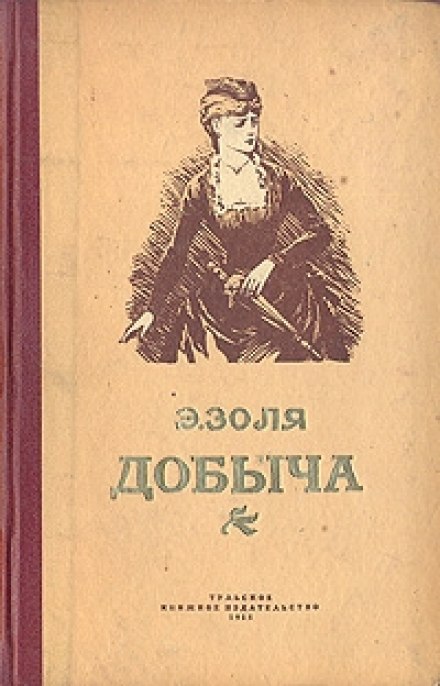
La Curée (The Kill)
12 hrs. 37 min.
A novel from the “Rougon-Macquart” series depicts one year in the life of the Second Empire: from the autumn of 1861 to the autumn of 1862. According to the writer, he wanted to immortalize “the ringing of gold, the rustling of millions, the loud orgies of the flesh,” “the bacchanalia of brawls” that characterized that era. His hero, Aristide, is driven by an all-consuming goal—to amass a fortune, snatch a portion from the common spoils; plans to remodel Paris open up wide space for his financial schemes. The love story of Aristide’s wife René for her stepson is presented with the impartiality and tragic force characteristic of the naturalist method. The novel’s impact on the public was such that the writer had to give explanations to the prosecutor of the Republic.
1.
The Fortune of the Rougons
(narrated by
Alexey Dyakov)
1.
The Fortune of the Rougons
(narrated by
Konstantin Dneprovsky)
1.
The Fortune of the Rougons
(narrated by
Elena Shemet)
2.
La Curée (The Kill)
2.
La Curée (The Kill)
(narrated by
Konstantin Dneprovsky)
3.
The Belly of Paris
(narrated by
Larisa Tretyakova)
3.
The Belly of Paris
(narrated by
Konstantin Dneprovsky)
3.
The Belly of Paris
(narrated by
Pavel Lomakin)
3.
The Belly of Paris
(narrated by
Vsevolod Kuznetsov)
4.
The Conquest of Plassans
(narrated by
Konstantin Dneprovsky)
5.
The Sin of Father Mouret
(narrated by
Arkady Bukhmin)
5.
The Sin of Father Mouret
(narrated by
Alina Ray)
5.
The Sin of Abbé Mouret
(narrated by
Konstantin Dneprovsky)
6.
His Excellency Eugene Rougon
(narrated by
Valery Tolkov)
7.
L'Assommoir
(narrated by
Veronika Oboyanka)
7.
The Trap
(narrated by
Margarita Ivanova)
8.
A Love Episode
(narrated by
Oleg Martyanov)
8.
A Love Episode
(narrated by
Natalya Frolova)
9.
Nana
(narrated by
Nikolay Orlovsky)
9.
Nana
(narrated by
Natalya Pervina)
9.
Nana
(narrated by
Irina Vorobyova)
10.
Pot Luck
(narrated by
Natalya Domeretskaya)
11.
The Ladies' Paradise
(narrated by
Olga Zyuzina)
11.
The Ladies' Paradise
(narrated by
Yuliya Tarkhova)
11.
The Ladies' Paradise
(narrated by
Veronika Oboyanka)
12.
The Joy of Life
(narrated by
Yuliya Tarkhova)
12.
The Joys of Life
(narrated by
Sergey Kazakov)
13.
Germinal
(narrated by
Yury Zaborovsky)
13.
Germinal
(narrated by
Natalya Pervina)
13.
Germinal
(narrated by
Konstantin Dneprovsky)
13.
Germinal
(narrated by
Arkady Bukhmin)
14.
The Masterpiece
(narrated by
Tatyana Telegina)
14.
The Masterpiece
(narrated by
Olga Andreeva)
14.
The Masterpiece
(narrated by
Ivan Zabelin)
15.
Earth
(narrated by
Valery Tolkov)
16.
The Dream
(narrated by
Irina Efremova, Olga Evdokimova)
17.
The Beast Within
(narrated by
Arkady Bukhmin)
17.
The Beast Within
(narrated by
Valery Tolkov)
18.
Money
(narrated by
Yury Zaborovsky)
18.
Money
(narrated by
Yaroslav Lukashev)
18.
Money
(narrated by
Olga Andreeva)
18.
Money
(narrated by
Konstantin Dneprovsky)
19.
The Debacle
(narrated by
Ilya Akintyev)
20.
Doctor Pascal
(narrated by
Vladislav Pogiba)
La Bête humaine
(narrated by
Roman Popov)
The Dream
(narrated by
Olga Evdokimova)
