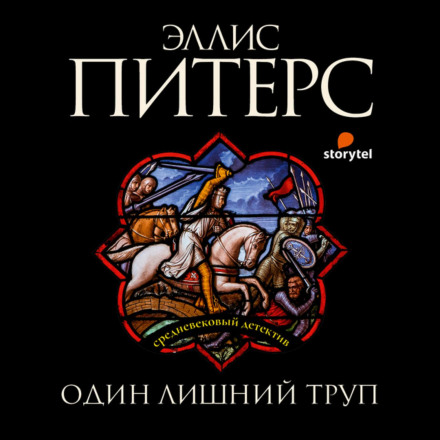
One Corpse Too Many
9 hrs. 51 min.
Language
Russian
Author
Ellis Peters
Author
Ellis Peters
Narrator
Kuryshev Sergey
Narrator
Kuryshev Sergey
Englishwoman Edith Pargeter was not a historian by training; however, under the pseudonym Ellis Peters, she created one of the most popular detective series, tightly linked to important historical events that shook 12th-century England and Wales, from where Pargeter’s ancestors were. "The Chronicles of Brother Cadfael" is also a political detective—because its action unfolds against the backdrop of the civil war between supporters of the rightful claimant to the throne, Queen Matilda, and King Stephen of Blois, who seized the throne by force—and classic, intimate stories that unfold among the residents of Shrewsbury and its surroundings, as well as among the inhabitants of the Benedictine abbey in Shrewsbury. It is here, late in life, that an old crusader—battle-scarred and hard as a fighter—retreated after adopting the name Brother Cadfael, deciding to live peacefully out his days, serving God and healing people. Yet instead, Cadfael, a subtle connoisseur of human souls and a man with rich life experience, constantly has to investigate the most various crimes and save not only bodies, but also souls…
King Stephen fights for the throne with Queen Matilda, and after a short and helpless resistance, in August 1138 the city of Shrewsbury surrenders to King Stephen’s mercy. But Stephen, notorious for his harsh temper, orders the execution of all the warrior defenders of Shrewsbury. The task falls to Brother Cadfael, the herbalist-monk of the Shrewsbury Benedictine abbey, to help with the burial of the executed defenders. Soon, however, Cadfael realizes: among these corpses there is one that is extra—someone who simply shouldn’t be there. He wasn’t executed—he was killed…
King Stephen fights for the throne with Queen Matilda, and after a short and helpless resistance, in August 1138 the city of Shrewsbury surrenders to King Stephen’s mercy. But Stephen, notorious for his harsh temper, orders the execution of all the warrior defenders of Shrewsbury. The task falls to Brother Cadfael, the herbalist-monk of the Shrewsbury Benedictine abbey, to help with the burial of the executed defenders. Soon, however, Cadfael realizes: among these corpses there is one that is extra—someone who simply shouldn’t be there. He wasn’t executed—he was killed…
1.
A Morbid Taste for Bones
(narrated by
Sergey Venzelev)
1.
A Morbid Taste for Bones
(narrated by
Kuryshev Sergey)
2.
One Corpse Too Many
(narrated by
Sergey Venzelev)
2.
One Corpse Too Many
3.
A Morbid Taste for Bones
(narrated by
Sergey Venzelev)
3.
The Monk's Hood
(narrated by
Kuryshev Sergey)
4.
The Potter's Field
(narrated by
Theophanu)
4.
Saint Peter's Fair
(narrated by
Alexey Bagdasarov)
5.
The Leper of Saint Giles
(narrated by
Theophanu)
5.
The Leper of Saint Giles
(narrated by
Vladimir Levasheov)
6.
The Virgin in Ice
(narrated by
Theophanu)
6.
The Virgin in the Ice
(narrated by
Grigory Dantsiger)
7.
A Sparrow Under the Holy Eaves
(narrated by
Theophanu)
7.
A Sparrow Under the Eaves
(narrated by
Kuryshev Sergey)
8.
The Devil's Novice
(narrated by
Theophanu)
8.
The Devil's Novice
(narrated by
Grigory Dantsiger)
9.
Ransom for a Dead Man
(narrated by
Theophanu)
9.
Dead Man's Ransom
(narrated by
Grigory Dantsiger)
10.
A Morbid Taste for Bones
(narrated by
Theophanu)
10.
The Raven in the Foregate
(narrated by
Alexey Bagdasarov)
11.
The Hermit of Eyton Forest
(narrated by
Theophanu)
11.
A Morbid Taste for Bones
(narrated by
Alexey Bagdasarov)
12.
The Raven in the Foregate
(narrated by
Theophanu)
12.
The Raven in the Foregate
12.
The Raven in the Foregate
(narrated by
Alexey Bagdasarov)
13.
The Rose Rent
(narrated by
Theophanu)
13.
The Rose Rent
14.
The Hermit of Eyton Forest
(narrated by
Theophanu)
14.
The Hermit of Eyton Forest
(narrated by
Alexey Bagdasarov)
15.
A Morbid Taste for Bones
(narrated by
Theophanu)
15.
A Monk's Hood
(narrated by
Vladimir Levasheov)
16.
The Heretic's Apprentice
(narrated by
Theophanu)
17.
The Potter's Field
(narrated by
Theophanu)
17.
Death on Potter's Field
(narrated by
Vladimir Levasheov)
18.
A Morbid Taste for Bones
(narrated by
Theophanu)
19.
A Morbid Taste for Bones
(narrated by
Theophanu)
19.
The Holy Thief
(narrated by
Vladimir Levasheov)
20.
The Confession of Brother Cadfael
(narrated by
Theophanu)
