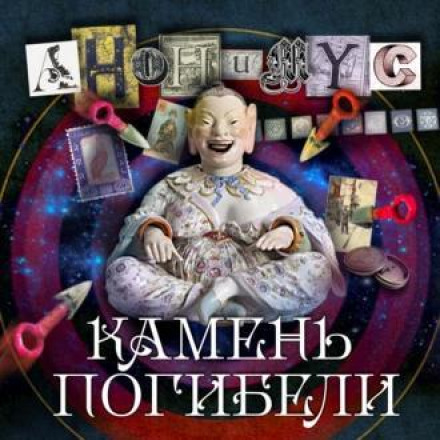
Stone of Perdition
7 hrs. 32 min.
Language
Russian
Author
ANONYMUS
Author
ANONYMUS
Narrator
Alexander Klyukvin
Narrator
Alexander Klyukvin
The owner of the largest and most expensive collection of Chinese porcelain in Russia loses a significant part of it—some of the exhibits are stolen right from his home. The senior investigator of the Investigative Committee, Orest Volin, takes on the investigation of this crime. He finds out that all the stolen items have one thing in common—not antiquity or value, but their small size. The only exception is a small porcelain Chinese trinket depicting the Buddha Maitreya. It is not only the largest of the stolen objects, but also the most ordinary, cheap one. So what might the thief need it for?
The chief research associate of the Hermitage tells Volin about the famous Chinese diamond "Tear of Buddha," which was gifted to Emperor Kangxi by Tibetan lamas. According to legend, the diamond possessed enormous magical power. Before the Xinhai Revolution in 1911, the stone was stolen from the Beijing monastery Yonghegong and, after some time, transferred abroad—specifically, it was carried out inside that same porcelain trinket that was stolen from the collection. After the theft, the diamond’s trail was lost. It’s unlikely the diamond stayed inside the porcelain Buddha for a hundred years. Most likely, it was taken out much earlier. But now someone has needed the former treasury. For whom, and for what?
Volin’s old acquaintance, historian of the special services General Vorontsov—who keeps Zagorsky’s diaries—tells Volin that one of the diaries precisely describes the story of the diamond "Tear of Buddha" and may be able to help with the investigation. Volin takes up the diary, which narrates events occurring in China and Tibet in 1914.
The chief research associate of the Hermitage tells Volin about the famous Chinese diamond "Tear of Buddha," which was gifted to Emperor Kangxi by Tibetan lamas. According to legend, the diamond possessed enormous magical power. Before the Xinhai Revolution in 1911, the stone was stolen from the Beijing monastery Yonghegong and, after some time, transferred abroad—specifically, it was carried out inside that same porcelain trinket that was stolen from the collection. After the theft, the diamond’s trail was lost. It’s unlikely the diamond stayed inside the porcelain Buddha for a hundred years. Most likely, it was taken out much earlier. But now someone has needed the former treasury. For whom, and for what?
Volin’s old acquaintance, historian of the special services General Vorontsov—who keeps Zagorsky’s diaries—tells Volin that one of the diaries precisely describes the story of the diamond "Tear of Buddha" and may be able to help with the investigation. Volin takes up the diary, which narrates events occurring in China and Tibet in 1914.
1.
The Court Councillor (The Case of Zeli-Sultan)
(narrated by
Alexander Klyukvin)
2.
The Secret Diary of Mikhail Bulgakov
(narrated by
Alexander Klyukvin)
3.
Stone of Perdition
4.
ANONYMOUS
(narrated by
Alexander Klyukvin)
5.
The Case of the Black Dervishes
(narrated by
Alexander Klyukvin)
6.
The Case of Two Felixes
(narrated by
Alexander Klyukvin)
7.
Chronicles of the Underworld
(narrated by
Alexander Klyukvin)
8.
The Case of the Heir Tsesarevich
(narrated by
Alexander Klyukvin)
9.
The Death of Saturn
(narrated by
Alexander Klyukvin)
10.
Treasures of the Khan's Headquarters
(narrated by
Alexander Klyukvin)
11.
The Savva Morozov Case
(narrated by
Alexander Klyukvin)
12.
The Case of the Defeated Brontosaurus
(narrated by
Alexander Klyukvin)
13.
The Case of the God Plutos
(narrated by
Alexander Klyukvin)
14.
The Schemer, or The Golden Fleece of Fate
(narrated by
Alexander Klyukvin)
15.
Poor Liza
(narrated by
Alexander Klyukvin)
16.
Cairo Opening. Notes from the Blue Notebook
(narrated by
Alexander Klyukvin)
17.
California on the Amur
(narrated by
Alexander Klyukvin)
18.
V.V. A Notebook with Doodles in the Margins
(narrated by
Alexander Klyukvin)
