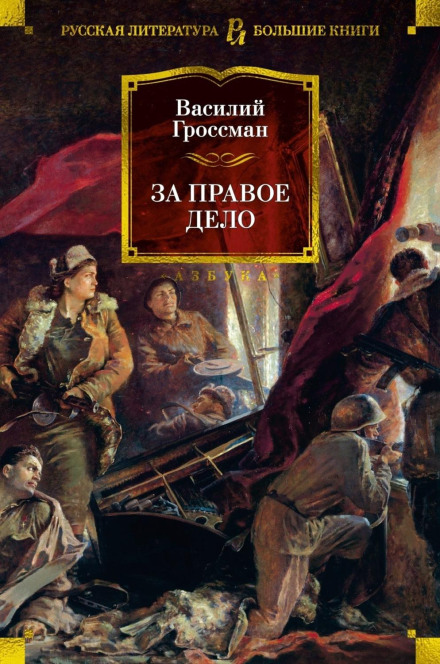
For a Just Cause
37 hrs. 3 min.
Language
Russian
Author
Vasily Grossman
Author
Vasily Grossman
Narrator
Igor Taradaykin
Narrator
Igor Taradaykin
The first part of Vasily Grossman’s Stalingrad diptych—known as “For a Just Cause” and written between 1943 and 1952 (published in 1952)—precedes the more popular novel “Life and Fate” (written between 1950 and 1959, published in 1980), which brought the author worldwide fame. Based on Grossman’s personal experience as a war correspondent for the newspaper “Krasnaya Zvezda,” who directly took part in battles along the Stalingrad front lines, the book faced harsh criticism from party authorities, leading to a campaign against the writer and complicating the publication of the second novel. Today, this novel, reflecting the suffering and losses of the war’s initial period, stands alongside outstanding works of Russian literature that convey the “trench truth” of the great battle—such as “Days and Nights” and “The Living and the Dead” by Konstantin Simonov, “In the Trenches of Stalingrad” by Viktor Nekrasov, and “War and Hot Snow” (Hot Snow) by Yuri Bondarev. Grossman wrote in the spirit of an epic tradition akin to Leo Tolstoy—where, behind the fates of many people, from ordinary soldiers and workers to scholars and commanders, one can feel the powerful breath of Great History, which changed millions of lives.
