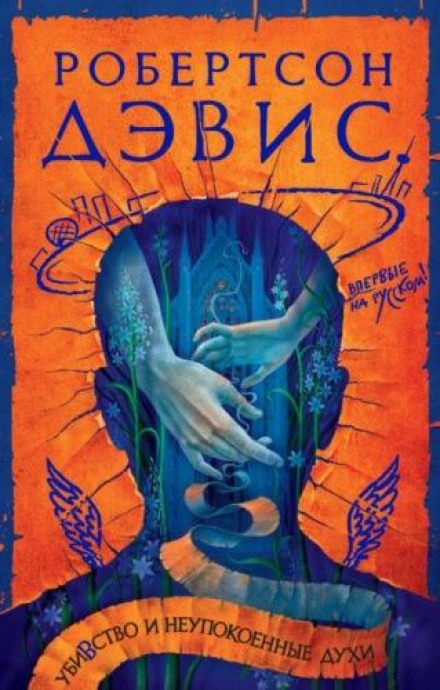
Murder and Walking Spirits
13 hrs. 42 min.
Language
Russian
Author
Robertson Davies
Author
Robertson Davies
Narrator
Sergey Kirsanov
Narrator
Sergey Kirsanov
Robertson Davies is Canada’s greatest writer, a master of plot intricacies and riddles, one of the best storytellers in English-language literature. His “Deptford Trilogy” (“The Fifth Person,” “Manticore,” “What’s in the Bones”) was considered the beginning of a “Canadian breakthrough” in world literature. He made it onto the Booker shortlist (with “What’s in the Bones” from the Cornish Trilogy), received Canada’s top literary honor—the Governor General’s Award—and toward the end of his life almost received the Nobel Prize; yet even remaining among the candidates forever, he earned the status of a world classic.
As the English satirist of the seventeenth century Samuel Butler wrote: “Printers find from experience that one Murder costs two Monsters and no fewer than three Unbodied Ghosts.” “But if you add Unbodied Ghosts to Murder, no other Tale will compare.” And the hero of this novel will have to test that wise thought for himself—because in the very first lines, Connor Gilmartin, the culture editor of the newspaper “The Voice,” becomes an unbodied ghost: he catches his wife in bed with a lover and receives from him (his subordinate, a theater critic) a club blow to the head. Then some unknown force leads Connor’s spirit first “into the eighteenth century, which, by the scale of all human history, was practically yesterday”—and it doesn’t stop there; and now “the signature Davies time-machine unfolds vivid scenes of the past, full of wonder and mischief” (The Los Angeles Times Book Review). But why does Connor see scenes from the lives of his own ancestors, and what does it have to do with a church called “The Immanuel Swedenborg Society, of Learned and Prophetic Nature”?
As the English satirist of the seventeenth century Samuel Butler wrote: “Printers find from experience that one Murder costs two Monsters and no fewer than three Unbodied Ghosts.” “But if you add Unbodied Ghosts to Murder, no other Tale will compare.” And the hero of this novel will have to test that wise thought for himself—because in the very first lines, Connor Gilmartin, the culture editor of the newspaper “The Voice,” becomes an unbodied ghost: he catches his wife in bed with a lover and receives from him (his subordinate, a theater critic) a club blow to the head. Then some unknown force leads Connor’s spirit first “into the eighteenth century, which, by the scale of all human history, was practically yesterday”—and it doesn’t stop there; and now “the signature Davies time-machine unfolds vivid scenes of the past, full of wonder and mischief” (The Los Angeles Times Book Review). But why does Connor see scenes from the lives of his own ancestors, and what does it have to do with a church called “The Immanuel Swedenborg Society, of Learned and Prophetic Nature”?
100%
02:29
001
04:43
002
00:47
003
05:45
004
01:50
005
08:53
006
03:23
007
05:32
008
01:08
009
12:15
010
11:03
011
06:00
012
04:02
013
07:53
014
09:37
015
00:46
016
05:22
017
05:09
018
10:20
019
11:25
020
06:16
021
05:06
022
11:06
023
03:36
024
02:43
025
03:33
026
02:15
027
07:28
028
04:07
029
02:07
030
06:35
031
05:20
032
13:15
033
06:38
034
01:47
035
01:38
036
03:29
037
07:38
038
09:05
039
12:42
040
07:24
041
02:53
042
17:34
043
02:06
044
09:43
045
13:50
046
04:36
047
03:09
048
05:31
049
08:29
050
07:16
051
11:40
052
05:22
053
04:08
054
06:32
055
05:16
056
01:10
057
06:08
058
15:19
059
09:02
060
15:38
061
01:04
062
10:11
063
14:09
064
06:17
065
02:37
066
06:10
067
10:46
068
01:55
069
05:48
070
08:58
071
03:01
072
06:11
073
05:40
074
08:44
075
05:20
076
01:41
077
01:39
078
11:16
079
10:40
080
17:45
081
03:09
082
28:28
083
33:31
084
06:25
085
06:09
086
05:46
087
03:46
088
04:39
089
05:43
090
05:13
091
04:57
092
14:06
093
04:26
094
14:43
095
20:56
096
07:53
097
09:25
098
08:30
099
12:40
100
00:16
101
05:11
102
05:17
103
07:20
104
09:18
105
04:44
106
20:33
107
09:21
108
18:42
109
03:51
110
