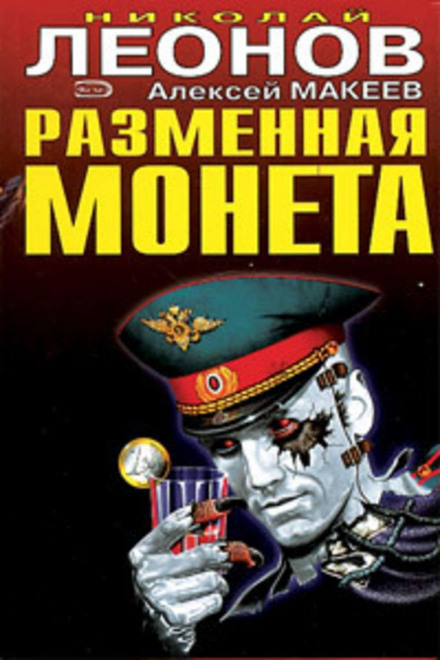
Dilemma
7 hrs. 56 min.
“After all,” Gurov said with satisfaction, “we’re becoming more and more like Europe—despite all our shortcomings.” “Our particular shortcomings,” Kryachko corrected him. “Untypical ones, and easy to eliminate through routine procedures…”
The square on the other side of the station turned out to be just as nice—swept clean, surrounded along the perimeter by tall poplars with golden-tipped tops. Beyond it stretched a panorama of a sun-drenched city: straight streets decorated with greenery, light rectangular blocks of five-story buildings, and in places structures even higher—by local standards, almost skyscrapers. In spite of the early hour, or maybe precisely because of it, the square was full of cars. There were many new-model imports shining with nickel and lacquer. Against them, Kryachko’s dusty, beaten-up “Mercedes” looked like an exhibit from a fair titled “At the Dawn of the Automobile Age.”
Smiling to himself, Gurov said as much to his friend. And without the slightest embarrassment, Kryachko replied: “That’s the advantage—it's visible from a distance. You don’t have to look for it.” “Just watch—someone really will find it!” Gurov joked, not suspecting how close he was to the truth.
Barely had they approached the car and Kryachko started to reach for the keys when—out of nowhere—a young but very stern man in a police lieutenant’s uniform appeared in front of them. Casually saluting, with a kind of vicious irony, he asked:
The square on the other side of the station turned out to be just as nice—swept clean, surrounded along the perimeter by tall poplars with golden-tipped tops. Beyond it stretched a panorama of a sun-drenched city: straight streets decorated with greenery, light rectangular blocks of five-story buildings, and in places structures even higher—by local standards, almost skyscrapers. In spite of the early hour, or maybe precisely because of it, the square was full of cars. There were many new-model imports shining with nickel and lacquer. Against them, Kryachko’s dusty, beaten-up “Mercedes” looked like an exhibit from a fair titled “At the Dawn of the Automobile Age.”
Smiling to himself, Gurov said as much to his friend. And without the slightest embarrassment, Kryachko replied: “That’s the advantage—it's visible from a distance. You don’t have to look for it.” “Just watch—someone really will find it!” Gurov joked, not suspecting how close he was to the truth.
Barely had they approached the car and Kryachko started to reach for the keys when—out of nowhere—a young but very stern man in a police lieutenant’s uniform appeared in front of them. Casually saluting, with a kind of vicious irony, he asked:
The God of the Fiery Lagoon
(narrated by
Margarita Lyalina)
Purgatory for Gurov
(narrated by
Svyatoy)
The Deputy's Order
(narrated by
Alexander Yegorov)
Dilemma
Dollar Equivalent
(narrated by
Svyatoy)
Echo of Default
(narrated by
Alexander Yegorov)
Hot Dance of Death
(narrated by
Pavel Krab)
Grandmaster of Detection
(narrated by
Michel)
Intimate Bullets
(narrated by
Boris Gorsky)
Intimate Bullets
(narrated by
Boris Gorsky)
Stones of Discord
(narrated by
Kirill Fedorov)
Captain of the Pirate Brig
(narrated by
Michel)
Long-Distance Hearse
(narrated by
Yury Mironenko)
The King Beats the Queen
(narrated by
Dima_ mus)
Extreme Measures
(narrated by
Michel)
The Kremlin Ace
(narrated by
Olga Alexandrova)
The Detective's Personal File
(narrated by
Gennadiy Vorobyev)
The Seasoned Cop
(narrated by
Sergey Trushin)
Bear's Corner
(narrated by
Igor Golubev)
The Trifles of Detection
(narrated by
Ksenia Shulga)
Dead Chain
(narrated by
Andrey Trommelman)
The Bullet Names the Meeting Place
(narrated by
Sergey Trushin)
We Are from the Russian Police
(narrated by
Alina Suratova)
Werewolf, Take Off Your Epaulettes!
(narrated by
Ilya Nezhdanov)
Hunting for a Macho
(narrated by
Mikhail Ivanov)
Dangerous Elections
(narrated by
Olga Alexandrova)
A Sharply Honed Strike
(narrated by
Sergey Trushin)
A Couple of Lives in Reserve
Five Minutes to Reckoning
(narrated by
Michel)
The Detective Is Suspected
(narrated by
Igor Yashchenko)
Nobody Believes the Colonel
(narrated by
Virginia Rockville)
An Outside Party
(narrated by
Mikhail Obukhov)
The Lost Relative
(narrated by
Sergey Ermilov)
The Past Is Not for Sale
(narrated by
Tatyana Slepokurova)
Bullet Ellipsis
(narrated by
Horhe)
Hands Up, General!
(narrated by
Svyatoy)
The Werewolf's Trail
(narrated by
Dmitry Khaimov)
The Deadly Call
(narrated by
Alexey Voskoboynikov)
The Snow Killer
(narrated by
Sergey Trushin)
Midnight Will Judge
(narrated by
Boris Gorsky)
The Minister's Son
(narrated by
Svyatoy)
A Detective Makes a Mistake Only Once
(narrated by
Romanov Arkadyevich)
Taiga Police
(narrated by
Igor Yashchenko)
It's Hard to Be a Thief
(narrated by
Oleg Novikov)
Murder on Schedule
(narrated by
Michel)
A Clue from the Other World
(narrated by
Matrona Kulikova)
Evidence Burns Blue
(narrated by
Svyatoy)
Beat Death to It
(narrated by
Gennadiy Vorobyev)
A Virtuoso Heist
(narrated by
Michel)
Backstage Intrigues
(narrated by
Svyatoy)
Life on the Edge
(narrated by
Pavel Mikheev)
0.
Nine Millimeters Decide Everything
(narrated by
Svyatoy)
0.
The Neophyte's Mistake
(narrated by
Mikhail Obukhov)
0.
The First Target
(narrated by
Tatyana Slepokurova)
0.
A Habit for Darkness
(narrated by
Evgeny Poltavsky)
100%
34:16
Дилемма - 0 -
29:00
Дилемма - 1 -
29:18
Дилемма - 2 -
35:04
Дилемма - 3 -
34:57
Дилемма - 4 -
35:53
Дилемма - 5 -
38:33
Дилемма - 6 -
36:27
Дилемма - 7 -
27:57
Дилемма - 8 -
35:33
Дилемма - 9 -
35:58
Дилемма - 10 -
25:02
Дилемма - 11 -
25:32
Дилемма - 12 -
24:28
Дилемма - 13 -
28:25
Дилемма - 14 -
