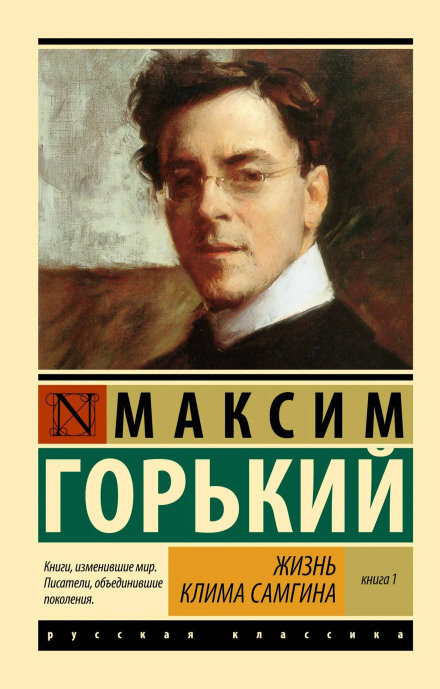
The Life of Klim Samgin. Part 1
22 hrs. 32 min.
Language
Russian
Author
Maxim Gorky
Author
Maxim Gorky
Narrator
Anton Platonov
Narrator
Anton Platonov
Description
“I write something ‘farewell’-like—a kind of a chronicle novel of forty years of Russian life,” M. Gorky wrote while working on “The Life of Klim Samgin,” which at first he called “The Story of Empty Life.” This novel revealed a new Gorky to the reader, with a different manner of writing; it surprised with the breadth of political and social events it covered, with masterful depictions of everyday life, and with subtle psychological insight. A novel about people who, in the author’s words, “invented a life for themselves,” “invented themselves”—and a novel about Russia and the terrible tragedy that befell the country: “I want to portray all our ‘Khodyankas,’ all the hecatombs we offered to history during the years from the end of the 1880s up to the 18th.”
100%
59:37
Жизнь Клима Самгина. Часть 1 01
44:18
Жизнь Клима Самгина. Часть 1 02
36:42
Жизнь Клима Самгина. Часть 1 03
51:55
Жизнь Клима Самгина. Часть 1 04
57:46
Жизнь Клима Самгина. Часть 1 05
54:56
Жизнь Клима Самгина. Часть 1 06
48:33
Жизнь Клима Самгина. Часть 1 07
51:53
Жизнь Клима Самгина. Часть 1 08
40:37
Жизнь Клима Самгина. Часть 1 09
21:12
Жизнь Клима Самгина. Часть 1 10
55:41
Жизнь Клима Самгина. Часть 1 11
58:56
Жизнь Клима Самгина. Часть 1 12
54:17
Жизнь Клима Самгина. Часть 1 13
25:36
Жизнь Клима Самгина. Часть 1 14
1:00:00
Жизнь Клима Самгина. Часть 1 15
58:38
Жизнь Клима Самгина. Часть 1 16
59:10
Жизнь Клима Самгина. Часть 1 17
59:26
Жизнь Клима Самгина. Часть 1 18
59:28
Жизнь Клима Самгина. Часть 1 19
13:25
Жизнь Клима Самгина. Часть 1 20
55:30
Жизнь Клима Самгина. Часть 1 21
57:52
Жизнь Клима Самгина. Часть 1 22
57:31
Жизнь Клима Самгина. Часть 1 23
59:02
Жизнь Клима Самгина. Часть 1 24
55:43
Жизнь Клима Самгина. Часть 1 25
55:56
Жизнь Клима Самгина. Часть 1 26
39:00
Жизнь Клима Самгина. Часть 1 27
