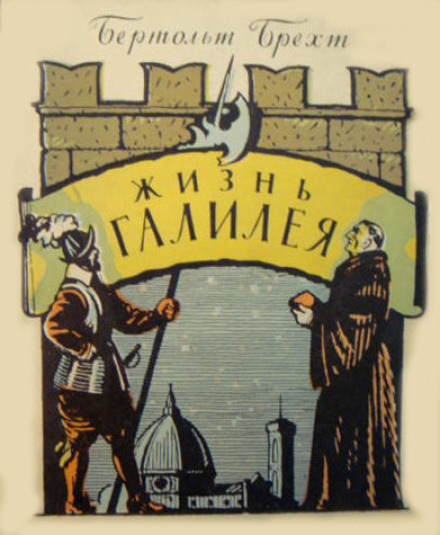
Life of Galileo
2 hrs. 40 min.
Language
Russian
Author
Bertolt Brecht
Author
Bertolt Brecht
Narrator
Theatre Actors
Narrator
Theatre Actors
Description
What is “The Life of Galileo”? First of all, it is a wild director’s fantasy. Much was invented—or rather, seen—right in Brecht’s play itself, by Y. Lyubimov. On the sides of the stage there are choirs—boys and fat monks. The boys’ choir embodies truth, harmony, and a striving toward the future. The monks’ choir is a sober thought of ordinary people, the cunning of bourgeois; the mind of cowards. And the conflict is not only in the words of their songs, but in their very voices—“heavenly” voices of children and rough, earthly voices of the monks. In the clash of choirs, the purpose and meaning of the tragedy about Galileo become clearer.
Both the monks and the children, the opportunism of the ordinary person, and the childlike faith in truth, the power of science—these are one and the same character, one and the same type of person—Galileo. In Galileo, these two aspects of one enormous soul struggle with each other, and their constant, terrible discord is visible. It is not called “Galileo,” after the developed and unchanging hero; it is called “The Life of Galileo.” We deal not with a completed, immutable character, but with a person’s life—its rises and falls, discoveries and retreats, its belief and painful self-analysis. What will win in a person? That is what the performance asks us.
Both the monks and the children, the opportunism of the ordinary person, and the childlike faith in truth, the power of science—these are one and the same character, one and the same type of person—Galileo. In Galileo, these two aspects of one enormous soul struggle with each other, and their constant, terrible discord is visible. It is not called “Galileo,” after the developed and unchanging hero; it is called “The Life of Galileo.” We deal not with a completed, immutable character, but with a person’s life—its rises and falls, discoveries and retreats, its belief and painful self-analysis. What will win in a person? That is what the performance asks us.
100%
45:19
01_0186_01
47:12
01_0186_02
45:00
01_0186_03
23:14
01_0186_04
