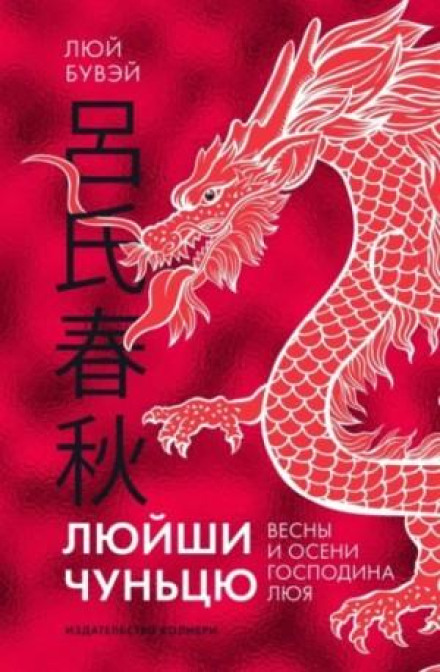
The Spring and Autumn Annals of Master Lü
21 hrs. 15 min.
Language
Russian
Author
Lü Buwei
Author
Lü Buwei
Narrator
Stanislav Ivanov
Narrator
Stanislav Ivanov
Description
“Lüshi Chunqiu” (Spring and Autumn Annals of Mr. Lü) is a Chinese classic. It was written in the 3rd century BCE by Lü Buwei, chancellor of the Qin state.
This book can, without exaggeration, be called a manual for perfect governance. It contains all the wisdom of Ancient China from the earliest reigns. Some sources say that when the book was finished, it was displayed for everyone to see and a large reward was offered to anyone who could skilfully add something to it or find something superfluous. No one earned the prize.
In this treatise, based on numerous historical examples, the causes and effects are revealed; it tells about the measure of good and evil, about how important it is to follow the Dao—and about the fate of those who do not value virtue.
This book combines knowledge about state management, morality, natural laws, and human relationships. It brings together historical chronicles, aphorisms, and wise teachings, forming a holistic picture of how ancient Chinese people understood harmony in society and in life.
The book addresses fundamental foundations of human life that remain unchanged since the appearance of humanity. Throughout history, only the external setting has changed. Therefore, the wisdom set out in the book remains relevant to this day.
This book can, without exaggeration, be called a manual for perfect governance. It contains all the wisdom of Ancient China from the earliest reigns. Some sources say that when the book was finished, it was displayed for everyone to see and a large reward was offered to anyone who could skilfully add something to it or find something superfluous. No one earned the prize.
In this treatise, based on numerous historical examples, the causes and effects are revealed; it tells about the measure of good and evil, about how important it is to follow the Dao—and about the fate of those who do not value virtue.
This book combines knowledge about state management, morality, natural laws, and human relationships. It brings together historical chronicles, aphorisms, and wise teachings, forming a holistic picture of how ancient Chinese people understood harmony in society and in life.
The book addresses fundamental foundations of human life that remain unchanged since the appearance of humanity. Throughout history, only the external setting has changed. Therefore, the wisdom set out in the book remains relevant to this day.
100%
02:25
1
07:31
2
06:18
3
05:49
4
05:51
5
05:10
6
05:29
7
09:22
8
07:00
9
06:39
10
04:56
11
06:25
12
06:21
13
08:18
14
07:34
15
08:29
16
05:59
17
07:25
18
08:42
19
07:25
20
05:14
21
05:28
22
07:02
23
05:49
24
07:31
25
10:58
26
05:46
27
05:29
28
06:22
29
08:05
30
08:33
31
05:37
32
07:18
33
05:20
34
06:46
35
06:22
36
06:37
37
07:39
38
05:50
39
06:25
40
05:28
41
06:16
42
07:56
43
05:57
44
05:21
45
05:57
46
06:59
47
07:47
48
08:23
49
05:31
50
05:39
51
06:25
52
06:34
53
07:56
54
05:33
55
07:30
56
05:48
57
05:48
58
05:28
59
05:43
60
08:12
61
04:24
62
03:19
63
09:20
64
06:14
65
06:35
66
07:52
67
06:29
68
05:16
69
10:46
70
12:30
71
08:26
72
09:12
73
09:55
74
08:29
75
10:12
76
10:25
77
11:35
78
11:17
79
10:48
80
10:04
81
08:48
82
08:51
83
08:56
84
09:58
85
11:50
86
12:06
87
09:40
88
08:59
89
11:04
90
10:28
91
06:14
92
07:45
93
11:43
94
10:55
95
11:22
96
09:59
97
14:21
98
13:06
99
02:42
100
08:35
101
10:16
102
08:14
103
10:43
104
09:07
105
08:04
106
11:35
107
12:02
108
07:32
109
11:59
110
10:44
111
12:39
112
10:36
113
10:20
114
10:23
115
10:40
116
10:53
117
10:44
118
08:12
119
10:08
120
10:24
121
10:40
122
11:45
123
10:46
124
09:34
125
09:25
126
03:39
127
05:26
128
05:43
129
07:36
130
04:53
131
09:14
132
06:32
133
06:30
134
06:02
135
07:36
136
07:17
137
10:02
138
06:03
139
06:49
140
06:00
141
07:58
142
05:47
143
08:50
144
06:40
145
05:39
146
06:34
147
08:10
148
07:19
149
07:33
150
06:28
151
05:41
152
09:31
153
07:06
154
05:52
155
08:38
156
06:43
157
09:08
158
06:13
159
07:12
160
07:20
161
