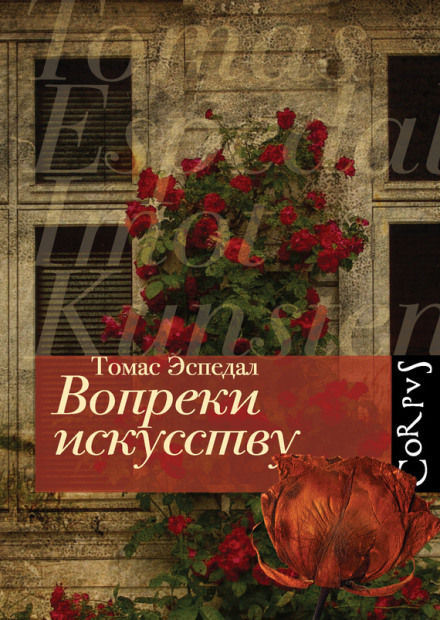
Against Art
4 hrs. 25 min.
Language
Russian
Author
Tomas Espedal
Author
Tomas Espedal
Narrator
Ilya Volkov
Narrator
Ilya Volkov
Description
Thomas Espedal writes about himself and his life in a piercingly honest and straightforward way: he tries to set up a household in an old, ramshackle cottage on an island—his former wife has died, and he has come here to raise their shared daughter. A writer, he turns grief into words, and does it in the Proustian manner, virtuously drawing story after story out like a silken thread from a cocoon. And step by step we learn a great deal about his life: how he wrote his first book because he was firmly decided to become a writer; how he buried his mother, the heiress of a noble Bergen family, whom he always felt slightly ashamed of because he and his father were “not good enough” for her, while another of his grandmothers could not forget until death that she was driven out of the house by a stepmother; how he is afraid of the neighbors’ dogs and how he adores walks. The stories cling to one another, the novel is peopled with people, but the tone never changes—these are very bright, ironic, brilliantly written observations and reflections of a person about life, where the old traditions of confessional prose are clearly influenced by the modern openness and unforced ease of internet diaries. Espedal’s books are considered canonical for the genre of “new diary prose.” They have been translated into all major languages of the world and in every country win awards and enthusiastic reader reviews.
100%
00:24
00-vopreki-iskusstvu
27:01
01-vopreki-iskusstvu
27:11
02-vopreki-iskusstvu
27:10
03-vopreki-iskusstvu
27:07
04-vopreki-iskusstvu
27:39
05-vopreki-iskusstvu
25:50
06-vopreki-iskusstvu
25:46
07-vopreki-iskusstvu
25:45
08-vopreki-iskusstvu
25:50
09-vopreki-iskusstvu
26:00
10-vopreki-iskusstvu
