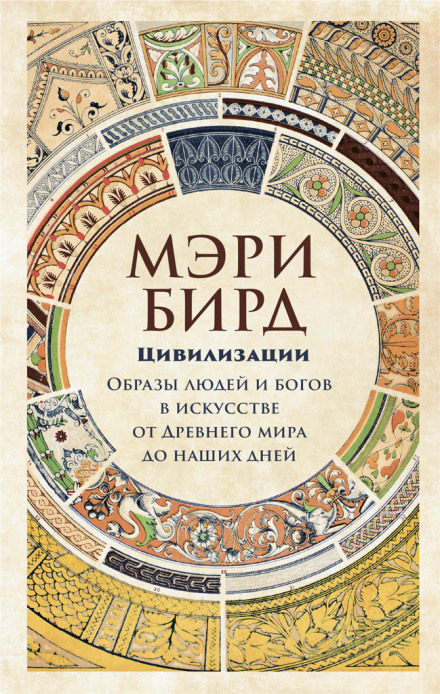
Civilisations
2 hrs. 15 min.
Language
Russian
Author
Mary Beard
Author
Mary Beard
Narrator
Yulia Yablonskaya
Narrator
Yulia Yablonskaya
Description
The idea of “civilization” has always been discussed. At the heart of these debates lies a major question: how did our ancestors—from ancient times to the present day—depict themselves and others, both people and gods? The outstanding historian Mary Beard examines how art was formed and created by people who made it. How did we look at these images? Why were they sometimes so controversial? In the first part, she explores how the human figure was portrayed in one of the earliest works of art in the world—from giant stone heads carved by Olmecs of Central America to statues and clay objects of the ancient Greeks, and to the terracotta army of China’s first emperor. She explains how one specific version of representing the human body—tracing back to the ancient world—still affects (and sometimes distorts) how people in the West see their own culture and the cultures of others. Throughout this story, she is interested not only in artists who created images, but also in those who used them, viewed them, and interpreted them. In other words: how do we look? In the second part, Mary Beard turns to the relationship between art and religion. For centuries, religion inspired art—from the Hindu temple in Angkor Wat to the Christian mosaics of Ravenna and the exquisite calligraphy of Islamic mosques.
100%
07:48
00_00_Vvedenie- Tsivilizatsiya i varvarstvo
04:11
01_01_Kak my smotrim! Prolog- Golovy i tela
06:56
01_02_Poyuschaya statuya
08:04
01_03_Grecheskie tela
07:33
01_04_Otobrazhenie poteri- Iz Gretsii v Rim
05:45
01_05_Kitayskiy imperator i sila izobrazheniy
06:16
01_06_Vozvelichivaya faraona
11:11
01_07_Grecheskiy kulturnyy perevorot
06:08
01_08_Sled na bedre
08:42
01_09_Nasledie kulturnogo perevorota
04:03
01_10_Olmekskiy borets
04:51
02_01_Vzglyad very. Prolog- Voshod nad Angkor-Vat
09:24
02_02_Kto smotrit! «Naskalnoe iskusstvo» v Adzhante
04:52
02_03_Kem ili chem byl Iisus!
05:10
02_04_Vopros tscheslaviya
04:31
02_05_Zhivaya statuya!
07:36
02_06_Iskusstvo Islama
04:33
02_07_Bibleyskie istorii
07:25
02_08_Sledy bitv
03:34
02_09_Induistskie izobrazheniya i islam
06:44
02_10_Vera v tsivilizatsiyu
