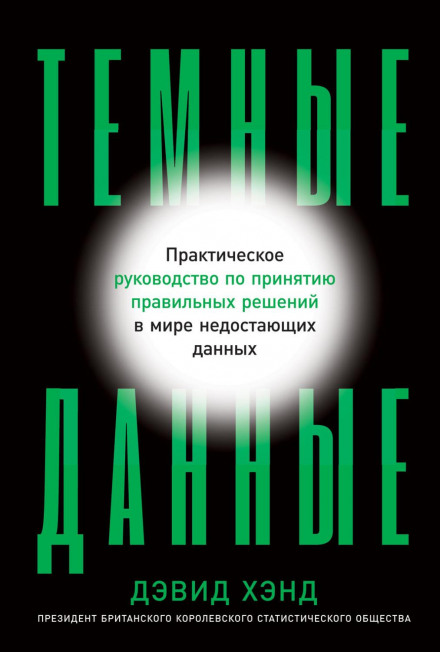
Dark Data: Why What You Don't Know Matters
10 hrs. 47 min.
Language
Russian
Author
David Hand
Author
David Hand
Narrator
Vadim Chernobel'sky
Narrator
Vadim Chernobel'sky
Description
Humanity has learned to collect, process, and use huge data sets in science, business, and everyday life. But what should we do with the data we don’t have? Is it acceptable to ignore what we don’t notice? A British statistician David Hand believes that this is at least short-sighted—and sometimes extremely dangerous. In his book, he identifies 15 types of data that influence our decisions and actions but remain in the shadows. For example, he discusses how distress signals might be accounted for if people in poor neighborhoods had smartphones; medical research results that are deliberately withheld or accidentally distorted; and data that become “dark” due to bad selection criteria for inclusion in samples. Hand also explains what measures can smooth out the effects of dark data—and how it can be turned to your advantage.
