Land of Crimson Clouds
11 hrs. 54 min.
Language
Russian
Author
Arkady Strugatsky
Author
Boris Strugatsky
Narrator
Vladimir Maslakov
Narrator
Vladimir Maslakov
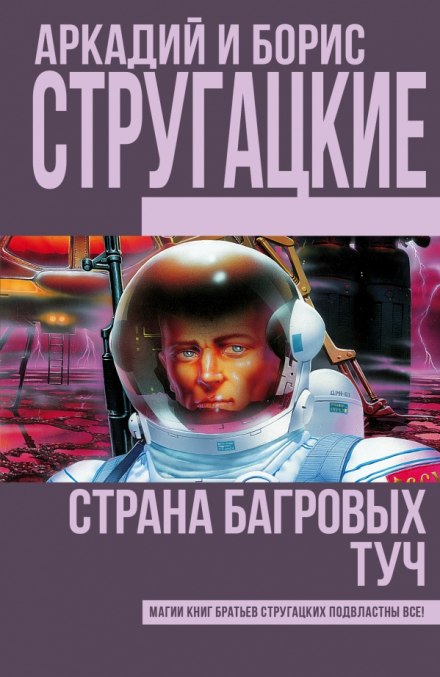
“The Crimson Cloud Country” (1959) is the first major work by the authors, from which their fame in science fiction began. It is a classic example of science-and-technology, popularizing science fiction—permeated with the communist ideology that was inevitable for that era.
And yet, rereading the novella today, we cannot help but see how the Strugatskys’ mighty talent breaks through—clearly visible—through genre clichés and propagandistic fluff: their ability to craft unforgettable plots, their living, distinctive language, and vivid, rounded images of heroes.
On Venus, an extraordinarily rich deposit of ores is discovered—ores that are extracted on Earth with great difficulty and huge expense. The deposit was named “Uranium Golconda.” Attempts to land research probes on Venus yielded nothing. After some time, the signal stopped coming from the stations. Attempts to land on the planet using old-type rockets ended with the death of the pilots.
For a Venus assault, Soviet designers create a new type of interplanetary ship—a photon rocket called “Hius.” Reconnaissance of the mysterious “Uranium Golconda” and the setup of the first rocket airfield on its shores are entrusted to a selected team of six brave interplanetary travelers.
And yet, rereading the novella today, we cannot help but see how the Strugatskys’ mighty talent breaks through—clearly visible—through genre clichés and propagandistic fluff: their ability to craft unforgettable plots, their living, distinctive language, and vivid, rounded images of heroes.
On Venus, an extraordinarily rich deposit of ores is discovered—ores that are extracted on Earth with great difficulty and huge expense. The deposit was named “Uranium Golconda.” Attempts to land research probes on Venus yielded nothing. After some time, the signal stopped coming from the stations. Attempts to land on the planet using old-type rockets ended with the death of the pilots.
For a Venus assault, Soviet designers create a new type of interplanetary ship—a photon rocket called “Hius.” Reconnaissance of the mysterious “Uranium Golconda” and the setup of the first rocket airfield on its shores are entrusted to a selected team of six brave interplanetary travelers.
