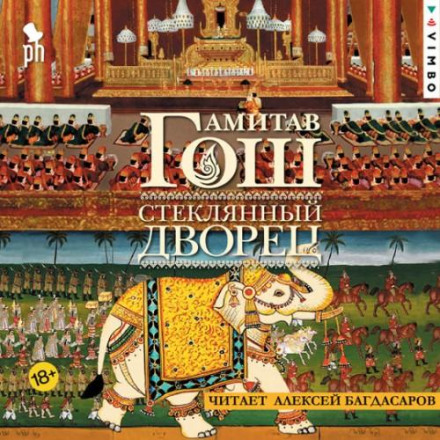
The Glass Palace
22 hrs. 22 min.
Language
Russian
Author
Amitav Ghosh
Author
Amitav Ghosh
Narrator
Alexey Bagdasarov
Narrator
Alexey Bagdasarov
Description
“The Glass Palace” is a story that grips you and doesn’t let go. In it, war lives alongside the quiet of a child’s room, and the fate of an empire intertwines with the light touches of hands. Amitav Ghosh wrote a novel where the personal and the historical have fused so closely that you can no longer tell them apart.
Everything begins with a thunderous crash—a strange and frightening sound heard over Mandalay in November 1885. This isn’t just the noise of a cannon. It’s a herald of change.
Rajkumar is an orphan—a boy without a past. He’s only eleven. He works in an eatery and every day watches the glittering lights of a palace shimmering across the moat. He is stubborn and clever, and he desperately wants to break out into a world where his life will mean something more. Dolly, Rajkumar’s peer, lives in a completely different world. She serves the Queen of Burma and lives in the Glass Palace, amid gold and silk. Dolly is quiet and obedient, almost invisible—but her eyes see everything: loyalty and betrayals, pain and the fall of the empire.
After the royal family is overthrown by British troops, Dolly’s and Rajkumar’s lives intersect and change forever. From that moment, a journey begins that lasts a century—from colonial Burma to independent Myanmar, from fields of teak trees to universities, from royal chambers to jungles, through love and war, losses and new hopes.
Listen to a masterful performance of a family saga spanning an entire era and a vast region by Aleksei Bagdasarov.
Press about the book:
“Doctor Zhivago for the Far East”—The Independent
“The fates of Rajkumar and Dolly will be directly tied to the fate of India, Burma, and Malaysia. Readers will find a weaving of destinies, different ranks and classes of heroes, vivid details, and historical authenticity,” — Anastasia Skorondaeva, “Rossiyskaya gazeta”
“Ghosh keeps rolling out and rolling out his multicolored historical canvas—can’t look away!—and even when World War II comes to Burma with Japanese tanks, even when Indian officers in the British army start asking why they’re dying for someone else’s flags, Ghosh’s text does not turn into either a manifesto or a political statement—it remains a big novel,” — Natalya Lomykina
Everything begins with a thunderous crash—a strange and frightening sound heard over Mandalay in November 1885. This isn’t just the noise of a cannon. It’s a herald of change.
Rajkumar is an orphan—a boy without a past. He’s only eleven. He works in an eatery and every day watches the glittering lights of a palace shimmering across the moat. He is stubborn and clever, and he desperately wants to break out into a world where his life will mean something more. Dolly, Rajkumar’s peer, lives in a completely different world. She serves the Queen of Burma and lives in the Glass Palace, amid gold and silk. Dolly is quiet and obedient, almost invisible—but her eyes see everything: loyalty and betrayals, pain and the fall of the empire.
After the royal family is overthrown by British troops, Dolly’s and Rajkumar’s lives intersect and change forever. From that moment, a journey begins that lasts a century—from colonial Burma to independent Myanmar, from fields of teak trees to universities, from royal chambers to jungles, through love and war, losses and new hopes.
Listen to a masterful performance of a family saga spanning an entire era and a vast region by Aleksei Bagdasarov.
Press about the book:
“Doctor Zhivago for the Far East”—The Independent
“The fates of Rajkumar and Dolly will be directly tied to the fate of India, Burma, and Malaysia. Readers will find a weaving of destinies, different ranks and classes of heroes, vivid details, and historical authenticity,” — Anastasia Skorondaeva, “Rossiyskaya gazeta”
“Ghosh keeps rolling out and rolling out his multicolored historical canvas—can’t look away!—and even when World War II comes to Burma with Japanese tanks, even when Indian officers in the British army start asking why they’re dying for someone else’s flags, Ghosh’s text does not turn into either a manifesto or a political statement—it remains a big novel,” — Natalya Lomykina
100%
41:29
01
20:27
02
25:22
03
30:35
04
40:25
05
29:36
06
35:57
07
39:01
08
41:57
09
37:05
10
11:26
11
43:08
12
27:46
13
26:37
14
1:01:22
15
31:16
16
29:53
17
32:44
18
29:12
19
10:07
20
37:54
21
09:43
22
27:52
23
39:22
24
33:11
25
18:50
26
17:28
27
17:33
28
29:29
29
24:20
30
35:05
31
15:26
32
26:11
33
24:05
34
30:51
35
29:33
36
24:36
37
32:50
38
43:28
39
15:14
40
27:55
41
21:56
42
24:48
43
20:55
44
19:55
45
31:38
46
08:36
47
08:19
48
