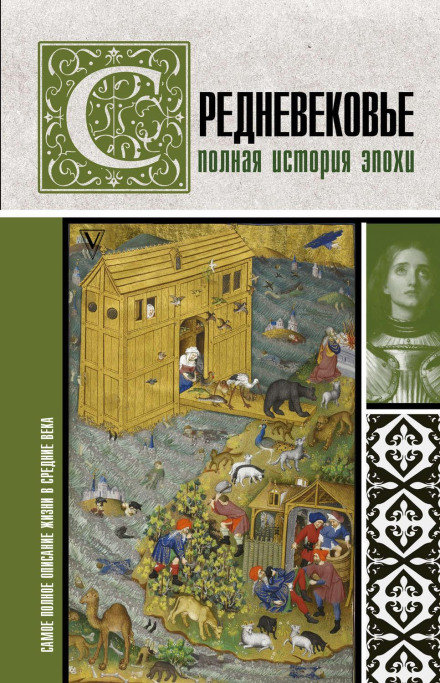
The Middle Ages
8 hrs. 27 min.
Language
Russian
Author
Grey Catherine
Author
Grey Catherine
Narrator
Victoria Fyodorova
Narrator
Victoria Fyodorova
The Middle Ages. The most controversial and contradictory era in human history. Some see it as the times of beautiful ladies and noble knights, minstrels and jesters—when spears broke, feasts thundered, serenades were sung, and sermons were preached. For others, however, the Middle Ages are the time of fanatics and executioners: inquisitions’ bonfires, stinking cities, epidemics, cruel customs, lack of hygiene, universal darkness and barbarity. Is it really true that knights—and all people in the Middle Ages—were small in stature, no taller than about one and a half meters, and those who reached today’s average 175 cm were considered almost giants? And that in the Middle Ages no one could read and write except monks; that people washed only twice in a lifetime—after birth and before death; that they smelled terribly and were teeming with fleas? And that a sword weighed 20 kg, and armor weighed 100, so a knight had to be hoisted onto his horse with a winch, and he had to use the toilet right in his armor because it was impossible to take it off? The new book in the series “Complete History of the Ages” will help you figure out what’s what.
Belarus. The Complete History of the Country
(narrated by
Dmitry Shabrov)
Israel. The Complete History of the Country
(narrated by
Igor Lomakin)
Croatia. The Complete History of the Country
(narrated by
Aleksandr Kovalev)
Mexico. The Complete History of the Country
(narrated by
Konstantin Korolkov)
Monaco. The Complete History of the Country
(narrated by
Alexander Chernov)
The Baltics. A Complete History
(narrated by
Evgeniy Shokin)
The Middle Ages
Uzbekistan: A Complete History
(narrated by
Evgeniy Shokin)
0.
Montenegro: The Complete History of the Country
(narrated by
Evgeniy Shokin)
0.
Venezuela: The Complete History of the Country
(narrated by
Alexey Voskoboynikov)
0.
Vietnam: The Complete History of the Country
(narrated by
Andrey Kurilov)
