Works
20 hrs. 43 min.
Language
Russian
Author
Antoine de Saint-Exupéry
Author
Antoine de Saint-Exupéry
Narrator
Evgeny Ternovsky
Narrator
Evgeny Ternovsky
Description
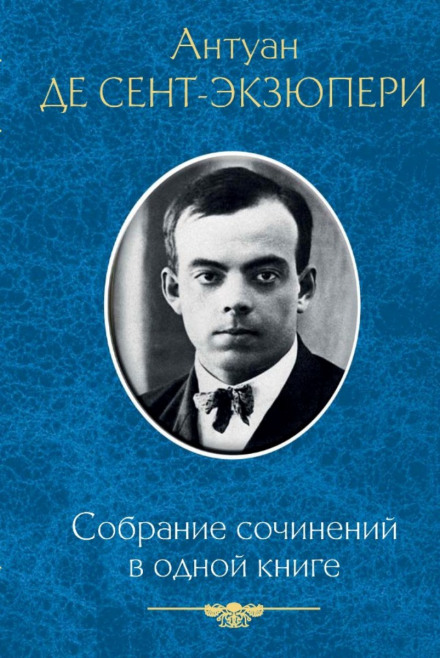
His parents were from an aristocratic family, but such a high origin and title (count) didn’t match the family’s actual social standing: his father was an inspector at an insurance company. After his father died, the young Antoine was left with his mother and 4 brothers and sisters. They were left without means, and the grandmothers helped the children get an education.
After school, Antoine entered the architecture department of the Academy of Fine Arts, but he never stopped thinking about his dream of becoming a pilot. Soon—without any prior training (local pilots trained him for 2000 francs)—he joined an aviation regiment and was appointed a junior lieutenant. After a serious accident, he was discharged and worked either as a controller at a factory or as an agent for an automobile firm. After 4 years, he returned to aviation and published his first works (at age 27). Soon, he bought his own airplane and tried to participate in long flights, but all these attempts ended in failure due to accidents.
In 1939, one of E. Saint-Exupéry’s best-known works was released: “The Planet of People.” It is very interesting to look at his attitude toward war (World War II)—and this attitude underwent a significant transformation. In his youth, he was a convinced militarist. With the outbreak of war, Exupéry sharply changes his viewpoint.
He receives a posting to a combat regiment of a reconnaissance squadron. At the time, many people couldn’t find answers to the questions posed by life (all of it was connected with political games): nothing depended on the courage or bravery of the army—everything had already been decided above; France was supposed to be conquered. Saint-Exupéry leaves the army and moves to America, where his book “The War Pilot” is published—a book full of harsh and tragic optimism, in which, from scenes of flight over defeated France that are so convincing in their reality, grows the conviction that forces of humanism and goodness will prevail. During this period, other works are created too: “The Little Prince,” “The Citadel,” “Appeal to the French.” Saint-Exupéry strives to fight the fascist Germany personally.
In 1944, Saint-Exupéry did not return from a combat mission. He photographed sites near his native city of Lyon. Saint-Exupéry is called a writer-pilot. We know many writer-sailors, writer-diplomats—people, in short, who lived an interesting life and were able to tell about it.
After school, Antoine entered the architecture department of the Academy of Fine Arts, but he never stopped thinking about his dream of becoming a pilot. Soon—without any prior training (local pilots trained him for 2000 francs)—he joined an aviation regiment and was appointed a junior lieutenant. After a serious accident, he was discharged and worked either as a controller at a factory or as an agent for an automobile firm. After 4 years, he returned to aviation and published his first works (at age 27). Soon, he bought his own airplane and tried to participate in long flights, but all these attempts ended in failure due to accidents.
In 1939, one of E. Saint-Exupéry’s best-known works was released: “The Planet of People.” It is very interesting to look at his attitude toward war (World War II)—and this attitude underwent a significant transformation. In his youth, he was a convinced militarist. With the outbreak of war, Exupéry sharply changes his viewpoint.
He receives a posting to a combat regiment of a reconnaissance squadron. At the time, many people couldn’t find answers to the questions posed by life (all of it was connected with political games): nothing depended on the courage or bravery of the army—everything had already been decided above; France was supposed to be conquered. Saint-Exupéry leaves the army and moves to America, where his book “The War Pilot” is published—a book full of harsh and tragic optimism, in which, from scenes of flight over defeated France that are so convincing in their reality, grows the conviction that forces of humanism and goodness will prevail. During this period, other works are created too: “The Little Prince,” “The Citadel,” “Appeal to the French.” Saint-Exupéry strives to fight the fascist Germany personally.
In 1944, Saint-Exupéry did not return from a combat mission. He photographed sites near his native city of Lyon. Saint-Exupéry is called a writer-pilot. We know many writer-sailors, writer-diplomats—people, in short, who lived an interesting life and were able to tell about it.
Contents:
M. Waxmacher. Foreword (article)
Antoine de Saint-Exupéry. The Southern Mail (novel, translation by M. Baranovich)
Antoine de Saint-Exupéry. Night Flight (novel, translation by M. Waxmacher)
Antoine de Saint-Exupéry. The Planet of People (novel, translation by N. Gal)
Antoine de Saint-Exupéry. The War Pilot (novella, translation by A. Teterivnikova)
Antoine de Saint-Exupéry. Letter to a Hostage (essay, translation by M. Baranovich)
Antoine de Saint-Exupéry. The Little Prince (novella, translation by N. Gal)
SKETCHES. REPORTAGES. LETTERS
Spain in the Blood
Antoine de Saint-Exupéry. In Barcelona. The Invisible Line of the Civil War (article, translation by R. Grachev)
Antoine de Saint-Exupéry. The Ways of the Anarchists and Street Scenes in Barcelona (article, translation by R. Grachev)
Antoine de Saint-Exupéry. Civil War—It Isn’t Really a War: It’s a Disease (article, translation by R. Grachev)
Antoine de Saint-Exupéry. In Search of War (article, translation by R. Grachev)
Antoine de Saint-Exupéry. Here they shoot, as if they were cutting down a forest… And people stopped respecting each other (article, translation by R. Grachev),
Antoine de Saint-Exupéry. Madrid (sketch, translation by R. Grachev)
Antoine de Saint-Exupéry. The Southern Mail (novel, translation by M. Baranovich)
Antoine de Saint-Exupéry. Night Flight (novel, translation by M. Waxmacher)
Antoine de Saint-Exupéry. The Planet of People (novel, translation by N. Gal)
Antoine de Saint-Exupéry. The War Pilot (novella, translation by A. Teterivnikova)
Antoine de Saint-Exupéry. Letter to a Hostage (essay, translation by M. Baranovich)
Antoine de Saint-Exupéry. The Little Prince (novella, translation by N. Gal)
SKETCHES. REPORTAGES. LETTERS
Spain in the Blood
Antoine de Saint-Exupéry. In Barcelona. The Invisible Line of the Civil War (article, translation by R. Grachev)
Antoine de Saint-Exupéry. The Ways of the Anarchists and Street Scenes in Barcelona (article, translation by R. Grachev)
Antoine de Saint-Exupéry. Civil War—It Isn’t Really a War: It’s a Disease (article, translation by R. Grachev)
Antoine de Saint-Exupéry. In Search of War (article, translation by R. Grachev)
Antoine de Saint-Exupéry. Here they shoot, as if they were cutting down a forest… And people stopped respecting each other (article, translation by R. Grachev),
Antoine de Saint-Exupéry. Madrid (sketch, translation by R. Grachev)
100%
00:27
00_00_00_Sent-Ekzyuperi_A_de_Sochineniya_Ternovskiy_E_96
00:50
00_00_01_Soderzhanie
24:01
00_01_01_Predislovie
23:37
00_01_02_Predislovie
23:28
00_01_03_Predislovie
32:52
01_01_Yuzhnyy pochtovyy
27:19
01_02_01_Yuzhnyy pochtovyy
27:27
01_02_02_Yuzhnyy pochtovyy
23:04
01_02_03_Yuzhnyy pochtovyy
23:47
01_02_04_Yuzhnyy pochtovyy
24:05
01_03_01_Yuzhnyy pochtovyy
24:12
01_03_02_Yuzhnyy pochtovyy
24:02
01_03_03_Yuzhnyy pochtovyy
29:44
02_01_Nochnoy polet
29:45
02_02_Nochnoy polet
29:14
02_03_Nochnoy polet
29:08
02_04_Nochnoy polet
27:59
02_05_Nochnoy polet
01:55
03_00_Planeta lyudey
35:45
03_01_Liniya
33:49
03_02_Tovarischi
07:08
03_03_Samolet
38:50
03_04_Samolet i planeta
29:59
03_05_01_V pustyne
29:49
03_05_02_V pustyne
28:42
03_05_03_V pustyne
21:22
03_05_04_V pustyne
21:04
03_05_05_V pustyne
21:15
03_05_06_V pustyne
24:10
03_06_01_Lyudi
23:21
03_06_02_Lyudi
23:14
04_01_Voennyy lYotchik
22:57
04_02_Voennyy lYotchik
26:13
04_03_Voennyy lYotchik
26:39
04_04_Voennyy lYotchik
26:09
04_05_Voennyy lYotchik
25:49
04_06_Voennyy lYotchik
26:28
04_07_Voennyy lYotchik
26:23
04_08_Voennyy lYotchik
29:00
04_09_Voennyy lYotchik
27:18
04_10_Voennyy lYotchik
27:17
04_11_Voennyy lYotchik
27:40
04_12_Voennyy lYotchik
23:49
05_01_Pismo k zalozhniku
23:49
05_02_Pismo k zalozhniku
27:07
06_01_Pilot i stihii
06:24
06_02_Ispaniya v krovi. V Barselone
03:55
06_03_Nravy anarhistov i ulichnye stsenki v Barselone
06:13
06_04_Grazhdanskaya voyna - vovse ne voyna, a bolezn
07:48
06_05_V poiskah voyny
17:19
06_06_Zdes rasstrelivayut, slovno les vyrubayut
24:11
06_07_01_Madrid
23:30
06_07_02_Madrid
22:27
06_07_03_Madrid
