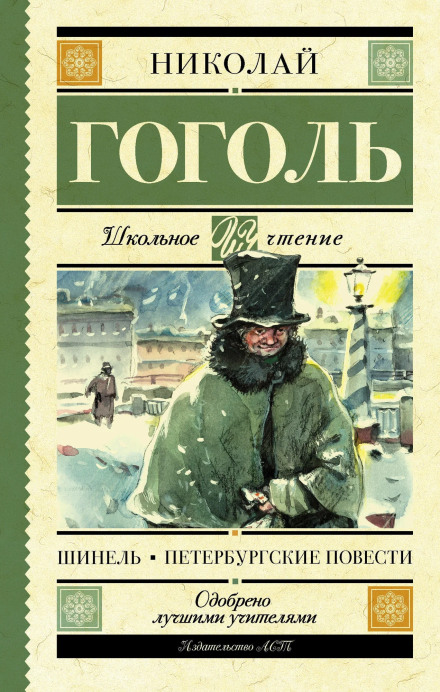
The Overcoat. Petersburg Tales
7 hrs. 30 min.
Language
Russian
Author
Nikolai Gogol
Author
Nikolai Gogol
Narrator
Alexey Yastrebov
Narrator
Alexey Yastrebov
Description
The cycle “Petersburg Tales” by Nikolai Vasilyevich Gogol (1809–1852) paints a picture of everyday life and morals in St. Petersburg in the 1830s–1840s. It includes works such as “Nevsky Prospect,” “The Nose,” “The Portrait,” “The Overcoat,” “The Coach,” and “Notes of a Madman.” The central characters of the cycle are the so-called “little people”: unnoticed, poor, occupying low rungs in society and endowed with no special gifts. Through their fates, the author exposes spiritual emptiness and moral poverty in the official and high-society circles. These tales vividly demonstrate the uniqueness of Gogol’s writing; V. G. Belinsky noted that they are marked by the simplicity of the artistic concept, national character, life authenticity, originality, and comedy—always shaded by a deep sense of sadness and longing. The source of these qualities lies in the fact that Gogol is a poet of real life.
100%
45:10
Шинель. Петербургские повести 01
43:22
Шинель. Петербургские повести 02
08:23
Шинель. Петербургские повести 03
46:55
Шинель. Петербургские повести 04
07:05
Шинель. Петербургские повести 05
45:00
Шинель. Петербургские повести 06
45:58
Шинель. Петербургские повести 07
50:25
Шинель. Петербургские повести 08
29:54
Шинель. Петербургские повести 09
48:17
Шинель. Петербургские повести 10
52:15
Шинель. Петербургские повести 11
27:38
Шинель. Петербургские повести 12
