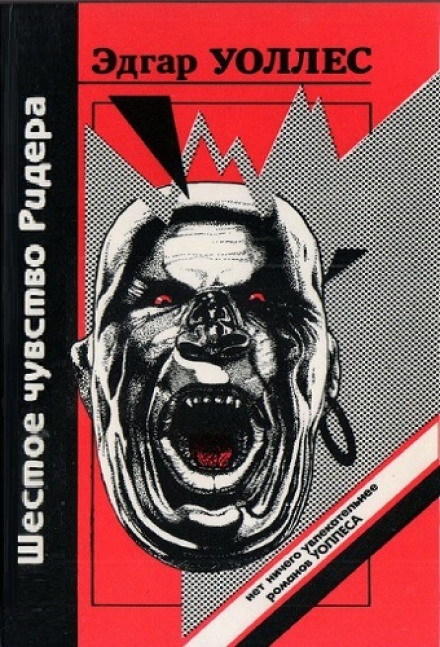
Reader's Sixth Sense
5 hrs. 53 min.
Language
Russian
Author
Edgar Wallace
Author
Edgar Wallace
Narrator
Valery Stelmashchuk
Narrator
Valery Stelmashchuk
Why is Edgar Wallace called the King of Thrillers?
The answer is right on the surface. He taught 20th-century writers how to create captivating stories.
Really?
The plots of Edgar Wallace are so incredible with their twists and turns that at some point the reader becomes hypnotized by worry. He starts shifting in his chair and asking himself what will happen next; gradually he loses control over himself and, like a walking—more precisely, reading—corpse, he wanders through the labyrinths of a mad plot built by the author.
Wallace built the labyrinths of his novels like you’d assemble a child’s construction set from individual pieces, so you will always find a hero who will certainly defeat everything at the end, a heroine who will be saved from something worse than just death, villains of various kinds—but still recognizable and classifiable...
The method of constructing a plot in Edgar Wallace is, like many of his brilliant ideas, very simple. At the beginning, the writer always offers an intrigue setup that will be resolved only at the end during a long and tedious explanation. That’s how most sensation novels worked, and those were the best representatives of the genre dominating the 19th century. Wallace realized that 20th-century readers—at least most—were bored with reading a huge novel with only one intrigue. To be honest, Wallace’s literary craft itself wouldn’t have allowed him to create endless descriptions of estates, characters, and sensations. His literary talent, nurtured in his best years in journalism, was very limited. Here, it was necessary to create small, entertaining stories that could fit on a newspaper page. Edgar Wallace was a different person—fast and self-assured. His strength was the ability to write in small forms, so he came up with a very clever move.
The plot of his novels was, as I said, a single intrigue—and he retained the familiar forms of a literary work for readers. But inside, the novel consisted of episodes, chapters, and parts, each of which had its own intrigue—that is, its own setup, development, and resolution at the end of the episode. Yet if we read such a novel straight through, it would be too much like a collection of adventure tales. That’s why the clever writer placed the setup of the next episode before the resolution of the previous one. The result was a tightly interwoven construction: you don’t even have time for the hero to sort out one situation before he is already plunged headfirst into the next.
And his novels seem naive only because his plots, ideas, and discoveries were used in the 20th century so many times that they now feel overused, chewed up, and secondary. The effect of his novels was such that dozens, if not hundreds, of writers rushed to tell stories about noble avengers and private detectives who replaced law-enforcement and judicial authorities. Thousands of writers adopted the technique where, within one large intrigue, there are several small plot lines woven into a single narrative. All classic detective writers admitted how strong Edgar Wallace’s influence was: how he captured readers’ attention and trained them to read popular literature. Even Arthur Conan Doyle counted on finding in Edgar Wallace a literary successor.
Listen to 8 stories by Edgar Wallace and judge for yourself...
The answer is right on the surface. He taught 20th-century writers how to create captivating stories.
Really?
The plots of Edgar Wallace are so incredible with their twists and turns that at some point the reader becomes hypnotized by worry. He starts shifting in his chair and asking himself what will happen next; gradually he loses control over himself and, like a walking—more precisely, reading—corpse, he wanders through the labyrinths of a mad plot built by the author.
Wallace built the labyrinths of his novels like you’d assemble a child’s construction set from individual pieces, so you will always find a hero who will certainly defeat everything at the end, a heroine who will be saved from something worse than just death, villains of various kinds—but still recognizable and classifiable...
The method of constructing a plot in Edgar Wallace is, like many of his brilliant ideas, very simple. At the beginning, the writer always offers an intrigue setup that will be resolved only at the end during a long and tedious explanation. That’s how most sensation novels worked, and those were the best representatives of the genre dominating the 19th century. Wallace realized that 20th-century readers—at least most—were bored with reading a huge novel with only one intrigue. To be honest, Wallace’s literary craft itself wouldn’t have allowed him to create endless descriptions of estates, characters, and sensations. His literary talent, nurtured in his best years in journalism, was very limited. Here, it was necessary to create small, entertaining stories that could fit on a newspaper page. Edgar Wallace was a different person—fast and self-assured. His strength was the ability to write in small forms, so he came up with a very clever move.
The plot of his novels was, as I said, a single intrigue—and he retained the familiar forms of a literary work for readers. But inside, the novel consisted of episodes, chapters, and parts, each of which had its own intrigue—that is, its own setup, development, and resolution at the end of the episode. Yet if we read such a novel straight through, it would be too much like a collection of adventure tales. That’s why the clever writer placed the setup of the next episode before the resolution of the previous one. The result was a tightly interwoven construction: you don’t even have time for the hero to sort out one situation before he is already plunged headfirst into the next.
And his novels seem naive only because his plots, ideas, and discoveries were used in the 20th century so many times that they now feel overused, chewed up, and secondary. The effect of his novels was such that dozens, if not hundreds, of writers rushed to tell stories about noble avengers and private detectives who replaced law-enforcement and judicial authorities. Thousands of writers adopted the technique where, within one large intrigue, there are several small plot lines woven into a single narrative. All classic detective writers admitted how strong Edgar Wallace’s influence was: how he captured readers’ attention and trained them to read popular literature. Even Arthur Conan Doyle counted on finding in Edgar Wallace a literary successor.
Listen to 8 stories by Edgar Wallace and judge for yourself...
