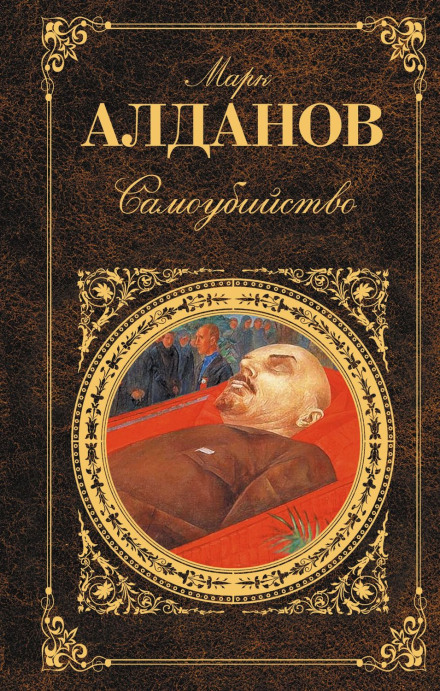
Suicide
22 hrs. 54 min.
Language
Russian
Author
Mark Aldanov
Author
Mark Aldanov
Narrator
Natalia Nekrasova
Narrator
Vladimir Sushkov
Description
This novel is Aladanov’s last major work, written shortly before his death. About death—about its probable nearness—Mark Alexandrovich often spoke and, apparently, constantly thought of it. Something from these thoughts is reflected in the overall design of “Suicide,” which has features that resemble a will.
Aladanov was too restrained a person to dare to openly and directly pass to readers what was the essence of his life experience. I mentioned the idea of a will only in the sense that in “Suicide” some conclusions are drawn, and in this novel Aladanov expressed judgments he considered more important than others. He also allowed himself, though extremely cautiously, hopes that were unusual for him—hoping in a way that did not quite fit the spiritual image of the Russian Anatole France, and in the end meant a Voltairean stance, which is usually associated with him. Before his death, cracks appeared in Aladanov’s skepticism; and it is precisely those pages of the novel where this is found—the unfortunate case involving Lastochkin and everything that follows, all the way through the couple’s double suicide—that belong to the very best he ever wrote.
In recent years, many people thought that Aladanov’s creative powers were gradually running out. After “Sources” — hardly the most significant of his works — almost everything he wrote caused a certain disappointment. Even faithful friends, even the most convinced admirers of his talent, did not respond with the interest and reactions the author likely expected to a major, oddly constructed novel “Live as You Want.”
Aladanov’s mastery, formally, remained the same. But there were signs of fatigue, scatteredness, and confusion in his plans, and even his mastery lacked that “little extra” that would breathe life into it.
Aladanov was too restrained a person to dare to openly and directly pass to readers what was the essence of his life experience. I mentioned the idea of a will only in the sense that in “Suicide” some conclusions are drawn, and in this novel Aladanov expressed judgments he considered more important than others. He also allowed himself, though extremely cautiously, hopes that were unusual for him—hoping in a way that did not quite fit the spiritual image of the Russian Anatole France, and in the end meant a Voltairean stance, which is usually associated with him. Before his death, cracks appeared in Aladanov’s skepticism; and it is precisely those pages of the novel where this is found—the unfortunate case involving Lastochkin and everything that follows, all the way through the couple’s double suicide—that belong to the very best he ever wrote.
In recent years, many people thought that Aladanov’s creative powers were gradually running out. After “Sources” — hardly the most significant of his works — almost everything he wrote caused a certain disappointment. Even faithful friends, even the most convinced admirers of his talent, did not respond with the interest and reactions the author likely expected to a major, oddly constructed novel “Live as You Want.”
Aladanov’s mastery, formally, remained the same. But there were signs of fatigue, scatteredness, and confusion in his plans, and even his mastery lacked that “little extra” that would breathe life into it.
100%
28:52
001-samoubiystvo
24:30
002-samoubiystvo
19:57
003-samoubiystvo
17:07
004-samoubiystvo
18:19
005-samoubiystvo
23:44
006-samoubiystvo
21:04
007-samoubiystvo
20:32
008-samoubiystvo
22:55
009-samoubiystvo
18:22
010-samoubiystvo
20:42
011-samoubiystvo
16:40
012-samoubiystvo
19:05
013-samoubiystvo
25:27
014-samoubiystvo
22:34
015-samoubiystvo
24:52
016-samoubiystvo
22:34
017-samoubiystvo
18:39
018-samoubiystvo
24:17
019-samoubiystvo
17:56
020-samoubiystvo
24:59
021-samoubiystvo
27:10
022-samoubiystvo
29:48
023-samoubiystvo
16:36
024-samoubiystvo
17:35
025-samoubiystvo
18:01
026-samoubiystvo
19:43
027-samoubiystvo
18:41
028-samoubiystvo
19:42
029-samoubiystvo
19:36
030-samoubiystvo
29:19
031-samoubiystvo
24:09
032-samoubiystvo
27:27
033-samoubiystvo
24:30
034-samoubiystvo
16:46
035-samoubiystvo
15:32
036-samoubiystvo
20:02
037-samoubiystvo
25:53
038-samoubiystvo
21:05
039-samoubiystvo
19:27
040-samoubiystvo
25:40
041-samoubiystvo
18:29
042-samoubiystvo
15:06
043-samoubiystvo
18:31
044-samoubiystvo
15:16
045-samoubiystvo
16:51
046-samoubiystvo
25:05
047-samoubiystvo
24:53
048-samoubiystvo
16:52
049-samoubiystvo
17:21
050-samoubiystvo
24:19
051-samoubiystvo
16:15
052-samoubiystvo
15:16
053-samoubiystvo
16:55
054-samoubiystvo
15:33
055-samoubiystvo
20:42
056-samoubiystvo
15:03
057-samoubiystvo
15:08
058-samoubiystvo
26:16
059-samoubiystvo
25:36
060-samoubiystvo
18:34
061-samoubiystvo
17:26
062-samoubiystvo
21:19
063-samoubiystvo
18:27
064-samoubiystvo
15:24
065-samoubiystvo
26:36
066-samoubiystvo
07:01
067-samoubiystvo
