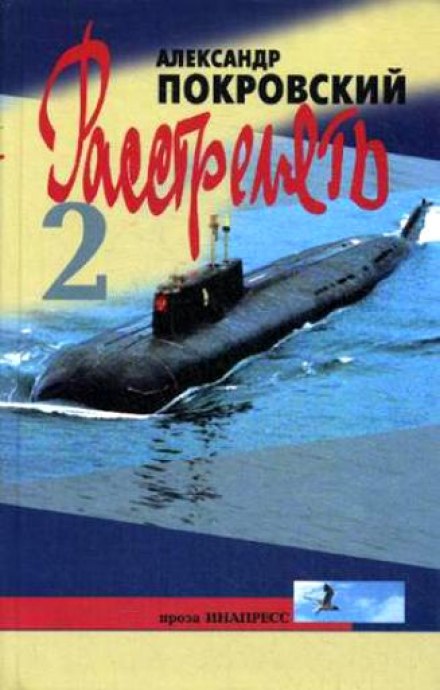
Shoot Them! Part Two
6 hrs. 13 min.
Language
Russian
Author
Alexander Pokrovsky
Author
Alexander Pokrovsky
Narrator
Alexander Smollett
Narrator
Alexander Smollett
The second book by Alexander Pokrovsky consists of stories he wrote in the navy—as they say, straight from the heat of the moment. Here is what he himself writes about his prose: “Filled with true dramatic intensity, not at all amusing, but fine and lyrical stories that happened to a certain officer, an unquestionable son of his country—and all sorts of coincidences that happened to his distant relatives and close friends, friends of relatives and relatives of friends, told by him.”
Naval terms
Starpmaster (starpom) — the senior assistant to the ship’s commanding officer. The commander runs the ship in battle and during the transit; the starpom runs things at other times. He knows everything and is responsible for everything.
Zam or zampol[it] (political officer) — deputy commander of the ship for political affairs. Responsible for the crew’s political training and morale—political classes, political briefings, reports on the state of discipline, showing films. In everything else, as a rule, useless. Maybe that’s why deputies aren’t loved.
НачПО — head of the political department, the boss over the political officers of all ships in the formation.
Kapraz — captain of the first rank, colonel, in land terms. Accordingly, kapdva and kaptri are lieutenant colonel and major. Captain-lieutenant is also by land terms, captain.
BC-1 — the combat navigation division—navigators and helmsmen.
BC-2 — missile and artillery combat unit.
BC-3 — mine and torpedo combat unit.
BC-4 — communications unit.
BC-5 — electromechanical BC — power plants and life-support systems.
BC-6 — aviation BC.
BC-7 — command control BC—radar stations and others.
Chemist or nachkhim — head of the ship’s chemical service. On a submarine he is also responsible, among other things, for air regeneration.
ПКЗ — floating barracks. I don’t know how it is on nuclear submarines, but on diesel ones there is one bunk for two or three sailors; at sea they stand watch and sleep in turns. In port, personnel live in barracks on shore or in a floating barracks.
Zam or zampol[it] (political officer) — deputy commander of the ship for political affairs. Responsible for the crew’s political training and morale—political classes, political briefings, reports on the state of discipline, showing films. In everything else, as a rule, useless. Maybe that’s why deputies aren’t loved.
НачПО — head of the political department, the boss over the political officers of all ships in the formation.
Kapraz — captain of the first rank, colonel, in land terms. Accordingly, kapdva and kaptri are lieutenant colonel and major. Captain-lieutenant is also by land terms, captain.
BC-1 — the combat navigation division—navigators and helmsmen.
BC-2 — missile and artillery combat unit.
BC-3 — mine and torpedo combat unit.
BC-4 — communications unit.
BC-5 — electromechanical BC — power plants and life-support systems.
BC-6 — aviation BC.
BC-7 — command control BC—radar stations and others.
Chemist or nachkhim — head of the ship’s chemical service. On a submarine he is also responsible, among other things, for air regeneration.
ПКЗ — floating barracks. I don’t know how it is on nuclear submarines, but on diesel ones there is one bunk for two or three sailors; at sea they stand watch and sleep in turns. In port, personnel live in barracks on shore or in a floating barracks.
100%
00:31
000-vstupleniye
01:30
001-vakhta
00:46
002-sled_vopros
00:41
003-vinovat
01:22
004-eschyo_o_vakhte
00:35
005-chto_glavnoe
00:29
006-ne_nado_schitatj
00:08
007-myslj
00:55
008-chto_prihoditsya
01:02
009-flotskoe-schactje
01:24
010-pomnitj_vsegda
01:29
011-o_litse
00:27
012-o_chesti
00:46
013-o_vybore
00:39
014-o_garmonii_i_forme
00:56
015-o_bratstve
00:48
016-o_komissii
01:57
017-ob_organizatsii
00:26
018-o_terzaniyah
02:21
019-o_sne
01:01
020-o_boegotovnosti
01:02
021_stroy
01:15
022-o_smotre
01:27
023-o_nachalnike
01:14
024-pri_vstreche
00:57
025-po_telephonu
00:25
026-o_lichnom_sostave
04:09
027-dlya_chego_lichnyj
01:02
028-oficer
00:40
029-oficer2
01:01
030-otpusk
01:42
031-o_ruble
00:25
032-gde_zgivut
01:39
033-v_chyom
02:03
034-slava_voinam
00:28
035-boevoe_dezgurstvo
02:12
036-vot_narod
03:43
037-o_zamah
01:13
038-zam_predstavitelj_CK
00:52
039-oicer_kak_chto
01:14
040-kak_nagrazgdaetsya
02:15
041-leytenant-admiral
01:41
042-kak_zevaet
01:31
043-o_vstrechah
00:32
044-no_inogda
00:55
045-o_kartochke
00:25
046-izyuminka
00:30
047-o_zgenschine
00:48
048-o_kholostyake
00:00
049-zhgostkii_sjyom
01:47
050-o_toske
01:06
051-ne_mogu_ya
00:21
052-flotskaya_retch
02:03
053-nepredskazuemostj
02:36
054-vsem_podryad
01:38
055-svistatj_vseh
00:52
056-gestapo
00:21
057-dayte_mne
01:29
058-tragedii1
01:13
059-tragedii2
00:42
060-tragedii3
01:32
061-kinoscenarii
01:57
062-net_rebyata
03:11
063-borzota
04:10
064-123
01:33
065-posle_ljubvi
01:25
066_bes
03:15
067-pitj
04:34
068-dobyval_samolyoty
00:36
069-neproshibaemostj
03:36
070-shishka
01:53
071-vasjka
02:42
072-vityu_nashego
00:48
073_vinovat
01:22
074-nechto
01:39
075-kolokoljchiki
00:52
076-nachinaetsya
06:53
a01-tralenie
03:52
a02-tiger
03:30
a03-za_supom
03:49
a04-kombat_i_dima
03:21
a05-gluhonemoj
02:50
a06-volga_glavkoma
03:33
a07-po_stenochke
02:36
a08-chytjyo
05:06
a09-v_kustah
04:34
a10-pyat_sutok
03:30
a11-razreshite
01:34
a12-bobyor
02:48
a13-v_tumane
02:50
a14-vsyo_normaljno
02:00
a15-master
02:03
a16-obstanovka
03:05
a17-v_ovre
02:03
a18-nedorazumenie
02:16
a19-po_keljvinu
05:51
a20-beljy_grib
05:35
a21_sapogi
03:49
a22-groby
03:53
a23-sekretnoe_orudzie
03:05
a24_gena_yanychar
04:32
a25-mesto
03:22
a26-notchj
07:53
a27-vrag_fyurera
07:41
a28-choybolsan
06:36
a29-fokus
04:02
a30-chudovische
05:19
a31-ozon
07:21
a32-prishli
02:57
a33-porosyata
10:45
a34-zaezd
03:39
b01-poema
04:39
b02-pro_nachpo
02:11
b03-skorogovorka
04:10
b04-skorogovorka2
02:11
b05-skorogovorka3
02:13
b06-skorogovorka4
06:42
b07-skorogovorka5
03:12
b08-gorodok1
02:45
b09-gorodok2
03:57
b10-gorodok3
02:10
b11-gorodok4
02:25
b12-gorodok5
03:10
b13-gorodok6
02:24
b14-gorodok7
02:23
b15-byli_konechno1
07:27
b16-byli_konechno2
03:24
b17-byli_konechno3
04:26
b18-byli_konechno4
03:18
b19-byli_konechno5
03:36
b20-byli_konechno6
02:43
b21-byli_konechno7
01:43
b22-byli_konechno8
03:00
b23-byli_konechno9
03:26
b24-byli_konechno10
02:20
b25-byli_konechno11
01:33
b26-byli_konechno12
00:33
b27-byli_konechno13
05:52
b28-byli_konechno14
03:02
b29-byli_konechno15
00:43
b30-byli_konechno16
01:44
b31-byli_konechno17
01:50
b32-byli_konechno18
02:28
b33-vot_ono1
02:32
b34-vot_ono2
02:22
b35-vot_ono3
01:47
b36-vot_ono4
04:15
b37-more_leto
02:34
b38-lodka_botsman
06:52
b39-lysina
