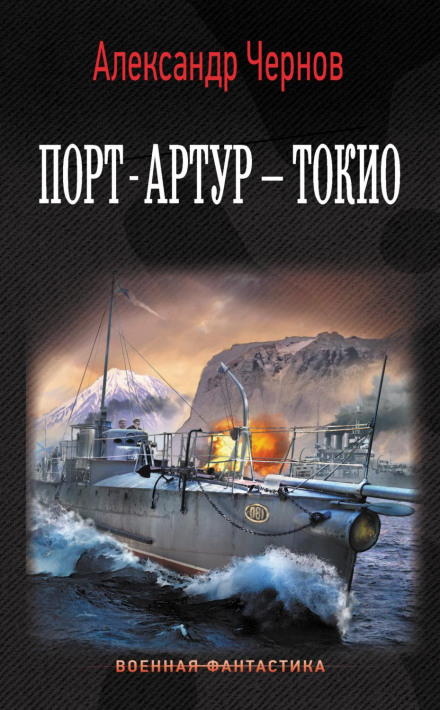
Port Arthur — Tokyo
9 hrs. 28 min.
Language
Russian
Author
Alexander Chernov
Author
Alexander Chernov
Narrator
Max Radman
Narrator
Max Radman
If the enemy doesn’t surrender, they are destroyed. Or they are forced into peace if, instead of a thirst for revenge and plunder, political pragmatism and humaneness prevail among the victorious side’s motives. After winning a decisive fleet battle off the Cape of Chantung and avoiding the bloody, destructive consequences of the Gapon unrest, St. Petersburg surprisingly proposed peace to Tokyo on honorable terms—for the defeated.
However, the generous offer was rejected. The military leadership secured from Emperor Mutsuhito a decision to continue fighting. His position isn’t changed even by the first serious defeat on land, near Liaoyang.
But dragging out the war isn’t in Russia’s interests. And the tsar approves two audacious operations proposed by the staff of the Pacific Fleet. Rudenyev’s squadrons are tasked with attacking the forts of Tokyo Bay and landing the Guards Expeditionary Corps to seize Japan’s capital. At the same time, thirty torpedo boats must strike the enemy fleet directly at its main base—Sasebo.
However, the generous offer was rejected. The military leadership secured from Emperor Mutsuhito a decision to continue fighting. His position isn’t changed even by the first serious defeat on land, near Liaoyang.
But dragging out the war isn’t in Russia’s interests. And the tsar approves two audacious operations proposed by the staff of the Pacific Fleet. Rudenyev’s squadrons are tasked with attacking the forts of Tokyo Bay and landing the Guards Expeditionary Corps to seize Japan’s capital. At the same time, thirty torpedo boats must strike the enemy fleet directly at its main base—Sasebo.
100%
25:30
Порт-Артур – Токио - 0 - Порт-Артур – Токио_01
51:03
Порт-Артур – Токио - 1 - Порт-Артур – Токио_02
23:49
Порт-Артур – Токио - 2 - Порт-Артур – Токио_03
33:10
Порт-Артур – Токио - 3 - Порт-Артур – Токио_04
29:51
Порт-Артур – Токио - 4 - Порт-Артур – Токио_05
13:11
Порт-Артур – Токио - 5 - Порт-Артур – Токио_06
53:26
Порт-Артур – Токио - 6 - Порт-Артур – Токио_07
54:54
Порт-Артур – Токио - 7 - Порт-Артур – Токио_08
45:10
Порт-Артур – Токио - 8 - Порт-Артур – Токио_09
17:09
Порт-Артур – Токио - 9 - Порт-Артур – Токио_10
56:37
Порт-Артур – Токио - 10 - Порт-Артур – Токио_11
22:45
Порт-Артур – Токио - 11 - Порт-Артур – Токио_12
36:37
Порт-Артур – Токио - 12 - Порт-Артур – Токио_13
41:32
Порт-Артур – Токио - 13 - Порт-Артур – Токио_14
37:43
Порт-Артур – Токио - 14 - Порт-Артур – Токио_15
13:51
Порт-Артур – Токио - 15 - Порт-Артур – Токио_16
04:45
Порт-Артур – Токио - 16 - Порт-Артур – Токио_17
07:06
Порт-Артур – Токио - 17 - Порт-Артур – Токио_18
