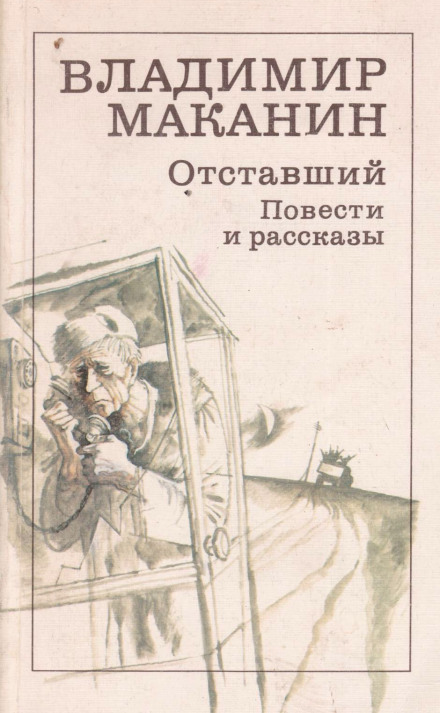
The Straggler
4 hrs. 11 min.
Language
Russian
Author
Vladimir Makanin
Author
Vladimir Makanin
Narrator
Evgeny Ternovsky
Narrator
Evgeny Ternovsky
Description
The old man is tormented by a dream—my father (my mother died, father is alone, and when I come to visit, he tells me the dream in all its details. If I don’t come, he calls and tells me the dream over the phone. Either plaintively or angrily).
I can’t help him with his dreams—this is clear. But I can listen.
My father tells how he runs out past the gate, pulling a hat over his head, even though he himself is still in his undershirt (and he hasn’t even tucked the undershirt into his trousers). The belt isn’t tightened yet—it swings to and fro as he runs. And of course, as soon as he runs out, his father already knows that the street is empty and that he has fallen behind his people. “As I ran out, I already knew everything.” “Did you feel it?” Yes, yes—he felt it in advance, knew: the truck (rattling along with the sideboards—like a half-ton from those years) had already left. He is alone...
He dreams that the truck is far away, and that people inside it, in the cargo bed, are also half-dressed, yet they manage to jump up, climb in, shout something at him, wave their hands—but the truck can’t, for some important reason, for the relentless unavoidability of it, even stop for a moment, slow down, and pick up his father. And this misfortune, this inevitability of falling behind—this is what seems to be the main feeling of his recurring dream.
I can’t help him with his dreams—this is clear. But I can listen.
My father tells how he runs out past the gate, pulling a hat over his head, even though he himself is still in his undershirt (and he hasn’t even tucked the undershirt into his trousers). The belt isn’t tightened yet—it swings to and fro as he runs. And of course, as soon as he runs out, his father already knows that the street is empty and that he has fallen behind his people. “As I ran out, I already knew everything.” “Did you feel it?” Yes, yes—he felt it in advance, knew: the truck (rattling along with the sideboards—like a half-ton from those years) had already left. He is alone...
He dreams that the truck is far away, and that people inside it, in the cargo bed, are also half-dressed, yet they manage to jump up, climb in, shout something at him, wave their hands—but the truck can’t, for some important reason, for the relentless unavoidability of it, even stop for a moment, slow down, and pick up his father. And this misfortune, this inevitability of falling behind—this is what seems to be the main feeling of his recurring dream.
100%
05:14
makanin-otstavshyi-01
05:01
makanin-otstavshyi-02
05:01
makanin-otstavshyi-03
05:02
makanin-otstavshyi-04
05:00
makanin-otstavshyi-05
05:01
makanin-otstavshyi-06
05:02
makanin-otstavshyi-07
05:01
makanin-otstavshyi-08
05:01
makanin-otstavshyi-09
05:01
makanin-otstavshyi-10
05:02
makanin-otstavshyi-11
05:01
makanin-otstavshyi-12
05:01
makanin-otstavshyi-13
05:02
makanin-otstavshyi-14
05:01
makanin-otstavshyi-15
05:01
makanin-otstavshyi-16
05:02
makanin-otstavshyi-17
05:01
makanin-otstavshyi-18
05:01
makanin-otstavshyi-19
05:03
makanin-otstavshyi-20
05:01
makanin-otstavshyi-21
05:02
makanin-otstavshyi-22
05:02
makanin-otstavshyi-23
05:02
makanin-otstavshyi-24
05:01
makanin-otstavshyi-25
05:01
makanin-otstavshyi-26
05:03
makanin-otstavshyi-27
05:02
makanin-otstavshyi-28
05:03
makanin-otstavshyi-29
05:00
makanin-otstavshyi-30
05:02
makanin-otstavshyi-31
05:02
makanin-otstavshyi-32
05:03
makanin-otstavshyi-33
05:03
makanin-otstavshyi-34
05:02
makanin-otstavshyi-35
05:02
makanin-otstavshyi-36
05:03
makanin-otstavshyi-37
05:02
makanin-otstavshyi-38
05:05
makanin-otstavshyi-39
05:02
makanin-otstavshyi-40
05:02
makanin-otstavshyi-41
05:00
makanin-otstavshyi-42
05:01
makanin-otstavshyi-43
05:02
makanin-otstavshyi-44
05:02
makanin-otstavshyi-45
05:01
makanin-otstavshyi-46
05:01
makanin-otstavshyi-47
05:03
makanin-otstavshyi-48
05:01
makanin-otstavshyi-49
05:04
makanin-otstavshyi-50
