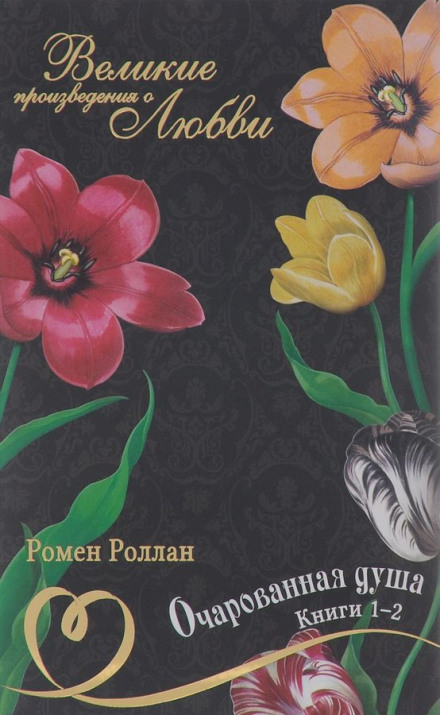
The Enchanted Soul 4
31 hrs. 46 min.
Language
Russian
Author
Romain Rolland
Author
Romain Rolland
Narrator
Vyacheslav Gerasimov
Narrator
Vyacheslav Gerasimov
Roland’s life was wholly devoted to creativity, and for him creativity was both a means of self-expression and an act—struggle. Roland wrote for those who stood at the head of armies on the march, for the people. And the people remember and honor Romain Rolland, the writer who, as he put it himself, went down the road—winding upward—with all the most advanced of humankind.
In the novel, with great fullness, is reflected the path of the author’s ideological searching after the First World War and the revolutionary outcome of these searches. In this narrative he embodied the most important life processes of the era: the death of the old world and the birth of the new. He recreated the paths and crossroads of Western intellectuals seeking the truth—their errors and breakthroughs toward truth, their defeats and victories.
The novel “The Enchanted Soul” is the pinnacle of Romain Rolland’s work. The novel’s central problem is the paths and fates of French intellectuals.
The artistic-philosophical axis of the cycle is the interaction between the heroes’ inner world and the external circumstances of their existence. The author gives priority not to depicting events in the heroes’ lives, but to analyzing their spiritual universe.
In the novel, with great fullness, is reflected the path of the author’s ideological searching after the First World War and the revolutionary outcome of these searches. In this narrative he embodied the most important life processes of the era: the death of the old world and the birth of the new. He recreated the paths and crossroads of Western intellectuals seeking the truth—their errors and breakthroughs toward truth, their defeats and victories.
The novel “The Enchanted Soul” is the pinnacle of Romain Rolland’s work. The novel’s central problem is the paths and fates of French intellectuals.
The artistic-philosophical axis of the cycle is the interaction between the heroes’ inner world and the external circumstances of their existence. The author gives priority not to depicting events in the heroes’ lives, but to analyzing their spiritual universe.
100%
00:26
04-00-00-od-04-provozvestnitza
23:22
04-01-01-01-semero-protiv-fiv
29:21
04-01-01-02-semero-protiv-fiv
18:49
04-01-01-03-semero-protiv-fiv
18:45
04-01-01-04-semero-protiv-fiv
22:34
04-01-01-05-semero-protiv-fiv
20:12
04-01-01-06-semero-protiv-fiv
19:46
04-01-01-07-semero-protiv-fiv
16:09
04-01-01-08-semero-protiv-fiv
17:43
04-01-01-09-semero-protiv-fiv
21:19
04-01-01-10-semero-protiv-fiv
18:27
04-01-01-11-semero-protiv-fiv
22:53
04-01-01-12-semero-protiv-fiv
18:36
04-01-02-01-anneta-v-dzhunglyah
15:24
04-01-02-02-anneta-v-dzhunglyah
25:13
04-01-02-03-anneta-v-dzhunglyah
16:55
04-01-02-04-anneta-v-dzhunglyah
17:53
04-01-02-05-anneta-v-dzhunglyah
17:07
04-01-02-06-anneta-v-dzhunglyah
22:37
04-01-02-07-anneta-v-dzhunglyah
27:00
04-01-02-08-anneta-v-dzhunglyah
28:47
04-01-02-09-anneta-v-dzhunglyah
25:22
04-01-02-10-anneta-v-dzhunglyah
18:25
04-01-02-11-anneta-v-dzhunglyah
25:49
04-01-03-01-veter-prestupleniya
21:34
04-01-03-02-veter-prestupleniya
16:29
04-01-03-03-veter-prestupleniya
23:39
04-01-03-04-veter-prestupleniya
17:53
04-01-03-05-veter-prestupleniya
28:14
04-01-03-06-veter-prestupleniya
20:30
04-01-03-07-veter-prestupleniya
25:59
04-01-03-08-veter-prestupleniya
19:57
04-01-03-09-veter-prestupleniya
22:10
04-01-03-10-veter-prestupleniya
17:05
04-01-03-11-veter-prestupleniya
24:54
04-01-03-12-veter-prestupleniya
27:21
04-02-01-01-bitva
20:04
04-02-01-02-bitva
16:20
04-02-01-03-bitva
23:15
04-02-01-04-bitva
28:40
04-02-01-05-bitva
23:35
04-02-01-06-bitva
19:01
04-02-01-07-bitva
17:05
04-02-01-08-bitva
29:13
04-02-01-09-bitva
26:55
04-02-01-10-bitva
25:17
04-02-01-11-bitva
25:34
04-02-01-12-bitva
25:45
04-02-01-13-bitva
18:49
04-02-02-01-flotentiyskyi-may
27:58
04-02-02-02-flotentiyskyi-may
19:19
04-02-02-03-flotentiyskyi-may
15:38
04-02-02-04-flotentiyskyi-may
24:29
04-02-02-05-flotentiyskyi-may
22:17
04-02-02-06-flotentiyskyi-may
17:30
04-02-02-07-flotentiyskyi-may
22:59
04-02-02-08-flotentiyskyi-may
21:11
04-02-02-09-flotentiyskyi-may
18:26
04-02-02-10-flotentiyskyi-may
15:27
04-02-02-11-flotentiyskyi-may
28:39
04-02-02-12-flotentiyskyi-may
17:54
04-02-02-13-flotentiyskyi-may
22:47
04-02-02-14-flotentiyskyi-may
26:20
04-02-02-15-flotentiyskyi-may
18:06
04-02-02-16-flotentiyskyi-may
27:35
04-02-02-17-flotentiyskyi-may
21:21
04-02-02-18-flotentiyskyi-may
24:14
04-02-02-19-flotentiyskyi-may
18:28
04-02-02-20-flotentiyskyi-may
17:14
04-02-02-21-flotentiyskyi-may
22:22
04-02-02-22-flotentiyskyi-may
19:47
04-02-02-23-flotentiyskyi-may
23:34
04-02-02-24-flotentiyskyi-may
24:28
04-02-03-01-via-sakra
26:54
04-02-03-02-via-sakra
20:00
04-02-03-03-via-sakra
23:26
04-02-03-04-via-sakra
22:40
04-02-03-05-via-sakra
20:45
04-02-03-06-via-sakra
23:10
04-02-03-07-via-sakra
23:36
04-02-03-08-via-sakra
29:08
04-02-03-09-via-sakra
25:54
04-02-03-10-via-sakra
28:26
04-02-03-11-via-sakra
25:35
04-02-03-12-via-sakra
20:15
04-02-03-13-via-sakra
23:54
04-02-03-14-via-sakra
