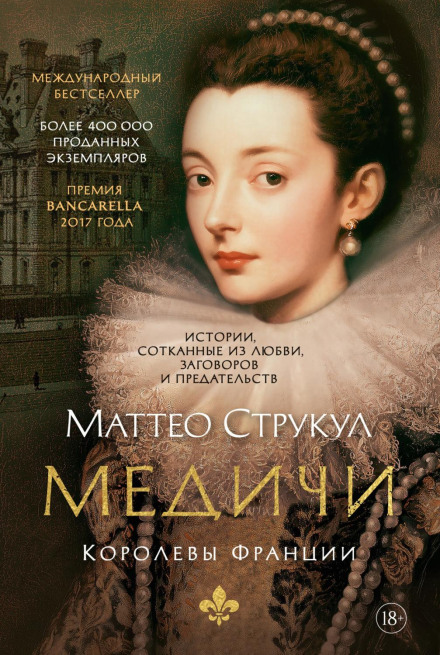
The Medici. Queens of France
20 hrs. 6 min.
Language
Russian
Author
Matteo Strukul
Author
Matteo Strukul
Narrator
Alexey Voskoboynikov
Narrator
Alexey Voskoboynikov
The saga of the Medici family, which forever changed the face of Europe during the Renaissance. Brilliant heirs of an ambitious dynasty of bankers—two great Italians on the French throne—find themselves at the center of the most critical turning points in history, making decisions that determine the fate of a state.
Book 3. Ruthless Catherine. France, 1536. Catherine de’ Medici’s position, as the childless wife of the heir Henry, becomes especially vulnerable after his brother’s death, the Dauphin Francis of Valois. Only King Francis I has no doubts about her innocence.
Convinced that only Nostradamus—an astrologer and seer who inspires fear among the commoners and the nobility alike—can help her become a mother, Catherine sends Captain Raymond de Polignac to find him. Amid palace conspiracies, betrayals, humiliations, and persecution, she stubbornly waits for the hour when she can finally give the world her firstborn.
After the death of Francis I, Catherine—now queen—without hesitation enters dangerous alliances, relying on Nostradamus’s predictions, and pushes the country toward open confrontation between Catholics and Huguenots. Their enmity will inevitably lead to the bloody Night of Saint Bartholomew, when Paris will drown in the massacre of Protestants, and when Catherine, becoming regent after the death of Henry II, will lose everything that mattered to her…
Book 4. The Last Chapter. Paris, 1601. The French capital at the beginning of the seventeenth century—a city where cruelty and licentiousness rule. Marie de’ Medici, wife of Henry IV Bourbon, is forced to confront the intrigues of his mistress, while, at the highest levels, a grim plot is ripening: nobles intend to deprive the king of the throne. Sensing that danger is near, Marie puts her faith in Matthieu La Forges—an informer and assassin—and for a time keeps events under control.
But when Henry IV is ultimately killed by the conspirators, Marie becomes regent for her son Louis. Governing the country is excruciatingly difficult: the people and the nobility alike struggle to accept the queen mother—an outsider and a relative of Catherine’s “Black Queen.” Trying to break free from the web of intrigue, Marie forms an alliance with the formidable Richelieu. However, the cardinal seeks absolute power and easily betrays the queen mother. Her fame and influence fade, and only her friendship with the master Rubens illuminates Marie’s final years and the decline of the Medici dynasty.
Matteo Strukul’s prose—rapid, sparkling with напряжение—brought the author lasting success not only in Italy, but far beyond its borders.
Book 3. Ruthless Catherine. France, 1536. Catherine de’ Medici’s position, as the childless wife of the heir Henry, becomes especially vulnerable after his brother’s death, the Dauphin Francis of Valois. Only King Francis I has no doubts about her innocence.
Convinced that only Nostradamus—an astrologer and seer who inspires fear among the commoners and the nobility alike—can help her become a mother, Catherine sends Captain Raymond de Polignac to find him. Amid palace conspiracies, betrayals, humiliations, and persecution, she stubbornly waits for the hour when she can finally give the world her firstborn.
After the death of Francis I, Catherine—now queen—without hesitation enters dangerous alliances, relying on Nostradamus’s predictions, and pushes the country toward open confrontation between Catholics and Huguenots. Their enmity will inevitably lead to the bloody Night of Saint Bartholomew, when Paris will drown in the massacre of Protestants, and when Catherine, becoming regent after the death of Henry II, will lose everything that mattered to her…
Book 4. The Last Chapter. Paris, 1601. The French capital at the beginning of the seventeenth century—a city where cruelty and licentiousness rule. Marie de’ Medici, wife of Henry IV Bourbon, is forced to confront the intrigues of his mistress, while, at the highest levels, a grim plot is ripening: nobles intend to deprive the king of the throne. Sensing that danger is near, Marie puts her faith in Matthieu La Forges—an informer and assassin—and for a time keeps events under control.
But when Henry IV is ultimately killed by the conspirators, Marie becomes regent for her son Louis. Governing the country is excruciatingly difficult: the people and the nobility alike struggle to accept the queen mother—an outsider and a relative of Catherine’s “Black Queen.” Trying to break free from the web of intrigue, Marie forms an alliance with the formidable Richelieu. However, the cardinal seeks absolute power and easily betrays the queen mother. Her fame and influence fade, and only her friendship with the master Rubens illuminates Marie’s final years and the decline of the Medici dynasty.
Matteo Strukul’s prose—rapid, sparkling with напряжение—brought the author lasting success not only in Italy, but far beyond its borders.
100%
12:56
00
05:47
01
1:11:11
02
15:44
03
31:37
04
24:00
05
50:31
06
18:15
07
05:34
08
31:18
09
22:54
10
1:19:49
11
29:58
12
24:25
13
25:55
14
34:42
15
14:43
16
1:09:50
17
03:02
18
07:02
19
1:09:44
20
1:07:47
21
33:15
22
31:23
23
24:22
24
42:09
25
25:52
26
25:17
27
36:49
28
1:02:58
29
27:14
30
16:47
31
20:20
32
44:26
33
36:23
34
26:35
35
31:36
36
04:46
37
