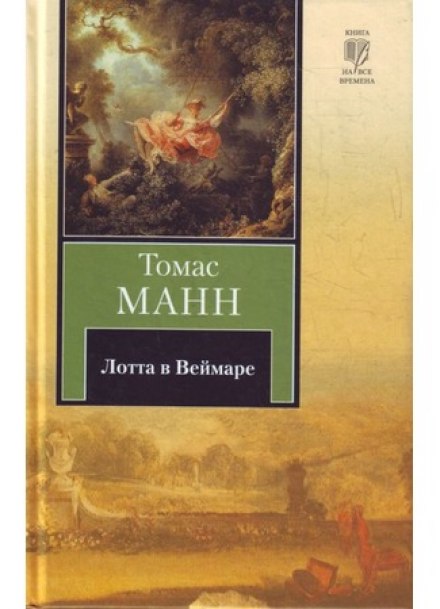
Lotte in Weimar
16 hrs. 9 min.
Language
Russian
Author
Thomas Mann
Author
Thomas Mann
Narrator
Nadezhda Vinokurova
Narrator
Nadezhda Vinokurova
Description
The novel tells of the meeting between an aging Goethe and his youth friend Charlotte Buff, who became the prototype for the heroine of “The Sorrows of Young Werther.” From the words of different people—Charlotte herself, Goethe’s secretary, his son August von Goethe, and the residents of Weimar—a complex, many-sided, and at times contradictory image of the famous writer and thinker comes into view. Master of the intellectual novel, Thomas Mann expertly reveals the depths of the creative personality of his fellow countryman and idol. Written by the time it was published, “Lotte in Weimar” was the summit and synthesis of two strands in Thomas Mann’s earlier work: his stories about the artist—“Tonio Kröger,” “Tristan,” “Death in Venice”—and his articles devoted to the personality and work of the great Goethe—“Goethe and Tolstoy,” “Goethe as a Representative of the Bourgeois Epoch,” and finally the remarkable essay about “Werther.” In that essay, the author ended with a call to write a story—or even a novel—about Goethe’s late meeting with Charlotte Kestner, née Buff, the prototype for Werther’s Lotte, whom an unknown young poet loved forty-one years earlier—a poet who at that time was (not too diligent) a practicing attorney under the “Imperial Court Chamber” in Wetzlar. The only and first one to respond to this call was Thomas Mann himself, who a year later wrote his “Lotte in Weimar.”
100%
00:32
00_00_00_Lotta_v_Veymare
25:03
01_01_01_Lotta_v_Veymare
19:43
01_01_02_Lotta_v_Veymare
34:22
01_02_00_Lotta_v_Veymare
29:10
01_03_01_Lotta_v_Veymare
27:29
01_03_02_Lotta_v_Veymare
24:09
01_03_03_Lotta_v_Veymare
29:33
01_03_04_Lotta_v_Veymare
20:03
01_03_05_Lotta_v_Veymare
23:57
01_03_06_Lotta_v_Veymare
25:03
01_03_07_Lotta_v_Veymare
23:19
01_04_01_Lotta_v_Veymare
25:03
01_04_02_Lotta_v_Veymare
20:33
01_05_01_Lotta_v_Veymare
34:41
01_05_02_Lotta_v_Veymare
28:17
01_05_03_Lotta_v_Veymare
29:22
01_05_04_Lotta_v_Veymare
20:06
01_05_05_Lotta_v_Veymare
17:33
01_05_06_Lotta_v_Veymare
28:19
01_06_01_Lotta_v_Veymare
21:53
01_06_02_Lotta_v_Veymare
27:52
01_06_03_Lotta_v_Veymare
31:38
01_06_04_Lotta_v_Veymare
27:12
01_06_05_Lotta_v_Veymare
27:05
01_07_01_Lotta_v_Veymare
29:42
01_07_02_Lotta_v_Veymare
30:05
01_07_03_Lotta_v_Veymare
29:30
01_07_04_Lotta_v_Veymare
25:45
01_07_05_Lotta_v_Veymare
29:46
01_07_06_Lotta_v_Veymare
35:18
01_07_07_Lotta_v_Veymare
27:58
01_08_01_Lotta_v_Veymare
30:10
01_08_02_Lotta_v_Veymare
32:28
01_08_03_Lotta_v_Veymare
17:18
01_08_04_Lotta_v_Veymare
20:26
01_08_05_Lotta_v_Veymare
38:48
01_09_00_Lotta_v_Veymare
