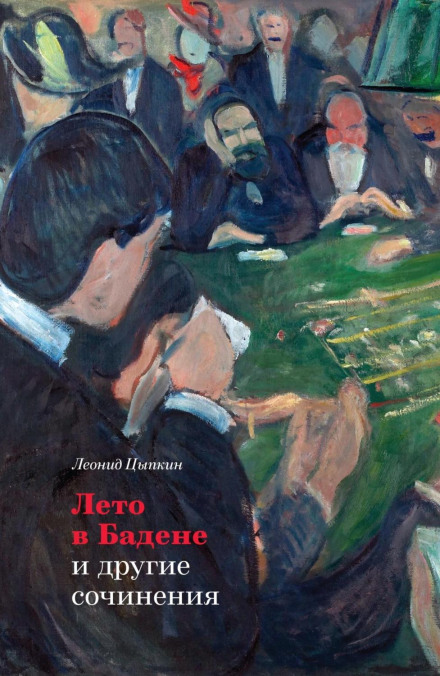
"Summer in Baden" and Other Works
6 hrs. 22 min.
Language
Russian
Author
Leonid Tsypkin
Author
Leonid Tsypkin
Narrator
Efim Shifrin
Narrator
Efim Shifrin
Description
A unique literary experiment—one of the few works of late Soviet literature that received international recognition.
In the plot of “Summer in Baden,” the story of Fyodor Mikhailovich Dostoevsky and his wife Anna Grigoryevna traveling from Petersburg to Germany in 1867 is intricately intertwined with the author’s reflections, written by a traveler who arrives a hundred years later from Moscow to Leningrad.
Tsypkin wasn’t a professional writer; he had published nothing before, and he hadn’t tried to break through Soviet censorship. However, when his friend brought the manuscript to New York and passed it to Evgeny Rubin and Sergei Dovlatov, they immediately recognized Tsypkin’s mastery and sent the work for publication. Joseph Brodsky called “Summer in Baden” first-class, and the English-language version of the book was met with delight and received glowing reviews from many well-known American publishing houses: New York Times, Los Angeles Times, The Guardian.
As if by some ominous twist of fate, Tsypkin died a week after the first publication of his work. Now he’s considered one of the most underrated classics of Russian literature, and “Summer in Baden” is a unique creation that surpassed literary canons.
The book’s narration is Joycean—written in the style of a stream of consciousness, moving in an elusive rhythm of wandering thought. The author’s stylistic skill turns the work of audio narration into a difficult task, yet theater and film actor Efim Shifrin truly virtuously performed the audiobook version of the novel.
“Without the slightest hesitation, I would include this novel among the most outstanding, uplifting, and original achievements of a century full of literature and literariness—in the broadest sense of that definition,” — Susan Sontag
“By virtuously building his fast, gasping, intensely vibrating multi-page sentence-periods, he immerses the reader in his world so that no other reality remains around,” — Karen Stepanyan, Russia’s leading researcher of Dostoevsky’s works
In the plot of “Summer in Baden,” the story of Fyodor Mikhailovich Dostoevsky and his wife Anna Grigoryevna traveling from Petersburg to Germany in 1867 is intricately intertwined with the author’s reflections, written by a traveler who arrives a hundred years later from Moscow to Leningrad.
Tsypkin wasn’t a professional writer; he had published nothing before, and he hadn’t tried to break through Soviet censorship. However, when his friend brought the manuscript to New York and passed it to Evgeny Rubin and Sergei Dovlatov, they immediately recognized Tsypkin’s mastery and sent the work for publication. Joseph Brodsky called “Summer in Baden” first-class, and the English-language version of the book was met with delight and received glowing reviews from many well-known American publishing houses: New York Times, Los Angeles Times, The Guardian.
As if by some ominous twist of fate, Tsypkin died a week after the first publication of his work. Now he’s considered one of the most underrated classics of Russian literature, and “Summer in Baden” is a unique creation that surpassed literary canons.
The book’s narration is Joycean—written in the style of a stream of consciousness, moving in an elusive rhythm of wandering thought. The author’s stylistic skill turns the work of audio narration into a difficult task, yet theater and film actor Efim Shifrin truly virtuously performed the audiobook version of the novel.
“Without the slightest hesitation, I would include this novel among the most outstanding, uplifting, and original achievements of a century full of literature and literariness—in the broadest sense of that definition,” — Susan Sontag
“By virtuously building his fast, gasping, intensely vibrating multi-page sentence-periods, he immerses the reader in his world so that no other reality remains around,” — Karen Stepanyan, Russia’s leading researcher of Dostoevsky’s works
100%
1:17:11
01
1:10:09
02
59:03
03
1:02:50
04
1:06:17
05
47:23
06
