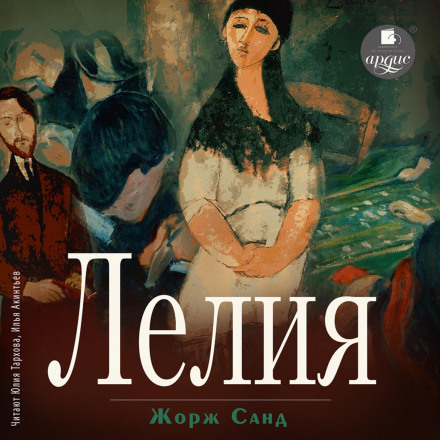
Lélia
17 hrs. 12 min.
Language
Russian
Author
George Sand
Author
George Sand
Narrator
Yuliya Tarkhova
Narrator
Ilya Akintyev
Description
George Sand wrote about her heroine Lélia three times. In 1832, she became one of the minor characters in the unfinished novella “Tremor,” about a penitent gambler sent to penal servitude. A year later, the writer placed Lélia at the center of a new novel. The plot was revised, and a small, not very complex novella turned into a philosophical work.
It is a kind of “confession of the daughter of the century”—a woman’s confession, deeply contemplating the problems of life, with anxiousness and pain looking at the surrounding world and people.
The early 1830s were the time of George Sand’s greatest pessimism, which is reflected in the novel. “Lélia is not a book; it’s a cry of sorrow,” the writer determined her new work in one of her letters.
In 1835, George Sand decides to introduce a number of changes into the work. In the preface to the 1839 edition, she says she only swapped the style of the book. In truth, the novel was subjected to such significant and serious revisions that this version is, in essence, a new book with a different overall tone.
George Sand wrote: “I want to finish the book that I once poured all the bitterness of my sufferings into, and now I want to illuminate it with a ray of hope that has been shining on me.”
It is a kind of “confession of the daughter of the century”—a woman’s confession, deeply contemplating the problems of life, with anxiousness and pain looking at the surrounding world and people.
The early 1830s were the time of George Sand’s greatest pessimism, which is reflected in the novel. “Lélia is not a book; it’s a cry of sorrow,” the writer determined her new work in one of her letters.
In 1835, George Sand decides to introduce a number of changes into the work. In the preface to the 1839 edition, she says she only swapped the style of the book. In truth, the novel was subjected to such significant and serious revisions that this version is, in essence, a new book with a different overall tone.
George Sand wrote: “I want to finish the book that I once poured all the bitterness of my sufferings into, and now I want to illuminate it with a ray of hope that has been shining on me.”
100%
02:22
Лелия - 0 - Часть 1. Глава 01
07:59
Лелия - 1 - Часть 1. Глава 02
02:40
Лелия - 2 - Часть 1. Глава 03
05:28
Лелия - 3 - Часть 1. Глава 04
01:32
Лелия - 4 - Часть 1. Глава 05
01:50
Лелия - 5 - Часть 1. Глава 06
05:43
Лелия - 6 - Часть 1. Глава 07
11:42
Лелия - 7 - Часть 1. Глава 08
03:32
Лелия - 8 - Часть 1. Глава 09
11:28
Лелия - 9 - Часть 1. Глава 10
03:21
Лелия - 10 - Часть 1. Глава 11
06:49
Лелия - 11 - Часть 1. Глава 12
23:56
Лелия - 12 - Часть 1. Глава 13
11:35
Лелия - 13 - Часть 1. Глава 14
03:37
Лелия - 14 - Часть 1. Глава 15
02:14
Лелия - 15 - Часть 1. Глава 16
01:53
Лелия - 16 - Часть 1. Глава 17
06:55
Лелия - 17 - Часть 1. Глава 18
03:22
Лелия - 18 - Часть 1. Глава 19
02:44
Лелия - 19 - Часть 1. Глава 20
13:56
Лелия - 20 - Часть 1. Глава 21
05:27
Лелия - 21 - Часть 1. Глава 22
32:52
Лелия - 22 - Часть 2. Глава 23
17:17
Лелия - 23 - Часть 2. Глава 24
11:55
Лелия - 24 - Часть 2. Глава 25
06:24
Лелия - 25 - Часть 2. Глава 26
04:55
Лелия - 26 - Часть 2. Глава 27
05:56
Лелия - 27 - Часть 2. Глава 28
34:28
Лелия - 28 - Часть 2. Глава 29
25:19
Лелия - 29 - Часть 2. Глава 30
06:18
Лелия - 30 - Часть 2. Глава 31
05:06
Лелия - 31 - Часть 2. Глава 32
20:06
Лелия - 32 - Часть 2. Глава 33
27:53
Лелия - 33 - Часть 2. Глава 34
1:36:42
Лелия - 34 - Часть 3. Глава 35
28:02
Лелия - 35 - Часть 3. Глава 36
08:24
Лелия - 36 - Часть 3. Глава 37
10:01
Лелия - 37 - Часть 3. Глава 38
10:24
Лелия - 38 - Часть 3. Глава 39
11:18
Лелия - 39 - Часть 3. Глава 40
08:29
Лелия - 40 - Часть 4. Глава 41
31:44
Лелия - 41 - Часть 4. Глава 42
14:07
Лелия - 42 - Часть 4. Глава 43
02:00
Лелия - 43 - Часть 4. Глава 44
16:09
Лелия - 44 - Часть 4. Глава 45
30:23
Лелия - 45 - Часть 5. Глава 46
16:27
Лелия - 46 - Часть 5. Глава 47
27:19
Лелия - 47 - Часть 5. Глава 48
03:04
Лелия - 48 - Часть 5. Глава 49
49:10
Лелия - 49 - Часть 5. Глава 50
17:14
Лелия - 50 - Часть 5. Глава 51
12:23
Лелия - 51 - Часть 5. Глава 52
24:09
Лелия - 52 - Часть 5. Глава 53
20:14
Лелия - 53 - Часть 6. Глава 54
19:42
Лелия - 54 - Часть 6. Глава 55
19:58
Лелия - 55 - Часть 6. Глава 56
20:36
Лелия - 56 - Часть 6. Глава 57
25:17
Лелия - 57 - Часть 6. Глава 58
05:27
Лелия - 58 - Часть 6. Глава 59
07:34
Лелия - 59 - Часть 6. Глава 60
08:51
Лелия - 60 - Часть 6. Глава 61
36:04
Лелия - 61 - Часть 6. Глава 62
35:11
Лелия - 62 - Часть 6. Глава 63
36:47
Лелия - 63 - Часть 6. Глава 64
16:15
Лелия - 64 - Часть 6. Глава 65
12:00
Лелия - 65 - Часть 6. Глава 66
12:16
Лелия - 66 - Часть 6. Глава 67
