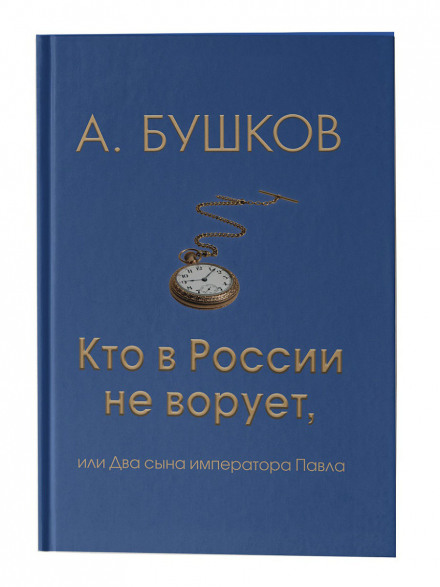
Who Doesn't Steal in Russia, or The Two Sons of Emperor Paul
7 hrs. 38 min.
Language
Russian
Author
Alexander Bushkov
Author
Alexander Bushkov
Narrator
Vsevolod Kuznetsov
Narrator
Vsevolod Kuznetsov
Description
Studying criminal reports and investigation files from the 18th–19th centuries in archives, you’re struck by how quickly the criminal world adapted to new conditions. Instead of the outdated, obsolete ways of illegal enrichment, it produced fresh, brilliant schemes. Of course, robbers and pickpockets didn’t vanish; so did housebreakers and murderers. It’s just that—on the historical stage—tight-knit criminal groups also appeared, the kind of OCGs we have today. And their “most tempting” crimes came within their interests: corruption and banking scams, embezzlement of state property and state budgets, bribes and kickbacks, printing counterfeit money, and blackmail. The criminal bosses declared themselves a new community by introducing their own “laws” for the first time: creating a common fund (grabbag) and a professional jargon, as well as a kind of initiation ritual into the “brotherhood.” In general, in the 19th century, Russia’s criminal world entered the new era stronger and more tightly organized—with enough power to set itself against order and law.
