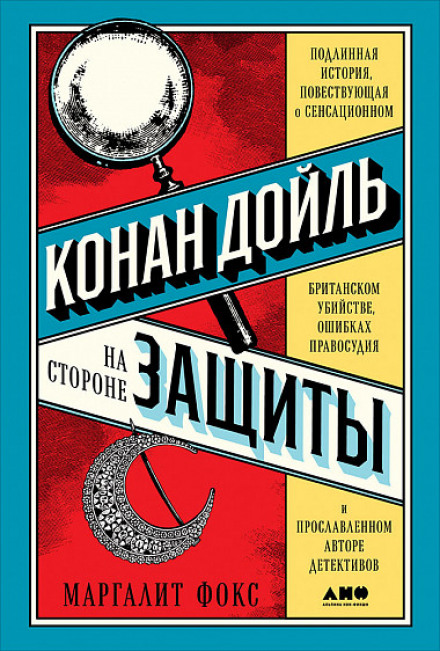
Conan Doyle for the Defense
7 hrs. 41 min.
Language
Russian
Author
Margalit Fox
Author
Margalit Fox
Narrator
Alexandra Maksimova
Narrator
Alexandra Maksimova
Description
In our time, few people know that Arthur Conan Doyle—the famous author of Sherlock Holmes detective stories—was also a well-known public figure, a defender of those unjustly convicted. Conan Doyle’s intervention helped soften the sentence of his friend accused of treason. It also helped restore legality in a loud case involving an Englishman of Indian origin who became a victim of xenophobia, and finally led to the release of Oscar Slater, who was found guilty of murdering a wealthy lady.
Sentenced to death—later commuted to life hard labor—Slater spent more than 18 years in prison, forgotten by almost everyone. Almost everyone, but not Arthur Conan Doyle. The writer managed to free Slater by conducting his own investigation, and his main weapons were observation and clear logic—the very things that brought his hero worldwide fame.
The book also tells about a man condemned to execution whose innocence was proven without modern methods of forensic science, and about a unique investigative method described in the Sherlock Holmes stories—and then applied to a real crime.
Sentenced to death—later commuted to life hard labor—Slater spent more than 18 years in prison, forgotten by almost everyone. Almost everyone, but not Arthur Conan Doyle. The writer managed to free Slater by conducting his own investigation, and his main weapons were observation and clear logic—the very things that brought his hero worldwide fame.
The book also tells about a man condemned to execution whose innocence was proven without modern methods of forensic science, and about a unique investigative method described in the Sherlock Holmes stories—and then applied to a real crime.
100%
00:28
00_00_Konan Doyl na storone zaschity
18:12
00_01_Primechanie ot avtora
08:10
00_02_Prolog. Zaklyuchennyy 2988
32:38
01_01_Shagi na lestnitse
27:01
01_02_Tainstvennyy mister Anderson
30:47
01_03_Stranstvuyuschiy rytsar, zaschitnik nespravedlivo obizhennyh
13:30
01_04_Chelovek v donegalskoy kepke
16:12
02_05_Sledy
13:26
02_06_Prototip Sherloka Holmsa
11:03
02_07_Iskusstvo retrospektivnyh rassuzhdeniy
34:10
02_08_Delo ob identifikatsii
25:55
03_09_Lyuk v polu
15:59
03_10_Poka ne nastupit smert
20:28
03_11_Zhestokoe holodnoe more
18:08
03_12_Artur Konan Doyl, konsultiruyuschiy detektiv
14:05
03_13_Strannyy sluchay Dzhordzha Edaldzhi
14:02
03_14_Zaklyuchennyy 1992
35:09
04_15_Vam izvesten moy metod
26:56
04_16_Krah Dzhona Tompsona Trencha
21:17
04_17_Ne isklyuchaya kannibalov
15:48
04_18_Pohischennaya brosh
09:28
04_19_Vorota Piterheda
18:23
04_20_Bolshe sveta, bolshe spravedlivosti
11:47
04_21_Rytsar i moshennik
08:22
04_22_Epilog. Chto s nimi stalo
