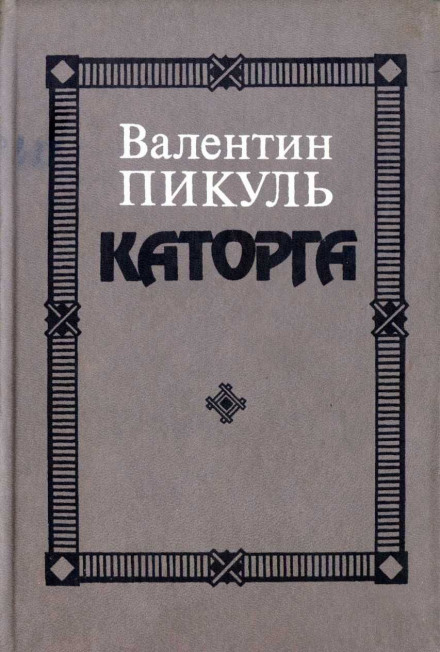
Hard Labour
17 hrs. 23 min.
Language
Russian
Author
Valentin Pikul
Author
Valentin Pikul
Narrator
Alexander Bordukov
Narrator
Alexander Bordukov
The first chapters of the novel “Katorga” (“Hard Labor”) were published in the newspaper “Kamchatskaya Pravda.” In 1987, the complete version of the novel appeared in the journals “Molodaya Gvardiya” and “Dalniy Vostok.” The novel was published as a separate book in 1988 by the “Sovremennik” publishing house.
“Katorga” tells the story of Sakhalin penal servitude convicts who did everything possible and impossible to defend the island from the Japanese army that captured it during the Russo-Japanese War of 1904–1905.
“…In 1869, the first convicts came ashore from the ships. And if you believe eyewitnesses, many of them bitterly cried when they saw where they had ended up. But tears also flowed from the convoy soldiers who guarded them… Even Chekhov, sailing toward Sakhalin, experienced a painful feeling of anxiety, nostalgia, and—partly—even fear. Indeed—what a terrible picture. The silhouettes of gloomy mountains were shrouded in smoke; somewhere above, at the level of the sky, tongues of flame bubbled from forest fires; the lighthouse beam barely pierced this hell, and enormous whales, swimming nearby, sprayed steaming fountains as they tumbled through the sea like prehistoric monsters.
But if the writer Chekhov found the sight unbearable, what must it have been like for the convicts who were to live and die there? Didn’t their famous Sakhalin proverbs form then: ‘Around is the sea, and in the middle—misery; around is water, and inside—trouble…’
In 1875, Sakhalin was recognized as legal Russian territory. From that time, Sakhalin was urgently built up with new prisons, and the police bureaucracy could no longer cope with the enormous mass of brutal criminals. The executioners’ hands cracked with lashes, gallows worked, cemeteries grew, forests burned, animals scattered, and they killed for a bottle of liquor. Russia and the Russian people feared Sakhalin like the plague, and convicts sentenced to penal servitude in Sakhalin often maimed themselves—just to get rid of the exile. In those days, even the death penalty seemed like a lighter punishment…
V.S. Pikul describes without embellishment the inhuman conditions under which penal convicts lived, the beatings, tortures, and mockery inflicted on them. And all the more surprising is that these people—so-called “society’s scum”—in a single burst of unity rise to defend their Motherland, this small piece of land called Sakhalin, when the Japanese decided to seize the island and become its full owners.”
“Katorga” tells the story of Sakhalin penal servitude convicts who did everything possible and impossible to defend the island from the Japanese army that captured it during the Russo-Japanese War of 1904–1905.
“…In 1869, the first convicts came ashore from the ships. And if you believe eyewitnesses, many of them bitterly cried when they saw where they had ended up. But tears also flowed from the convoy soldiers who guarded them… Even Chekhov, sailing toward Sakhalin, experienced a painful feeling of anxiety, nostalgia, and—partly—even fear. Indeed—what a terrible picture. The silhouettes of gloomy mountains were shrouded in smoke; somewhere above, at the level of the sky, tongues of flame bubbled from forest fires; the lighthouse beam barely pierced this hell, and enormous whales, swimming nearby, sprayed steaming fountains as they tumbled through the sea like prehistoric monsters.
But if the writer Chekhov found the sight unbearable, what must it have been like for the convicts who were to live and die there? Didn’t their famous Sakhalin proverbs form then: ‘Around is the sea, and in the middle—misery; around is water, and inside—trouble…’
In 1875, Sakhalin was recognized as legal Russian territory. From that time, Sakhalin was urgently built up with new prisons, and the police bureaucracy could no longer cope with the enormous mass of brutal criminals. The executioners’ hands cracked with lashes, gallows worked, cemeteries grew, forests burned, animals scattered, and they killed for a bottle of liquor. Russia and the Russian people feared Sakhalin like the plague, and convicts sentenced to penal servitude in Sakhalin often maimed themselves—just to get rid of the exile. In those days, even the death penalty seemed like a lighter punishment…
V.S. Pikul describes without embellishment the inhuman conditions under which penal convicts lived, the beatings, tortures, and mockery inflicted on them. And all the more surprising is that these people—so-called “society’s scum”—in a single burst of unity rise to defend their Motherland, this small piece of land called Sakhalin, when the Japanese decided to seize the island and become its full owners.”
100%
13:03
KA_01_001
13:30
KA_01_002
17:03
KA_01_003
17:41
KA_01_004
16:01
KA_01_005
21:10
KA_01_006
22:38
KA_01_007
20:28
KA_01_008
18:34
KA_01_009
20:30
KA_01_010
18:53
KA_01_011
21:14
KA_01_012
17:11
KA_01_013
21:25
KA_01_014
13:23
KA_01_015
16:32
KA_01_016
18:18
KA_01_017
23:16
KA_01_018
04:58
KA_01_019
18:35
KA_02_020
18:27
KA_02_021
23:36
KA_02_022
15:07
KA_02_023
16:31
KA_02_024
18:38
KA_02_025
18:44
KA_02_026
20:40
KA_02_027
20:35
KA_02_028
24:36
KA_02_029
28:05
KA_02_030
20:57
KA_02_031
26:27
KA_02_032
19:15
KA_02_033
21:38
KA_02_034
19:24
KA_02_035
10:41
KA_02_036
21:03
KA_03_037
14:56
KA_03_038
21:29
KA_03_039
22:04
KA_03_040
16:42
KA_03_041
17:26
KA_03_042
19:58
KA_03_043
19:24
KA_03_044
20:23
KA_03_045
22:34
KA_03_046
19:10
KA_03_047
27:21
KA_03_048
21:49
KA_03_049
26:00
KA_03_050
23:30
KA_03_051
16:05
KA_03_052
35:27
KA_03_053
