Art History for Dogs
5 hrs. 15 min.
Language
Russian
Author
Alexander Borovsky
Author
Alexander Borovsky
Narrator
Nadezhda Vinokurova
Narrator
Nadezhda Vinokurova
Description
"Ah, that’s where the dog is buried!" the cat Mona exclaimed—and wouldn’t give me the manuscript until she had read it all the way through and sat with it thoroughly. Then, giving it back, she sighed: "Well why does this Borovsky write only for dogs and people—and never for cats…"
Mikhail Trophimenko, 'Ъ'
In this book, Borovsky appears not only as a critic, but also as a writer—subtle and witty. As if in contrast to the gloomy criticism that has caused contemporary art to lose its audience. Oleg Kulik has a work called "The Family of the Future." In such a family, this book would be a desk item.
Marat Gelman
Don Quixote-ism—to write against all the normal rules and "discourses" of fashionable criticism of contemporary art.
Anna Tolstova, "Arthronicle"
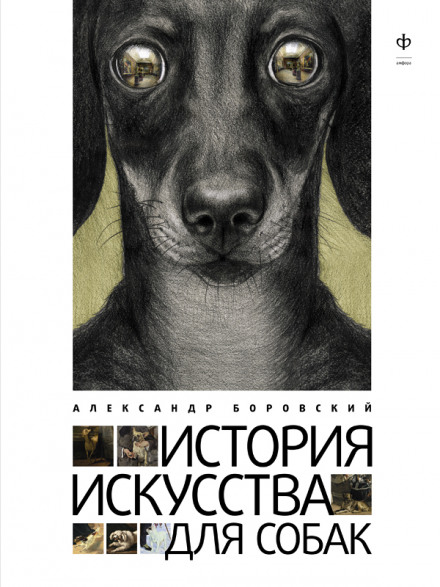
A new book by Alexander Borovsky, a well-known art historian and curator who heads the Department of Newest Trends at the State Russian Museum in St. Petersburg, presents—no more, no less— a history of art from the earliest times to the present day, told by two dogs: the court dachshund Tabaker Twenty-Seventh and a mongrel named Ryzhiy, who lives in a large museum. This unexpected move makes the book interesting both for adults and children.
Mikhail Trophimenko, 'Ъ'
In this book, Borovsky appears not only as a critic, but also as a writer—subtle and witty. As if in contrast to the gloomy criticism that has caused contemporary art to lose its audience. Oleg Kulik has a work called "The Family of the Future." In such a family, this book would be a desk item.
Marat Gelman
Don Quixote-ism—to write against all the normal rules and "discourses" of fashionable criticism of contemporary art.
Anna Tolstova, "Arthronicle"
A new book by Alexander Borovsky, a well-known art historian and curator who heads the Department of Newest Trends at the State Russian Museum in St. Petersburg, presents—no more, no less— a history of art from the earliest times to the present day, told by two dogs: the court dachshund Tabaker Twenty-Seventh and a mongrel named Ryzhiy, who lives in a large museum. This unexpected move makes the book interesting both for adults and children.
100%
00:25
00_00_Borovskiy_Istoriya iskusstva dlya sobak
01:35
00_01_Soderzhanie
12:08
01_Dvortsovaya
05:18
02_Dvorovaya
04:57
03_Zhalostlivaya i mechtatelnaya
06:01
04_Pobeg
11:43
05_Vstrecha
03:35
06_Muzeynaya tema
04:30
07_Vvedenie v iskusstvoznaniya novogo tipa
05:38
08_Etyud o perspektive
08:39
09_Esteticheskoe otnoshenie sobaki k deystvitelnosti
11:08
10_Natsionalnaya pochva
21:20
11_Ryzhiy kak istorik russkogo iskusstva
11:40
12_Sentimentalizm, romantizm, povsednevnost
33:06
13_Velikiy ohotnichiy put
11:00
14_Chelovekovedenie i sobakovedenie
24:30
15_Sobaka kak dvigatel iskusstva
15:46
16_Nyuh na stil
30:53
17_Brodyachaya sobaka avangard
16:04
18_Nuzhna sobaka povodyr
08:15
19_Skorbnoe predchuvstvie
10:08
20_mezhdu kosmosom i podpolem
16:32
21_Na povodke
09:51
22_Pop art, popkorn, populizm
09:14
23_Nas ne dogonish
21:53
24_Dolgoe proschanie
