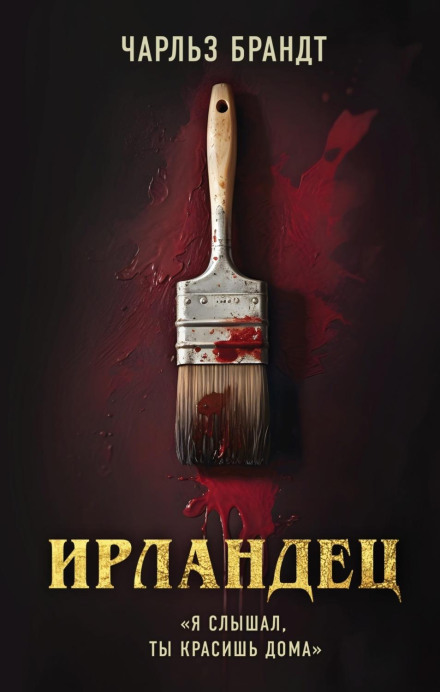
I Heard You Paint Houses
15 hrs. 6 min.
Language
Russian
Author
Charles Brandt
Author
Charles Brandt
Narrator
Andrey Trommelman
Narrator
Andrey Trommelman
Robert De Niro, Al Pacino, Harvey Keitel in Martin Scorsese’s crime drama “THE IRISHMAN.”
“An astonishing book,” Robert De Niro said as he handed it to Scorsese. And he wasn’t wrong. An irresistible desire to turn this book into a film seized the master at once—so that he could realize it a decade later.
“I heard you paint houses”—in the language of the mob means “I heard you kill people.” “Painting” refers to blood.
This is the rare case when mafia bosses recognized a book about themselves as truthful: Frank “The Irishman” Sheeran, a regular hitman for one of the “families,” told his story before he died. His tales were listened to with bated breath by experienced prosecutors and FBI agents. For the first time, a criminal of that level broke “omertà”—the law of silence.
Rowdy youth during the Great Depression, the first smell of blood in World War II, a chance entry into the closed world of Italian-American organized crime—and leaving it costs more than entering, when you have to choose between your life and the life of your best friend.
A documentary saga of the legendary 1950s–1970s era, when the mafia entered the struggle for power in America—bribing some and removing others.
Why was President Kennedy killed, and why did everyone lose because of it? Who was the model for the Godfather in the famous film? Who took out the top labor-union boss and billionaire Jimmy Hoffa—now a posthumous hero of the fourth film adaptation? And what drove Hoffa’s killer, Frank “The Irishman” Sheeran, to come to a penitent confession?
Engrossing and sharp, Charles Brandt’s book became an instant classic in the true-crime genre.
“If the people the author contacted while recording Sheeran’s story had suspected that Sheeran would confess to everything on tape, they would have killed both of them.” — Joe Pistone, former undercover FBI agent, author of “Donnie Brasco.”
“‘I Heard You Paint Houses’ is the best mafia book I’ve ever read—and trust me, I’ve read them all.” — Stephen Van Zandt, actor from “The Sopranos.”
“Told with such brevity and power that ‘The Sopranos’ seems like an obvious fake.” — New York Daily News
“An astonishing book,” Robert De Niro said as he handed it to Scorsese. And he wasn’t wrong. An irresistible desire to turn this book into a film seized the master at once—so that he could realize it a decade later.
“I heard you paint houses”—in the language of the mob means “I heard you kill people.” “Painting” refers to blood.
This is the rare case when mafia bosses recognized a book about themselves as truthful: Frank “The Irishman” Sheeran, a regular hitman for one of the “families,” told his story before he died. His tales were listened to with bated breath by experienced prosecutors and FBI agents. For the first time, a criminal of that level broke “omertà”—the law of silence.
Rowdy youth during the Great Depression, the first smell of blood in World War II, a chance entry into the closed world of Italian-American organized crime—and leaving it costs more than entering, when you have to choose between your life and the life of your best friend.
A documentary saga of the legendary 1950s–1970s era, when the mafia entered the struggle for power in America—bribing some and removing others.
Why was President Kennedy killed, and why did everyone lose because of it? Who was the model for the Godfather in the famous film? Who took out the top labor-union boss and billionaire Jimmy Hoffa—now a posthumous hero of the fourth film adaptation? And what drove Hoffa’s killer, Frank “The Irishman” Sheeran, to come to a penitent confession?
Engrossing and sharp, Charles Brandt’s book became an instant classic in the true-crime genre.
“If the people the author contacted while recording Sheeran’s story had suspected that Sheeran would confess to everything on tape, they would have killed both of them.” — Joe Pistone, former undercover FBI agent, author of “Donnie Brasco.”
“‘I Heard You Paint Houses’ is the best mafia book I’ve ever read—and trust me, I’ve read them all.” — Stephen Van Zandt, actor from “The Sopranos.”
“Told with such brevity and power that ‘The Sopranos’ seems like an obvious fake.” — New York Daily News
