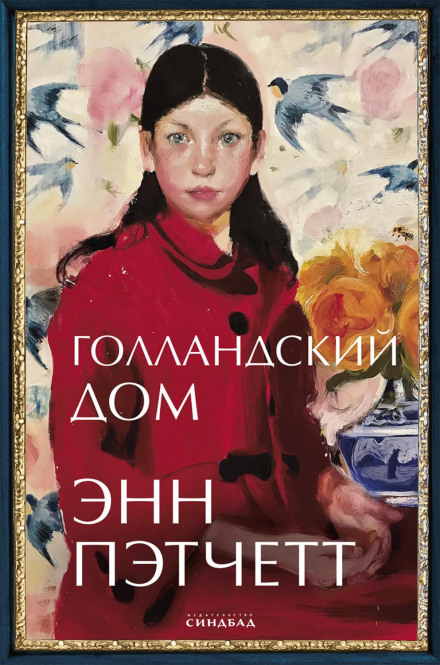
The Dutch House
11 hrs. 7 min.
Language
Russian
Author
Ann Patchett
Author
Ann Patchett
Narrator
Stanislav Kontsevich
Narrator
Stanislav Kontsevich
Description
A new novel by American writer Ann Patchett reminds one of a Grimms’ fairy tale grown into the scale of a family epic. The story of the main characters, Danny Conroy and his sister Maeve, spans the entire second half of the twentieth century, and their fates become intertwined in a fateful way with the Dutch House—a mansion in the east of Pennsylvania once owned by a fallen dynasty of Dutch magnates, the Van Houbeyks. The Dutch House is not inhabited by ghosts in itself, but everyone who crosses its threshold, in a sense, becomes a ghost of the house—wherever they go later, wherever they live afterwards, they carry that image with them everywhere.
Danny and Maeve have only one thing: their father, gone too soon; a mother who long ago turned into a memory; a stepmother who seems to have stepped out of a nightmare; and a sinister ancestral mansion. As well as adult life that keeps not beginning: a childhood curse, the stamp of orphanhood, the impossibility of breaking the bonds that were once formed. “The Dutch House” is a story about love’s victory over evil. A victory mixed with losses and, for the most part, not entirely obvious—because in the end the reader must figure out which side they are on, and whether there was a villain here. And if there was—who?
Danny and Maeve have only one thing: their father, gone too soon; a mother who long ago turned into a memory; a stepmother who seems to have stepped out of a nightmare; and a sinister ancestral mansion. As well as adult life that keeps not beginning: a childhood curse, the stamp of orphanhood, the impossibility of breaking the bonds that were once formed. “The Dutch House” is a story about love’s victory over evil. A victory mixed with losses and, for the most part, not entirely obvious—because in the end the reader must figure out which side they are on, and whether there was a villain here. And if there was—who?
