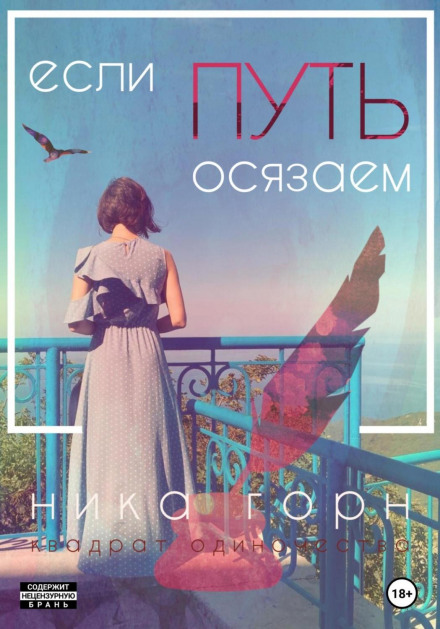
If the Path Is Tangible
13 hrs. 20 min.
What could possibly highlight the value of life better than death? The confessional novel «If the Path Is Tangible» reveals the underside of the obsession of Kira, a woman in love. She searches for causes behind accidents, carefully gathering scraps of the path into a single tapestry. She hopes to calculate the one wrong turn that led her to her madness—yet she sinks deeper and deeper into reflection. As if writing a mirror-reflection within a mirror, the author builds a book about Kira, who in turn writes a book about Herman. Her narrative patchwork is woven from memories and dreams. A compositional puzzle of the plot, shifts of eras and locations, lyrical digressions—everything carries Kira’s story beyond ordinary romantic prose. A novel of states, an illusion-novel, an expectation-novel takes the reader into a labyrinth of emotional multitudes, where a random choice condemns the characters to an empty, endless run around the circle of loneliness. From the first glance to the last scream. Who will be out of the game first? Who must make the main choice? The author on choosing a pseudonym: “Why Nikа Gorn and not Wendy Lynch, for example?”—you ask. First, thankfully I’m far from Wendy Lynch. And second, everything is a bit simpler—and far more pleasant—than with Wendy. An associative series—distant, detached, timeless, serene—led me to the image of highlands. In the mountains, alongside poetry, beauty lives in a constant, unseen way. The flora of the Celestial Empire holds many curious names, but my choice fell on a medicinal flower: Arnica of the mountains, which heals wounds and cures the heart. Then came a semantic bit of magic: «Arnica» shortened into the goddess of victory, “Nika,” and “Mountain” into the call “Gorn.” From now on, Nika Gorn sounds and heals—speaks and shows—for you.
Music: Anastasia Goncharova «If the Path Is Tangible».
Music: Anastasia Goncharova «If the Path Is Tangible».
