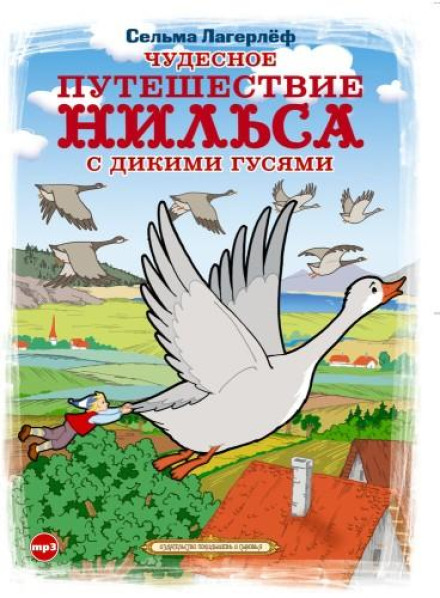
The Wonderful Adventures of Nils
5 hrs. 3 min.
Language
Russian
Author
Selma Lagerlöf
Author
Selma Lagerlöf
Narrator
Alexander Bordukov
Narrator
Alexander Bordukov
Description
Originally, the book was an engaging geography text about Sweden, written in literary form for first-grade students—nine-year-old children. In Sweden, since 1868 there had already been a “State Reading Book,” but, despite being innovative for its time, by the end of the nineteenth century it had lost relevance. One of the leaders of the General Union of Teachers in Primary Schools, Alfred Dahlin, proposed creating a new book, one that teachers and writers would work on together. His choice fell on Selma Lagerlöf, who had already become famous for her novel “The Story of Gösta Berling,” and who was also a former teacher. She agreed to Dahlin’s proposal, but refused co-authors. Lagerlöf began work on the book in the summer of 1904.
The writer believed that several textbooks were needed for students of different ages: first-graders were to receive a geography book about Sweden; second-graders—a book about their native history; and third and fourth graders—descriptions of other countries in the world, as well as accounts of discoveries and inventions and the country’s social structure. Over time, Lagerlöf’s project was carried out, and the first in the line of schoolbooks became “The Wonderful Journey of Nils…” Soon, reading books appeared as well: “Swedes and Their Leaders” by Werner von Heidenstam and “From Pole to Pole” by Sven Hedin.
The writer believed that several textbooks were needed for students of different ages: first-graders were to receive a geography book about Sweden; second-graders—a book about their native history; and third and fourth graders—descriptions of other countries in the world, as well as accounts of discoveries and inventions and the country’s social structure. Over time, Lagerlöf’s project was carried out, and the first in the line of schoolbooks became “The Wonderful Journey of Nils…” Soon, reading books appeared as well: “Swedes and Their Leaders” by Werner von Heidenstam and “From Pole to Pole” by Sven Hedin.
