The Great Game Without Rules
10 hrs. 8 min.
Language
Russian
Author
Alexander Mikhaylovsky
Author
Alexander Kharnikov
Narrator
Max Radman
Narrator
Max Radman
A Russian squadron that set sail from the shores of Syria at the end of 2012 somehow found itself in 1904. It turned out to be near Chemulpo, where the cruiser “Varyag” and the gunboat “Koreets” entered a deadly battle against a Japanese squadron. Our sailors couldn’t stand aside—because “Russians in war don’t abandon their own.” This interference in the course of history and the events that followed served as a trigger not only for changes in the Russo-Japanese War, but for changes in the entire world’s history. Japan is defeated both at sea and on land. Yet the victim of British agents was Emperor Nicholas II.
Many events have happened since then. Japan was forced to sign a peace treaty; the emperor’s daughter Masuhito’s daughter Matuhito became the wife of the new Russian tsar Mikhail II. The Bolshevik leader Lenin returned to Russia, where, together with the escaped exile Joseph Dzhugashvili, he agreed to take part in building a new Russia.
But not everyone liked the changes in the empire’s internal and foreign policy. Enemies are ready for revenge.
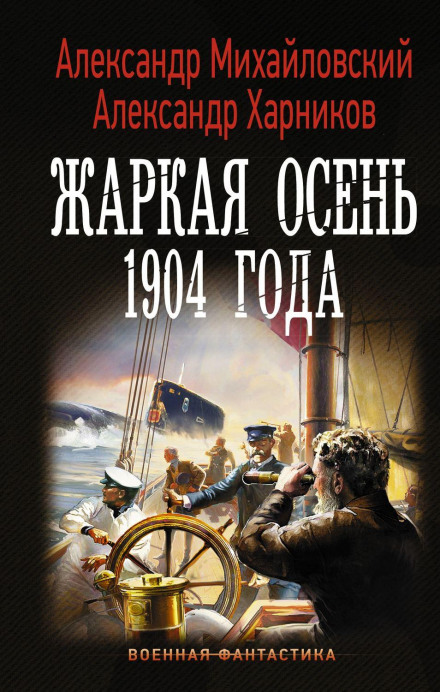
Previously published under the title “The Hot Autumn of 1904.”
Many events have happened since then. Japan was forced to sign a peace treaty; the emperor’s daughter Masuhito’s daughter Matuhito became the wife of the new Russian tsar Mikhail II. The Bolshevik leader Lenin returned to Russia, where, together with the escaped exile Joseph Dzhugashvili, he agreed to take part in building a new Russia.
But not everyone liked the changes in the empire’s internal and foreign policy. Enemies are ready for revenge.
Previously published under the title “The Hot Autumn of 1904.”
1.
Rendezvous with the Varyag
(narrated by
Pozhiloy Ksenomorf)
2.
The Petersburg Frontier. The Internal Front
(narrated by
Pozhiloy Ksenomorf)
3.
The World of Tsar Mikhail
(narrated by
Pozhiloy Ksenomorf)
4.
By a Different Path
(narrated by
Max Radman)
5.
Hostile Whirlwinds
(narrated by
Max Radman)
6.
The Great Game Without Rules
6.
The Hot Autumn of 1904
(narrated by
Max Radman)
7.
War for the Straits. A Call to Campaign
(narrated by
Sergey Udelov)
8.
War for the Straits. Cover Operation
(narrated by
Sergey Udelov)
9.
War for the Straits. The Decisive Blow
(narrated by
Sergey Udelov)
