The Lady in the Lake
7 hrs. 25 min.
Language
Russian
Author
Raymond Chandler
Author
Raymond Chandler
Narrator
Egor Partin
Narrator
Egor Partin
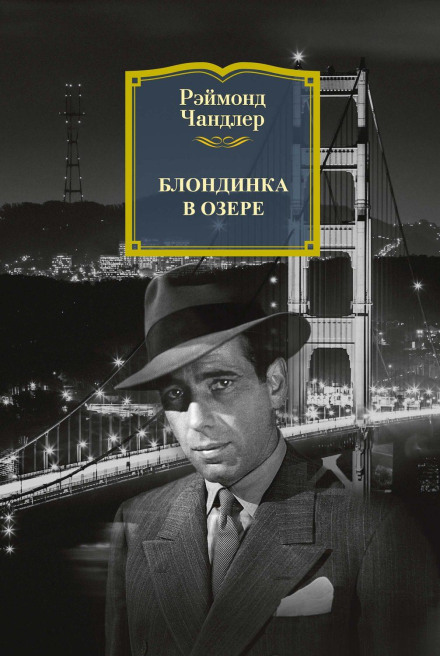
Raymond Chandler’s books about Philip Marlowe not only laid the foundations of the “hard-boiled” detective genre, but also became a modern classic in the broadest sense. “Raymond Chandler is an original stylist, and his hero Philip Marlowe is immortal, like Sherlock Holmes,” wrote the eminent Anthony Burgess.
Marlowe presents a new type of detective hero: he is a romantic, a sentimental knight who always preserves his individuality and observes a code of honor. He does not go looking for adventures—they find him. Moreover, the plot, brimming with the brand-name dizzying intricacies, usually begins quite innocently. Thus, in The Blonde in the Lake, the director of a large perfume company asks Marlowe to find his wife, who has run away from their country home.
Several benchmark film noirs are based on Chandler’s plots, and for many, the image of Marlowe is firmly associated with Humphrey Bogart. The Blonde in the Lake was adapted in 1946 by Robert Montgomery, who himself played the leading role; and this was one of the first films in world cinema, shot from beginning to end using a subjective camera.
1.
The Big Sleep
(narrated by
Evgeny Ternovsky)
1.
The Big Sleep
(narrated by
Egor Partin)
2.
Farewell, My Lovely
(narrated by
Egor Partin)
2.
Farewell, My Lovely
(narrated by
Evgeny Ternovsky)
3.
The High Window
(narrated by
Egor Partin)
4.
The Lady in the Lake
6.
The Long Goodbye
(narrated by
Egor Partin)
6.
The Long Goodbye
(narrated by
Vladimir Shevyakov)
9.
Two Little Sisters from Honolulu (Goldfish)
(narrated by
Vyacheslav Gerasimov)
