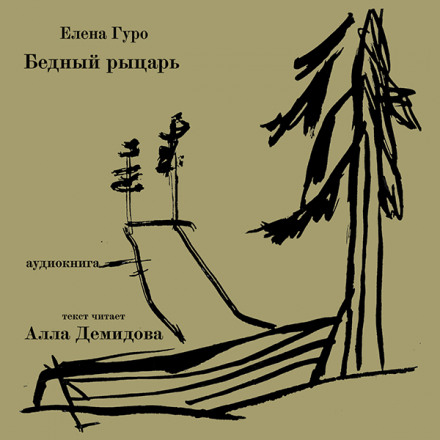
The Poor Knight
3 hrs. 42 min.
Description
In “The Poor Knight,” transparency and enlightenment become a sign of the spirit’s presence. The Spirit Knight enters plants, animals, and objects: “And there has always been the tearful enlightenment of a thing.” And on the other side, the acknowledgment of life everywhere and in everything leads to light: “Who considers everything alive and loves all that is alive will never remain in darkness.” The endless variety of forms, united by spirit, is understood by Guro as an endless process of life; thus, by comprehending the Laws of the Spirit, one can attain immortality: “And all that can pass from life to death, from decay—can become imperishable, so that death itself is a sign of immortality for you.”
Thus, in the “view from above”—“from there”—the world is seen in complete unity, and the spiritual essence hidden within everything is revealed. The “view from above,” therefore, also acquires another important meaning: the imperviousness of a three-dimensional form, since it is changeable and as if unanchored, turns out to be illusory. The knight described as a being of another space, a bodiless creature, capable of flying, does not notice “three-dimensional” obstacles. Therefore, it is emphasized that the Knight “always went away” from Mrs. Elsa not by a door leading into a corridor, onto a staircase, but through a glass door, via a hanging balcony where there was no staircase—only a pink sunset.
Thus, in the “view from above”—“from there”—the world is seen in complete unity, and the spiritual essence hidden within everything is revealed. The “view from above,” therefore, also acquires another important meaning: the imperviousness of a three-dimensional form, since it is changeable and as if unanchored, turns out to be illusory. The knight described as a being of another space, a bodiless creature, capable of flying, does not notice “three-dimensional” obstacles. Therefore, it is emphasized that the Knight “always went away” from Mrs. Elsa not by a door leading into a corridor, onto a staircase, but through a glass door, via a hanging balcony where there was no staircase—only a pink sunset.
100%
18:58
01
19:55
02
30:51
03
13:57
04
16:22
05
21:59
06
18:06
07
27:41
08
34:42
09
19:40
10
