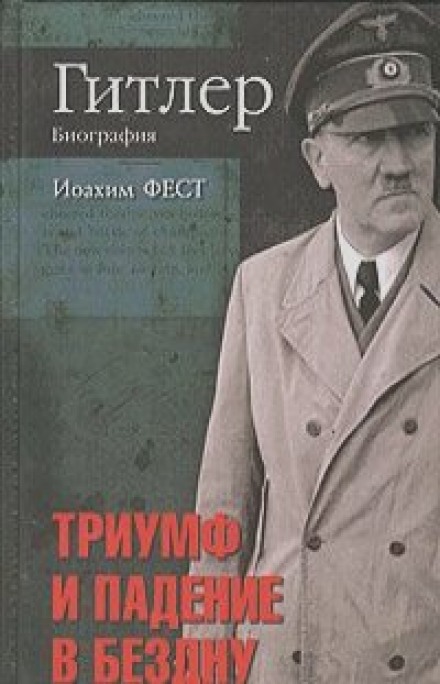
Adolf Hitler (Vol. 3)
18 hrs. 20 min.
Language
Russian
Author
Joachim Fest
Author
Joachim Fest
Narrator
Alexander Kharitonov
Narrator
Alexander Kharitonov
With a long delay, Joachim Fest’s book reaches the Russian reader. It had to rest on shelves in special archives for years, like most Western works about fascism. Back then, recognition itself was dangerous. For all the distinctiveness of the brown-and-red totalitarianism, the similarity of structures and leaders was simply too obvious.
Nowadays, readers’ attention will likely be drawn to striking analogies and parallels between Weimar Germany and modern Russia. A socio-economic crisis, a vacuum of power, corruption, collective rage, politicization, the loss of a sense of security—this is fertile ground for fascism. Let’s not forget that fascism itself was a revolt “for the sake of order.”
Our own harsh experience pushes us to look anew at many books and concepts we used to treat with arrogant criticism. And Fest’s book, without a doubt, belongs to the category of works with which it is necessary to become acquainted in order to shape our historical self-awareness, political and spiritual culture—and therefore to develop immunity against fascist and any totalitarian infection.
Nowadays, readers’ attention will likely be drawn to striking analogies and parallels between Weimar Germany and modern Russia. A socio-economic crisis, a vacuum of power, corruption, collective rage, politicization, the loss of a sense of security—this is fertile ground for fascism. Let’s not forget that fascism itself was a revolt “for the sake of order.”
Our own harsh experience pushes us to look anew at many books and concepts we used to treat with arrogant criticism. And Fest’s book, without a doubt, belongs to the category of works with which it is necessary to become acquainted in order to shape our historical self-awareness, political and spiritual culture—and therefore to develop immunity against fascist and any totalitarian infection.
100%
1:54:34
000 Книга шестая.Годы подготовки. Глава I Отвоёванная внешняя политика.
1:57:17
001 Глава II Взгляд на безликую личность.
2:15:18
002 Глава III ''Самый великий немец''.
1:57:47
003 Глава IV Развязывание войны.
1:03:34
004 Промежуточное размышление III Неудавшаяся война.
1:35:18
005 Книга седьмая.Победитель и побеждённый.Глава I Полководец.
1:17:35
006 Глава II. Третья мировая война.
1:49:57
007 Глава III.Утраченная реальность.
1:44:31
008 Книга восьмая.Гибель.Глава I Сопротивление.
1:50:48
009 Глава II Гибель богов.
54:01
010 Заключительное размышление неспособность к выживанию.
