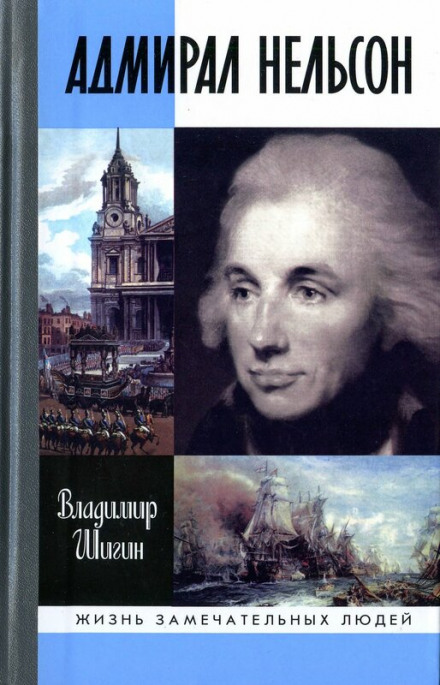
Admiral Nelson
17 hrs. 49 min.
Language
Russian
Author
Vladimir Shigin
Author
Vladimir Shigin
Narrator
Irina Vorobyova
Narrator
Irina Vorobyova
Description
Two centuries have passed since Nelson’s death, yet his name is known to everyone even today. In England, it is among the most respected. Trafalgar Square, Nelson’s Column, and the ship “Victory” frozen in eternal harbor—everything is a tribute to the admiral from grateful descendants. The British National Maritime Museum has long since become a temple of worship to the beloved hero.
He was not the sugary saint-like hero that his countrymen portray him as now. He could be naïve and self-interested, cruel and cunning, he loved money and excessive honors, sought protection and was a careerist. His life is full of ups as well as downs. Yet he had an amazing ability to turn his own shortcomings into benefits for his popularity. Even his scandalous relationship with Lady Hamilton brought Nelson no less posthumous fame than his naval feats.
So why is it specifically Nelson that sailors of the whole world still honor as one of the greatest naval commanders of all time and all peoples? The answer is quite simple. Only Nelson was destined to give the enemy major naval battles—at Aboukir, Copenhagen, and Trafalgar. Each of them ended in the complete destruction of the enemy fleet and had the most important strategic consequences not only for England, but for all of Europe.
Many admirals before and after Nelson achieved victories no less loud and glorious, but no one else could do it three times…
Nelson’s biographers report that when, after his death, his body was opened, it turned out that Nelson had a very small heart. This is yet another proof that selfless bravery, as well as the ability to love selflessly, can live even in the smallest heart.
He was not the sugary saint-like hero that his countrymen portray him as now. He could be naïve and self-interested, cruel and cunning, he loved money and excessive honors, sought protection and was a careerist. His life is full of ups as well as downs. Yet he had an amazing ability to turn his own shortcomings into benefits for his popularity. Even his scandalous relationship with Lady Hamilton brought Nelson no less posthumous fame than his naval feats.
So why is it specifically Nelson that sailors of the whole world still honor as one of the greatest naval commanders of all time and all peoples? The answer is quite simple. Only Nelson was destined to give the enemy major naval battles—at Aboukir, Copenhagen, and Trafalgar. Each of them ended in the complete destruction of the enemy fleet and had the most important strategic consequences not only for England, but for all of Europe.
Many admirals before and after Nelson achieved victories no less loud and glorious, but no one else could do it three times…
Nelson’s biographers report that when, after his death, his body was opened, it turned out that Nelson had a very small heart. This is yet another proof that selfless bravery, as well as the ability to love selflessly, can live even in the smallest heart.
