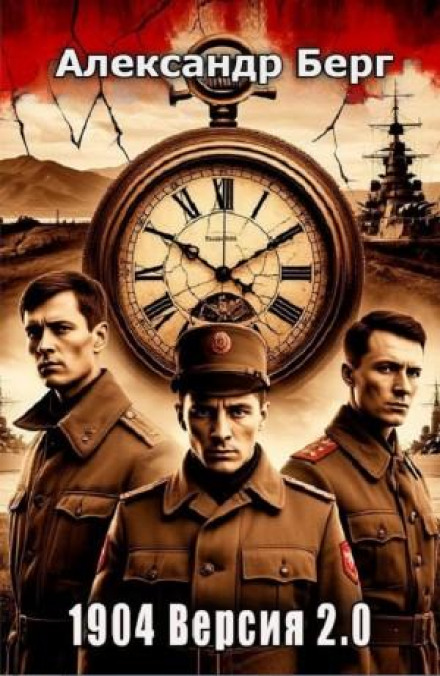
1904 Version 2.0
10 hrs. 35 min.
Language
Russian
Author
Alexander Berg
Author
Alexander Berg
Narrator
Chaitsyn Alexander (Alex)
Narrator
Chaitsyn Alexander (Alex)
16+ The Russo-Japanese War is perhaps one of the most significant wars in the history of Russia: the defeat of a huge empire by a small island state, supported by England and the USA, exposed the incompetence of tsarist power. Short-sighted government policy and the private interests of those in power were—among other reasons—both the cause of this war and its defeat. Too many in Russia were interested not in victory, but specifically in defeat—from revolutionaries of all kinds to individual great princes of the House of Romanov. Each of them had their own interests, and in the end it was ordinary soldiers, sailors, and officers who paid for them with their lives.
Author’s note: I want to say right away that in this book there won’t be only epic naval battles, packed with lots of specific naval terms and detailed accounts of who got hit, how, and where, and what it led to. Instead, the action of the book will unfold in a dispersed manner—both in time and in places. To forge a sword, first you have to learn the blacksmith; build the forge; make the tools; obtain coal and ore; then smelt iron from the ore, and only afterward forge the sword from that iron. That’s why the actions of the book will take place not only in the Far East, but also in central Russia, Europe, America, and even in Africa—with the start moved all the way back to the distant year 1885. Moreover, it’s not enough to just address the consequences; you must eliminate the root cause, otherwise a win in the war today can turn into big problems in the future. I’m writing about this now so later there won’t be outrage: I thought it would be like this, but it turned out to be that way—so I’m warning you in advance.
Author’s note: I want to say right away that in this book there won’t be only epic naval battles, packed with lots of specific naval terms and detailed accounts of who got hit, how, and where, and what it led to. Instead, the action of the book will unfold in a dispersed manner—both in time and in places. To forge a sword, first you have to learn the blacksmith; build the forge; make the tools; obtain coal and ore; then smelt iron from the ore, and only afterward forge the sword from that iron. That’s why the actions of the book will take place not only in the Far East, but also in central Russia, Europe, America, and even in Africa—with the start moved all the way back to the distant year 1885. Moreover, it’s not enough to just address the consequences; you must eliminate the root cause, otherwise a win in the war today can turn into big problems in the future. I’m writing about this now so later there won’t be outrage: I thought it would be like this, but it turned out to be that way—so I’m warning you in advance.
100%
37:40
1904 Версия 2.0 01
32:45
1904 Версия 2.0 02
32:49
1904 Версия 2.0 03
33:31
1904 Версия 2.0 04
32:47
1904 Версия 2.0 05
33:16
1904 Версия 2.0 06
34:09
1904 Версия 2.0 07
33:34
1904 Версия 2.0 08
33:35
1904 Версия 2.0 09
32:09
1904 Версия 2.0 10
32:54
1904 Версия 2.0 11
33:15
1904 Версия 2.0 12
33:30
1904 Версия 2.0 13
32:41
1904 Версия 2.0 14
35:01
1904 Версия 2.0 15
34:05
1904 Версия 2.0 16
32:39
1904 Версия 2.0 17
32:57
1904 Версия 2.0 18
31:52
1904 Версия 2.0 19
