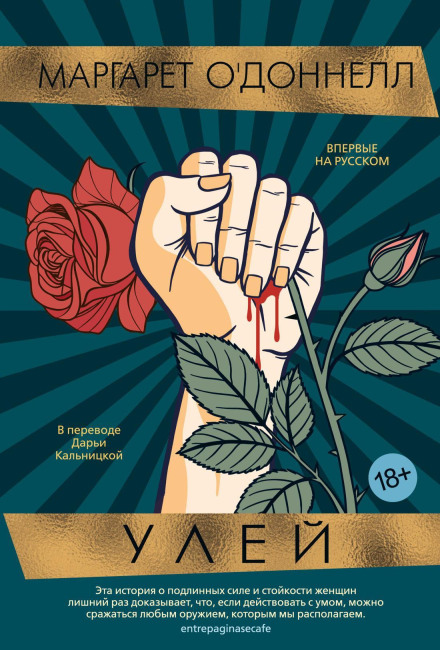
The Hive
11 hrs. 3 min.
Language
Russian
Author
Margaret O'Donnell
Author
Margaret O'Donnell
Narrator
Olga Bogdanova
Narrator
Olga Bogdanova
Description
In some nameless country, an economic collapse has struck: unemployment has soared, and a dictator has come to power. His “solution” is simple and brutal—to forbid women to work, so, in his words, they won’t steal jobs from men. Women’s place is in the home: to bear children, keep house, and serve her husband—doesn’t it amount to that?
For thirty years now, half the population has been living without daring to lift its head. Most women are required to be voiceless appendages of men and to constantly “replenish” the country with children. Some are still allowed to work, but only in the heaviest and dirtiest jobs—the ones men won’t do—and they are officially categorized not into the “second,” but into the “third” grade. From childhood, girls are trained to believe they’re capable of nothing more, but not everyone submits to this conditioning. And now, three decades later, a few powerless female workers gather at night in the cellar of an abandoned house to prepare a rebellion—one of them has been nurturing it for years—while across the city the secret police are searching for them…
Маргарет О’Доннелл (1932–2019) is an Irish public figure and advocate for women’s rights, an active participant in the movement to legalize contraception in Ireland. The anti-utopia “The Hive,” written five years earlier and in many ways anticipating Margaret Atwood’s “The Handmaid’s Tale,” is O’Доннелл’s only novel: a classic of feminist literature that for decades has been undeservedly left in the shadows—and is only now returning to readers—and, alas, still sounds frighteningly modern. It is a story about how change comes through pain, but is possible and inevitable; about how one woman’s fierce dream of justice can awaken hundreds of thousands—and move the world from its place.
For thirty years now, half the population has been living without daring to lift its head. Most women are required to be voiceless appendages of men and to constantly “replenish” the country with children. Some are still allowed to work, but only in the heaviest and dirtiest jobs—the ones men won’t do—and they are officially categorized not into the “second,” but into the “third” grade. From childhood, girls are trained to believe they’re capable of nothing more, but not everyone submits to this conditioning. And now, three decades later, a few powerless female workers gather at night in the cellar of an abandoned house to prepare a rebellion—one of them has been nurturing it for years—while across the city the secret police are searching for them…
Маргарет О’Доннелл (1932–2019) is an Irish public figure and advocate for women’s rights, an active participant in the movement to legalize contraception in Ireland. The anti-utopia “The Hive,” written five years earlier and in many ways anticipating Margaret Atwood’s “The Handmaid’s Tale,” is O’Доннелл’s only novel: a classic of feminist literature that for decades has been undeservedly left in the shadows—and is only now returning to readers—and, alas, still sounds frighteningly modern. It is a story about how change comes through pain, but is possible and inevitable; about how one woman’s fierce dream of justice can awaken hundreds of thousands—and move the world from its place.
100%
18:05
Улей 01
21:15
Улей 02
40:19
Улей 03
17:01
Улей 04
39:58
Улей 05
25:02
Улей 06
15:38
Улей 07
31:29
Улей 08
20:44
Улей 09
36:38
Улей 10
21:21
Улей 11
09:46
Улей 12
42:18
Улей 13
17:44
Улей 14
24:39
Улей 15
09:45
Улей 16
20:01
Улей 17
35:03
Улей 18
29:08
Улей 19
24:27
Улей 20
40:32
Улей 21
43:35
Улей 22
26:27
Улей 23
17:05
Улей 24
19:13
Улей 25
16:27
Улей 26
