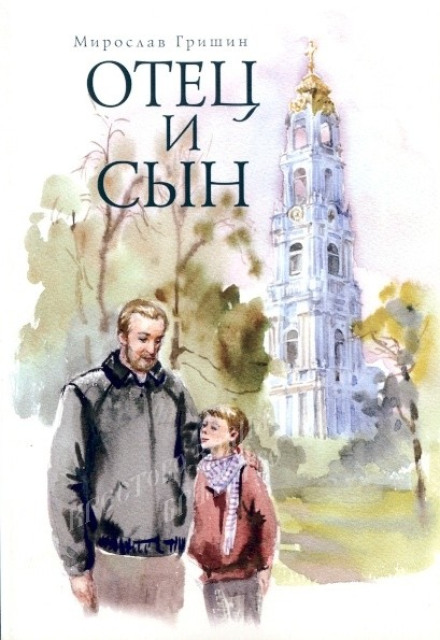
Батько і син
2 год. 51 хв.
Мова
російська
Автор
Мирослав Гришин
Автор
Мирослав Гришин
Читець
Ольга Плетньова
Читець
Ольга Плетньова
Опис
Третя збірка Мирослава Гришина невелика, але містить різні за обсягом і жанром твори: оповідання, притчі, есе. За всіх їхніх відмінностей, їх поєднує одне — у кожному з них звучить тема вибору: робити чи не робити; з ким ти, хто ти, який ти? Кожен із нас щодня, а інколи й щогодини опиняється перед своїм вибором, але не кожен може це осмислити, перенести на папір і поділитися з оточенням.
Мирославу Гришину це вдалося.
Частина 1. Кому служити
01_01_Кому служити
01_02_Післямова
01_03_Морзянка
01_04_Китель у поїзді
01_05_Як навчитися жити в любові
01_06_Нічна траса
01_07_Розумна й нерозумна діва
01_08_І радощі ваші ніхто не відбере від вас
01_09_Після снів
Частина 2. Мудрість цього світу
02_01_Що таке фашизм
02_02_Амстердам. Сонце правди
02_03_Поїздка на Великдень
02_04_Спроба худ. Аналізу к/ф «Острів»
Частина 3. Своя лінія в житті
03_01_Своя лінія в житті
03_02_Друге народження сестри Валентини
03_03_Синочок царського монастиря
03_04_Найрозумніший у клаcі
03_05_Сенс православної віри
03_06_Батько і син
Мирославу Гришину це вдалося.
Зміст:
Частина 1. Кому служити
01_01_Кому служити
01_02_Післямова
01_03_Морзянка
01_04_Китель у поїзді
01_05_Як навчитися жити в любові
01_06_Нічна траса
01_07_Розумна й нерозумна діва
01_08_І радощі ваші ніхто не відбере від вас
01_09_Після снів
Частина 2. Мудрість цього світу
02_01_Що таке фашизм
02_02_Амстердам. Сонце правди
02_03_Поїздка на Великдень
02_04_Спроба худ. Аналізу к/ф «Острів»
Частина 3. Своя лінія в житті
03_01_Своя лінія в житті
03_02_Друге народження сестри Валентини
03_03_Синочок царського монастиря
03_04_Найрозумніший у клаcі
03_05_Сенс православної віри
03_06_Батько і син
Про автора:
Мирослав Анатолійович Гришин. Письменник. Народився в Москві 6 серпня 1959 року. Після навчання в середній школі № 5 міста Люберци працював автослюсарем на заводі АЗЛК. Служив строкову службу в Радянській армії. За своє життя випробував багато професій. Закінчив Ленінградське мореходне училище (ЛМУ ММФ) і Морську Державну Академію ім. Адмірала С.О. Макарова в Ленінграді. Працював на атомних криголамах в Арктиці, на морських судах обійшов увесь світ, за контрактом працював у столиці Бразилії Ріо-де-Жанейро. У 1999 році закінчив Російську Державну Академію Держслужби (РАГС) за кафедрою державного регулювання економіки. Здійснював паломництва до святих місць Русі, трудився в монастирях. Поклонявся православним святиням Афона, Греції, Італії, Єрусалима та інших місць вселенського православ’я.
Для Мирослава Гришина найтеплішою творчою формою є коротке оповідання. У своїх творах письменник не перевантажує сюжетну лінію описом подробиць. У певному стилі оповідання схожі на біблійні притчі; важливо зазначити, що всі твори починаються з епіграфа з Біблії. Читачі сприймають Мирослава Анатолійовича як оповідача короткої повчальної історії.
Для Мирослава Гришина найтеплішою творчою формою є коротке оповідання. У своїх творах письменник не перевантажує сюжетну лінію описом подробиць. У певному стилі оповідання схожі на біблійні притчі; важливо зазначити, що всі твори починаються з епіграфа з Біблії. Читачі сприймають Мирослава Анатолійовича як оповідача короткої повчальної історії.
100%
00:25
00-00-grishin-m-otets-i-syn-pletnyova-omp3
00:20
00-01-soderzhaniemp3
07:53
01-01-komu-sluzhitmp3
00:58
01-02-posleloviemp3
06:09
01-03-morzyankamp3
02:46
01-04-shinel-v-poezdemp3
12:16
01-05-kak-nauchitsya-zhit-v-lyubvimp3
05:23
01-06-nochnaya-trassamp3
02:21
01-07-razumnaya-i-nerazumnaya-devamp3
01:48
01-08-i-radosti-vashey-nikto-ne-otnimet-u-vasmp3
00:19
01-09-posle-snovmp3
13:39
02-01-chto-takoe-fashizmmp3
07:14
02-02-amsterdam-solntse-pravdymp3
15:45
02-03-poezdka-na-pashump3
56:33
02-04-popytka-hud-analiza-kf-ostrovmp3
11:09
03-01-svoya-liniya-v-zhiznimp3
06:31
03-02-vtoroe-rozhdenie-sestry-valentinymp3
02:59
03-03-synok-tsarskiy-monastyrmp3
05:35
03-04-samyy-umnyy-v-klasemp3
05:15
03-05-smysl-pravoslavnoy-verymp3
06:36
03-06-otets-i-synmp3
