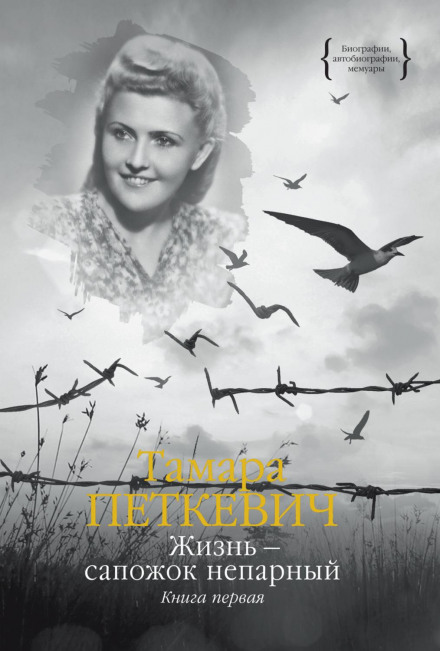
Life Is an Odd Shoe. Book One
25 hrs. 34 min.
Language
Russian
Author
Tamara Petkevich
Author
Tamara Petkevich
Narrator
Yuliya Tarkhova
Narrator
Yuliya Tarkhova
Description
Tamara Petkevich’s memoirs, along with works by Varlam Shalamov, Eufrosynia Kersnovskaya, Yevgenia Ginzburg, and many others, occupy a firm place among writings that captured the “single human stream of filth, goodness, cruelty, atrocities, and helplessness” and forever marked the coordinates of the “camp” theme on the map of 20th-century Russian literature. A young, fragile, gentle, astonishingly beautiful woman had to drink her share from the cup of suffering that fell to innocent victims of political repressions; she experienced unbearable labor, humiliations, hunger, and cold—everything that turns prisoners into hunted animals.
At the same time, the years in the camps became for the author not only a lesson in survival under inhuman conditions. Tamara Petkevich’s fate is worthy of a gripping novel, in which love, betrayal, jealousy, separation, friendship, meetings with astonishing people, the joy of motherhood, and the pain of loss are woven together—all the things that define the moving fullness of human life despite the ugliness of the terrible laws of the camp and the caprice of its little gods and bigger “gods.”
At the same time, the years in the camps became for the author not only a lesson in survival under inhuman conditions. Tamara Petkevich’s fate is worthy of a gripping novel, in which love, betrayal, jealousy, separation, friendship, meetings with astonishing people, the joy of motherhood, and the pain of loss are woven together—all the things that define the moving fullness of human life despite the ugliness of the terrible laws of the camp and the caprice of its little gods and bigger “gods.”
