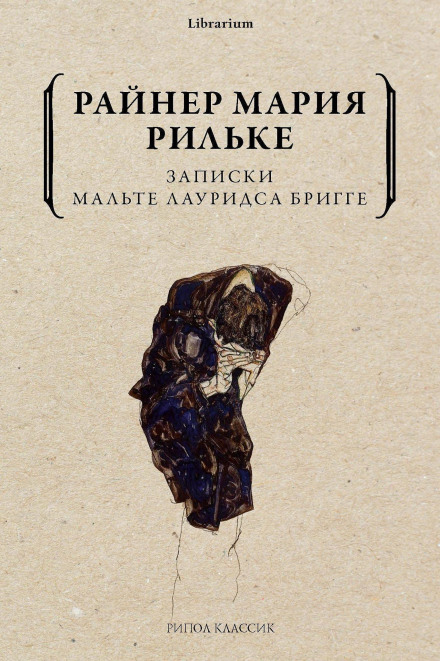
The Notebooks of Malte Laurids Brigge
6 hrs. 4 min.
Language
Russian
Author
Rainer Maria Rilke
Author
Rainer Maria Rilke
Narrator
Vladislav Gorbylyev
Narrator
Vladislav Gorbylyev
Description
Immerse yourself in the world of Rilke’s only prose masterpiece—“The Notebooks of Malte Laurids Brigge,” a work the writer labored over for seven years, where the story of a solitary Danish aristocrat teetering on the edge of poverty becomes a reflection of the human soul. This is not merely a set of diary entries, but a captivating mosaic of Parisian shelters, childhood memories, and relentless questions about life and death that won’t let you go until the very last page. Before you is the pinnacle of a great poet’s work—a book where precise realism is fused with philosophical depth, prompting you to think anew about what it means to be human and a creator.
“The Notebooks of Malte Laurids Brigge,” which R. M. Rilke worked on for seven years, is his only prose work, rightfully regarded as the culmination of the author’s artistic journey. The novel’s hero, the twenty-eight-year-old Dane Malte Laurids Brigge, the last heir of a once-noble family, endowed with talent and an extraordinary—indeed, at least in part, alter ego of Rilke himself—sensitivity, lives in Paris in complete solitude, with almost no money. He dreams of becoming a poet and keeps a diary, which takes shape as a mosaic tapestry of notes that seem, at first glance, disconnected: realistic scenes of Parisian life—shelters, beggars, those asking for alms—intertwine with memories of childhood and reflections on the meaning of human existence.
“The Notebooks of Malte Laurids Brigge,” which R. M. Rilke worked on for seven years, is his only prose work, rightfully regarded as the culmination of the author’s artistic journey. The novel’s hero, the twenty-eight-year-old Dane Malte Laurids Brigge, the last heir of a once-noble family, endowed with talent and an extraordinary—indeed, at least in part, alter ego of Rilke himself—sensitivity, lives in Paris in complete solitude, with almost no money. He dreams of becoming a poet and keeps a diary, which takes shape as a mosaic tapestry of notes that seem, at first glance, disconnected: realistic scenes of Parisian life—shelters, beggars, those asking for alms—intertwine with memories of childhood and reflections on the meaning of human existence.
100%
49:00
Записки Мальте Лауридса Бригге 01
57:50
Записки Мальте Лауридса Бригге 02
55:28
Записки Мальте Лауридса Бригге 03
15:48
Записки Мальте Лауридса Бригге 04
58:19
Записки Мальте Лауридса Бригге 05
58:10
Записки Мальте Лауридса Бригге 06
48:40
Записки Мальте Лауридса Бригге 07
20:57
Записки Мальте Лауридса Бригге 08
