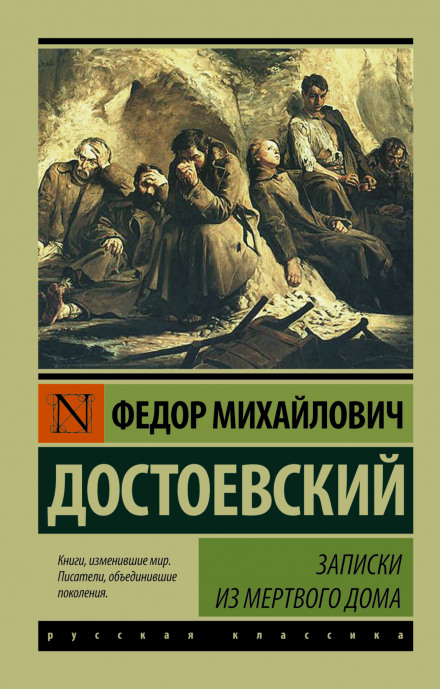
The House of the Dead
14 hrs. 19 min.
Language
Russian
Author
Fyodor Dostoevsky
Author
Fyodor Dostoevsky
Narrator
Boris Plotnikov
Narrator
Boris Plotnikov
Description
In “Notes from the Dead House,” Dostoevsky reflects the impressions of what he experienced and saw during his penal servitude in Siberia, in the Omsk prison, where he spent four years, sentenced for the case of the Petrashevsky circle.
How is this book about the Russian people, “Notes from the Dead House,” connected in succession with the many stories and essays about everyday folk life that were published in the 1840s–1850s in the pages of “The Contemporary,” “Notes of the Fatherland,” and “Library for Reading”?
How is this book about the Russian people, “Notes from the Dead House,” connected in succession with the many stories and essays about everyday folk life that were published in the 1840s–1850s in the pages of “The Contemporary,” “Notes of the Fatherland,” and “Library for Reading”?
100%
58:20
01-01
45:49
01-02
46:19
01-03
49:07
01-04
42:45
01-05
37:04
01-06
35:25
01-07
18:12
01-08
43:23
01-09
42:53
01-10
57:33
01-11
42:11
02-01
40:13
02-02
48:58
02-03
30:02
02-04
47:03
02-05
35:07
02-06
48:00
02-07
40:08
02-08
38:08
02-09
12:21
02-10
