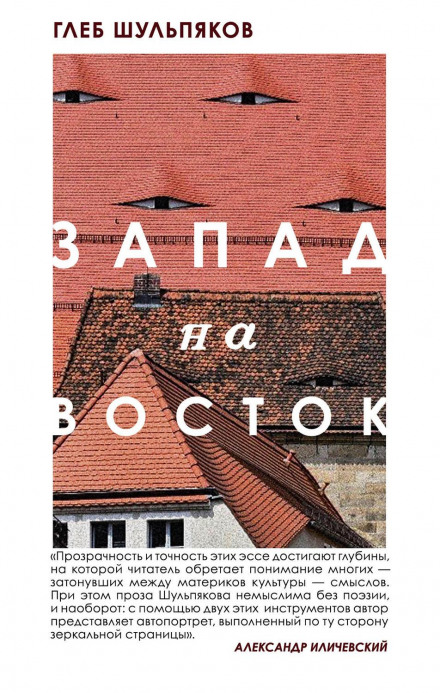
West to East
6 hrs. 53 min.
Language
Russian
Author
Gleb Shulpyakov
Author
Gleb Shulpyakov
Narrator
Alexander Sidorov
Narrator
Alexander Sidorov
Description
Literature is a journey into the artistic space of the Author. But how can one hear in that space the real time in which he lived and worked? In his book of essays, Gleb Shulpyakov reflects on the fear of the era that formed the absurdity of Kharms. He looks at Moscow on the eve of Napoleon’s invasion through the eyes of the poet Batyushkov. He examines why 200 years have passed, and yet Mary Shelley’s “Frankenstein” is still being adapted. He ponders what Wystan Auden, poet of Evil, considered idleness for—and why Stravinsky chose this poet to write the libretto for his opera. We will wander through the corridors of a German insane asylum where the Russian classic was treated. We’ll find out whose collection became the foundation of the Russian National Library. We’ll recall the nerve of freedom in the nineties, when the banned books of Berdyaev, Orwell, Brodsky, Nabokov, and Dombrovsky returned to the reader. We’ll meet the generation of Russians who emigrated to Germany in the new time.
Almost all Russian poets from Lomonosov onward were translators of Western European classics. Russian literature developed under its close gaze, but European literature seems to see itself in the mirror of Russian literature too. This is the dialogue without which no literature is possible.
Almost all Russian poets from Lomonosov onward were translators of Western European classics. Russian literature developed under its close gaze, but European literature seems to see itself in the mirror of Russian literature too. This is the dialogue without which no literature is possible.
100%
1:10:10
Запад на Восток - 0 - I
1:08:01
Запад на Восток - 1 - II
1:25:18
Запад на Восток - 2 - III
1:09:00
Запад на Восток - 3 - IV
1:21:09
Запад на Восток - 4 - V
40:03
Запад на Восток - 5 - VI
